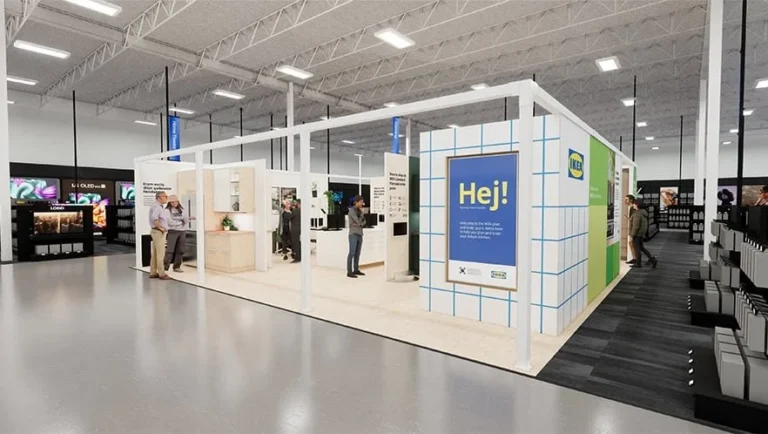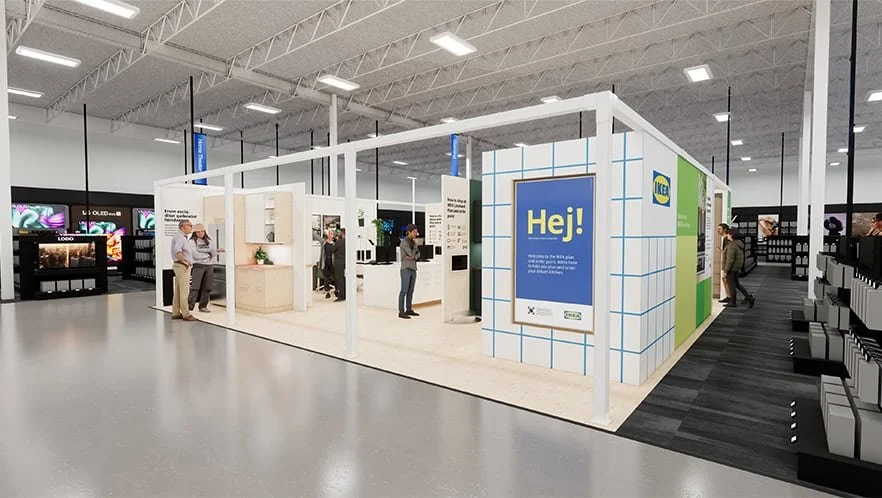
In a landmark shift for the American retail landscape, IKEA U.S. and Best Buy have announced a strategic partnership that promises to redefine the home improvement shopping experience. Beginning this fall, the two retail giants will launch a pilot program featuring "shop-in-shop" installations across 10 select Best Buy locations in Florida and Texas. This collaboration marks a historic milestone: the first time IKEA’s iconic furniture and planning services will be available within the physical footprint of another major U.S. retailer.
The initiative aims to synthesize IKEA’s expertise in functional interior design with Best Buy’s dominance in home technology and appliances. By co-locating their offerings, the companies hope to provide consumers with a seamless, "one-stop-shop" destination for comprehensive kitchen and laundry room renovations.
The Genesis of a Retail Partnership
The collaboration between IKEA and Best Buy is not merely a promotional gimmick; it is a calculated move toward the "integrated retail" model. Historically, IKEA has maintained a strict brand-controlled environment, focusing on its massive, destination-based showrooms. Best Buy, meanwhile, has been aggressively diversifying its portfolio to become a total home solution provider, moving well beyond consumer electronics into major appliances and smart home systems.
The partnership represents a significant departure from IKEA’s traditional "standalone warehouse" model. By embedding themselves into Best Buy stores—which are often more conveniently located in suburban retail hubs than the sprawling, out-of-town IKEA warehouses—the Swedish retailer is betting that accessibility will drive conversion rates for its kitchen and laundry systems.
A Cohesive Shopping Experience
Each of the 10 pilot locations will feature a dedicated 1,000-square-foot IKEA-branded area. These spaces are specifically designed to be immersive. Rather than simply selling cabinets or appliances in isolation, the shop-in-shops will feature curated displays that integrate IKEA’s signature cabinetry and storage solutions with Best Buy’s premium appliance lines.
The design philosophy is centered on the "total project" mindset. Customers will no longer need to travel between different retailers to visualize how a high-end refrigerator might fit into an IKEA-designed kitchen island. Instead, they can walk through fully realized, functional room sets that blend the aesthetics of IKEA with the technological capabilities of Best Buy’s product catalog.
Chronology of the Launch and Rollout
The pilot program is scheduled to commence later this year, with a phased rollout across the designated regions. While the specific list of the 10 participating stores is currently being finalized, the companies have confirmed that the focus is on high-traffic areas within Florida and Texas.
- Phase One (Pre-Launch): The months leading up to the fall launch involve extensive staff training. Both IKEA and Best Buy are cross-training employees to ensure that the "co-worker" experience is fluid. IKEA consultants are being trained on the nuances of appliance integration, while Best Buy staff are receiving briefings on IKEA’s modular design philosophy.
- Phase Two (The Fall Rollout): The 10 shop-in-shops will open their doors. During this phase, both companies will monitor customer foot traffic, dwell time within the branded sections, and the conversion rate of integrated sales (purchasing both a kitchen suite and appliances in a single visit).
- Phase Three (Logistics Integration): Two specific stores—one in Lakeland, Florida, and one in Alamo Ranch, Texas—will act as critical logistics hubs. These locations will serve as pick-up points for IKEA.com orders. This is a significant logistical expansion, allowing customers in these specific markets to collect most IKEA products free of charge at their local Best Buy.
Supporting Data: Why Florida and Texas?
The selection of Florida and Texas as the inaugural states is no accident. Both states represent significant growth markets for home improvement, driven by high rates of residential real estate turnover and new construction.
Industry data suggests that homeowners in the Sun Belt region are particularly invested in "value-add" renovations. By placing the pilot in these regions, the retailers are targeting a demographic that is actively engaged in the home improvement cycle. Furthermore, the sprawling nature of these states’ suburban developments makes the convenience of a Best Buy location—which is often situated closer to residential clusters than a regional IKEA—a strategic logistical advantage.
The 1,000-square-foot footprint per store is also a strategic decision. It is large enough to display three to four full kitchen "vignettes" while remaining small enough to be agile. This allows both companies to pivot their display strategy quickly if customer demand shifts toward, for example, laundry room efficiency or sustainable home energy systems.
Official Responses and Corporate Vision
The leadership at both IKEA and Best Buy have framed this partnership as a response to the evolving needs of the modern consumer.
Rob Olson, Chief Operating Officer for IKEA U.S., emphasized the company’s commitment to democratizing good design. "This partnership between IKEA and Best Buy is about making great design and functionality more accessible for the many," Olson stated. He noted that by removing the friction of traveling to multiple stores, IKEA is lowering the barrier to entry for consumers looking to undertake complex home projects.
Patrick McGinnis, Chief Merchandising Officer for Best Buy, highlighted the technological dimension of the partnership. "We are showing our customers what’s truly possible in blending home design with technology," McGinnis remarked. The sentiment from Best Buy’s leadership is clear: the modern kitchen is no longer just about cabinets and countertops; it is a connected ecosystem of smart ovens, intelligent dishwashers, and energy-efficient lighting. By joining forces with IKEA, Best Buy positions its technology as an integral component of the home’s architecture.
Implications for the Future of Retail
The IKEA-Best Buy collaboration is a harbinger of a broader trend: the era of the "siloed retailer" is drawing to a close. As e-commerce continues to dominate commodity retail, brick-and-mortar stores must offer a "destination experience" that cannot be replicated online.
Cross-Brand Synergy
This partnership demonstrates the power of shared retail spaces. By leveraging each other’s strengths—IKEA’s design authority and Best Buy’s tech-savviness—the companies are creating a value proposition that is greater than the sum of its parts. If successful, this pilot could serve as a blueprint for other cross-sector partnerships. Imagine, for example, a home improvement store housing a paint consultation center from a major design firm, or a tech retailer partnering with a home-security installation service.
The Logistics Pivot
The inclusion of pickup services at the Lakeland and Alamo Ranch locations is perhaps the most significant logistical implication. By utilizing Best Buy stores as fulfillment centers for IKEA products, IKEA is effectively expanding its "last-mile" capabilities without the massive capital expenditure of building new warehouses. This shared-logistics model could significantly lower the cost of goods for the consumer while increasing the efficiency of the supply chain.
The "Wait and See" Strategy
Both companies have been measured in their public statements, avoiding any commitment to a national rollout. The pilot is an experiment designed to generate data. "This pilot will help inform future decisions," representatives noted. The metrics of success will likely include:
- Synergy Sales: The percentage of customers who purchase both an IKEA kitchen system and a Best Buy appliance.
- Pickup Utilization: How frequently local customers opt for the Best Buy pickup option over home delivery.
- Brand Halo Effect: Whether the presence of IKEA in a Best Buy store increases the total dwell time and customer sentiment scores for the Best Buy location as a whole.
Conclusion
The IKEA and Best Buy partnership is a sophisticated response to the challenges of modern retail. By merging design expertise with technological capability, the two companies are creating a highly specialized retail environment that addresses the needs of the modern, renovation-focused consumer.
Whether this pilot program expands into a nationwide network remains to be seen, but the intent is clear: the retailers of the future will be defined by their ability to collaborate, integrate, and meet the customer where they are—both physically and in their home-improvement journey. As this pilot rolls out across Florida and Texas, the retail world will be watching closely, as this could well be the start of a fundamental transformation in how Americans shop for their homes.
About the Author