In a move that promises to fundamentally reshape the American maritime industrial base, HII—the nation’s largest military shipbuilder—has unveiled a transformative $900 million investment strategy. The company has entered into performance-based production agreements with two industry leaders in automation: GrayMatter Robotics and Path Robotics. This strategic collaboration aims to integrate "physical AI" into the construction of the U.S. Navy’s most critical assets, including aircraft carriers, nuclear-powered submarines, and advanced unmanned surface vessels.
The announcement, made this past Thursday, outlines a seven-year roadmap that seeks to solve one of the most persistent challenges in defense manufacturing: the need for massive, scalable throughput in an era of tightening geopolitical competition. By leveraging the autonomous capabilities of GrayMatter and Path, HII is betting that the fusion of artificial intelligence and heavy industrial robotics will provide the industrial resilience necessary to meet the Navy’s ambitious modernization goals.
The Core Mandate: Scaling Production for the 21st Century
The $900 million deal is not merely a purchase order for equipment; it is a long-term strategic alignment. Under the terms of the agreement, HII will award work to GrayMatter and Path contingent upon the firms meeting rigorous technology and manufacturing readiness levels. This "sustained demand signal" is designed to provide the two robotics companies with the financial stability required to invest in high-end facilities, workforce development, and, most importantly, the complex software stacks that power their autonomous systems.
For HII, the integration of these technologies is a core pillar of its "distributed shipbuilding" strategy. As the maritime environment becomes increasingly complex, the shipbuilder is looking to expand its structural assembly network. By 2026, HII intends to outsource more than 2.5 million hours of shipbuilding work—a 30% increase over 2025 figures. This shift allows the company to push more fabrication and assembly work out of the primary shipyard environments and into specialized partner facilities, effectively de-bottlenecking the final assembly phase of ship construction.
Chronology: From Concept to Industrial Integration
The path to this partnership has been deliberate, moving from exploratory trials to a full-scale industrial commitment.
- Early 2024 (February): HII and Path Robotics formally announced a Memorandum of Understanding (MOU) to explore the integration of physical AI for welding applications. The intent was clear: to evaluate whether autonomous systems could reliably perform the high-precision, high-stress welding required for military-grade vessels.
- Mid-2024: Following successful pilot programs and technical evaluations, the scope of the collaboration expanded. Discussions moved beyond simple welding to encompass broader autonomous manufacturing capabilities, leading to the involvement of GrayMatter Robotics.
- Late 2024 (Thursday Announcement): HII confirmed the High-Yield Production Robotics (HYPR) program. This framework establishes the governance, technical standards, and operational protocols necessary to move from R&D to full-scale production.
- 2025-2032 (The Implementation Horizon): The seven-year window of the agreement will see the progressive deployment of these technologies across HII’s shipyard ecosystem, with milestones tied to specific productivity metrics and manufacturing readiness benchmarks.
Supporting Data: The Need for Speed and Resilience
The necessity for this technological leap is underscored by the current state of the U.S. defense industrial base. The U.S. Navy has faced significant pressure to accelerate the delivery of its fleet, particularly the Virginia-class submarines and the Constellation-class frigates.
Historically, shipbuilding has been a labor-intensive, bespoke process. The introduction of the HYPR program is designed to inject the following efficiencies:
- Throughput Acceleration: By automating repetitive yet high-skill tasks like welding, structural fitting, and grinding, HII aims to reduce the man-hours required for complex assemblies.
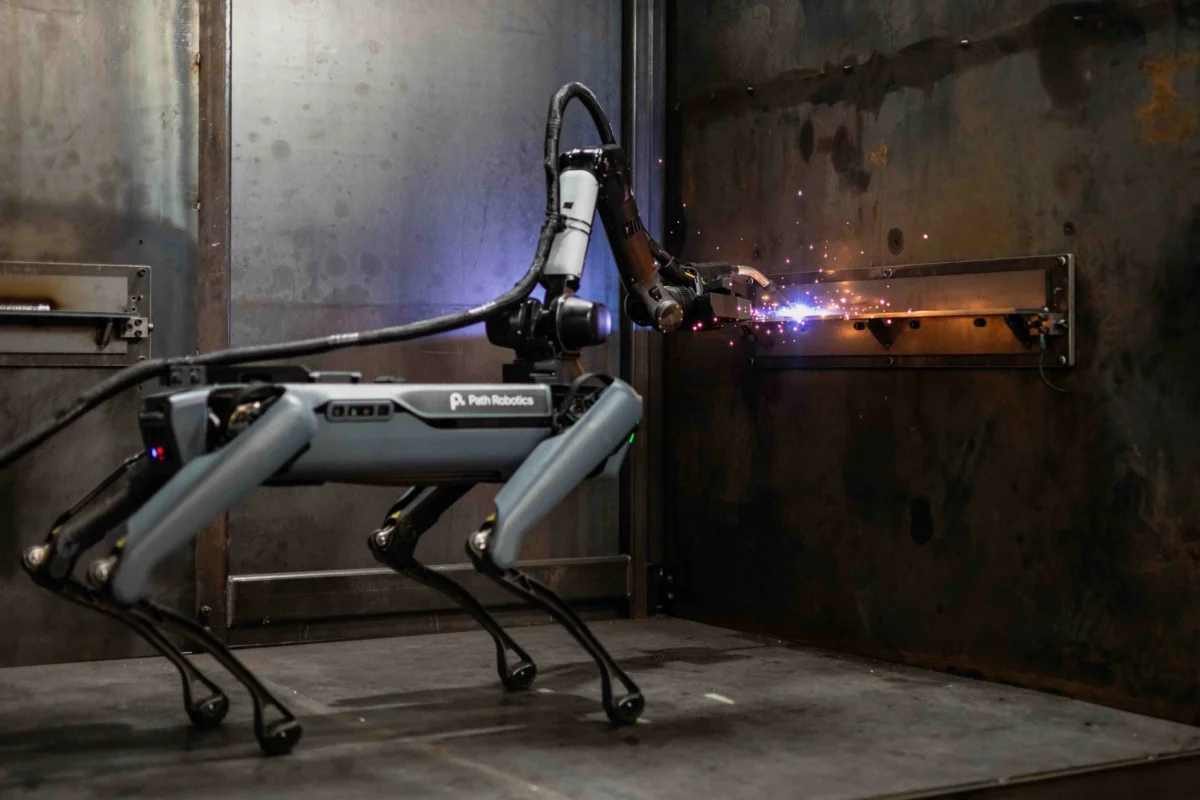
- Quality Consistency: Physical AI systems do not suffer from fatigue. By utilizing adaptive robots that can "see" and adjust to slight variations in materials or environmental conditions, the quality of welds is expected to reach a level of uniformity that is difficult to maintain with manual labor alone.
- Distributed Capacity: By enabling partner companies to operate with "Navy-grade" precision through these autonomous systems, HII can effectively expand its production footprint without needing to build entirely new, massive drydocks—a process that would take decades and billions of dollars.
Official Perspectives: Defining "Factory SuperIntelligence"
The leadership at both GrayMatter Robotics and Path Robotics views this partnership as a turning point for the American manufacturing sector.
Ariyan Kabir, CEO and co-founder of GrayMatter Robotics, framed the partnership as a shift toward a new paradigm of industrial cognition. "This agreement represents an important milestone in bringing ‘Factory SuperIntelligence’ to America’s leading shipbuilding company," Kabir stated. "By combining physical AI with autonomous production systems, we’re helping create manufacturing that learns, adapts, and improves over time, making complex shipbuilding faster, more resilient, and more scalable."
The sentiment is echoed by the leadership at Path Robotics, which has focused heavily on the application of AI to heavy-duty welding. The ability for these robots to navigate the often-cramped and geometrically complex interior of a warship—a task that is notoriously difficult for traditional, pre-programmed industrial robots—is what differentiates the "Physical AI" of this era from the automation of the past.
Implications for the Maritime Industrial Base
The implications of this $900 million investment extend far beyond the shipyard floor.
1. The Workforce Transformation
One of the most common concerns regarding industrial automation is its impact on human labor. However, proponents of the HYPR program argue that this is not a move to replace humans, but to augment them. The current shortage of skilled welders and shipbuilders is a major bottleneck in U.S. defense production. By offloading the most physically taxing and repetitive tasks to robots, shipbuilders can focus their human workforce on higher-level supervisory, maintenance, and complex engineering roles. This shift could help attract a new generation of "tech-savvy" industrial workers who are more comfortable managing a fleet of robots than wielding a manual torch.
2. Geopolitical Strategic Resilience
The U.S. Navy’s ability to project power depends on its ability to maintain its fleet. In the event of a conflict, the capacity to rapidly repair or replace damaged vessels is a strategic necessity. By building a robust, AI-driven manufacturing ecosystem, HII is essentially creating a "warm" industrial base that can pivot more easily than a traditional, manual-heavy shipyard. If a specific component or ship section is needed in a hurry, the use of standardized autonomous systems allows for the rapid scale-up of production.
3. Setting a New Standard
If successful, the HYPR program will likely serve as a blueprint for the entire defense industrial base. The aerospace and ground-vehicle sectors have been watching these developments closely. The ability to deploy "Physical AI" that can learn and adapt—rather than simply repeating a static sequence—is the "holy grail" of manufacturing. If HII, GrayMatter, and Path can prove that this technology is viable in the harsh, high-stakes environment of a shipyard, it will almost certainly be adopted by other military contractors, further accelerating the modernization of U.S. defense manufacturing.
Challenges Ahead: The Road to Readiness
Despite the enthusiasm surrounding the announcement, the path forward is not without hurdles. The maritime environment is famously unforgiving; extreme weather, salt-water corrosion, and the massive scale of ship components create an environment that is notoriously difficult for sensitive electronic equipment and delicate sensors.
GrayMatter and Path Robotics will need to ensure their systems can function in the gritty reality of a shipyard, where dust, vibration, and temperature fluctuations are the norm. Furthermore, the governance structures of the HYPR program will be tested as the companies integrate their proprietary software into HII’s existing operational frameworks. Ensuring cybersecurity, maintaining the integrity of the "learning" algorithms, and meeting the rigorous certification standards of the U.S. Navy will be ongoing challenges throughout the seven-year contract term.
Conclusion
The $900 million investment by HII into the technologies of GrayMatter Robotics and Path Robotics marks a definitive shift in the philosophy of U.S. shipbuilding. By embracing the principles of physical AI, the nation’s largest shipbuilder is acknowledging that the traditional methods of the 20th century are no longer sufficient to meet the challenges of the 21st.
As the program moves into its deployment phase, the focus will shift from high-level strategy to the granular details of execution. The success of the HYPR program will not be measured in press releases, but in the speed of submarine hull completion, the efficiency of aircraft carrier repairs, and the reliability of the industrial network that supports them. If the promise of "Factory SuperIntelligence" holds true, HII is not just building ships—it is building the future of American industrial power.
About the Author