In the modern landscape of commercial vehicle manufacturing, the challenge is rarely the mechanical prowess of an internal combustion engine. Instead, the true bottleneck—the "valley of death" for many development programs—lies in the complex digital choreography required to make an engine communicate with the labyrinthine array of sensors, controllers, and onboard computers that define today’s work trucks and last-mile delivery vans.
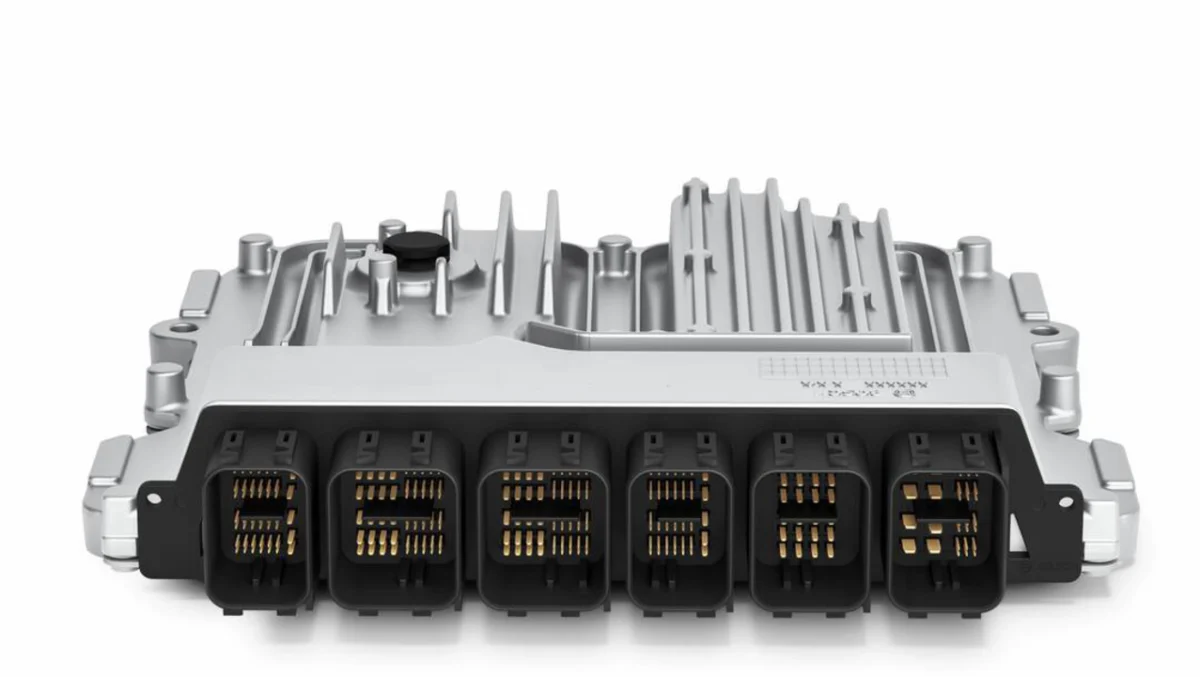
Recognizing this, GM Powered Solutions—the automaker’s dedicated business-to-business propulsion division—recently unveiled a strategic shift in how it supports external integrators. Announced at the ACT Expo earlier this year, GM is now offering a commercial-grade Engine Control Module (ECM) specifically engineered for its 6.6-liter heavy-duty gas engine. This is not merely a component sale; it is a "ready-to-run" digital foundation designed to turn months of integration labor into a streamlined, plug-and-play process for non-GM vehicle manufacturers.
The Digital Foundation: Why the Brain Matters
At the heart of every modern vehicle is the ECM—the digital brain that interprets thousands of inputs per second to dictate engine performance, fuel efficiency, and load management. For decades, companies integrating third-party engines into custom chassis faced a daunting reality: they had to build the engine’s digital environment from scratch.
"Put it this way: without the ECM, the engine is a paperweight in today’s world," says Anthony Locano, technical specialist and on-highway lead application engineer at GM Powered Solutions.
Locano, who has been with General Motors since 2013 and brings a deep background in heavy-duty diesel and industrial applications, notes that the complexity of modern engines has moved far beyond the era of the carburetor. Today, the engine must interface with various vehicle subsystems—transmission controllers, body control modules, and emissions hardware. When an upfitter or integrator starts a project with a "blank" controller, they are effectively tasked with writing a custom operating system before they can even hear the engine fire. GM’s new offering changes the paradigm by shipping a module with a GM-approved base calibration already loaded.
A Chronology of Integration Complexity
To understand the impact of this new offering, one must look at the traditional development cycle for a commercial vehicle. Historically, the process followed a grueling, linear timeline:
- Selection and Procurement: The integrator selects a powerplant, often chosen for its reliability and parts availability.
- The "Blank Slate" Phase: The engine arrives, but the controller is an unprogrammed husk. The integrator must spend months—sometimes over a year—mapping inputs and outputs to ensure the engine runs at all.
- Communication Mapping: The integrator must build "gateways" to bridge the engine’s digital language with the vehicle’s chassis architecture.
- Dyno Testing: Only after the software is stable can the team move to the dynamometer to begin refining performance.
GM’s new strategy effectively collapses the first three steps. By providing a "foundational starting point package," the automaker allows engineers to skip the manual "bring-up" phase. Instead of spending six months teaching the engine how to idle or react to a throttle pedal, developers can start their programs with a running engine. This allows them to focus immediately on the "meat and potatoes" of vehicle integration, such as emissions compliance and chassis-specific power mapping.
Supporting Data: Why "Scrappy" Engineering Matters
GM Powered Solutions occupies a unique space in the industry. It provides propulsion systems across diverse sectors, including marine, industrial, off-road, and on-road commercial applications. However, they are not a "one-off" shop; they rely on the economies of scale afforded by GM’s massive high-volume manufacturing lines.
The challenge, as Locano explains, is that while high-volume production creates reliability, it creates rigid requirements. "When we’re certifying an engine, it has to meet a defined set of requirements, so it isn’t practical to tailor the production solution for every application. So we got really scrappy and unique with this ECM."
This "scrappiness" resulted in a controller that is uniquely tailorable for external customers. In previous years, GM’s proprietary controllers were locked down to prevent unauthorized modification. The new commercial-spec ECM, however, allows integrators to add content for specific vehicle-related features. This is a radical departure from the "black box" approach, giving external OEMs the flexibility to communicate with their unique vehicle architectures without needing complex, costly gateway hardware.
Official Perspectives: The "Fuel to Noise" Philosophy
The genesis of this product was a direct response to customer feedback. During consultations with fleet operators and upfitters—those responsible for spec’ing step vans, work trucks, and delivery vehicles—a recurring theme emerged: the opening stretch of development was the most punishing and least differentiated work in the entire program.
"We listened to our customer saying, ‘Hey, I really need a launching pad,’" Locano says. "I don’t know what it takes to get an ECM to a state where we can turn fuel to noise—run the engine. It’s very technical, it’s very unique to that specific engine, and we just don’t know how to do that."
GM’s solution is a testament to the company’s evolution toward a service-oriented B2B model. Locano emphasizes that while this package is a game-changer, it is not a "certified" end-product. The buyer is responsible for emissions certification and final tuning, as those are inherently tied to the vehicle’s specific intake and exhaust hardware—components that vary wildly from a box truck to a marine generator.
"It’s only a starting point; it’s not a certified product," Locano reiterates. "But what it will do is jumpstart their development. They come to the table not starting from ground zero. They’re actually starting from a place of a running engine."
Strategic Implications: Future-Proofing and Hybridization
Beyond the immediate utility of the ECM, GM has built the hardware with an eye toward the future. Recognizing that the commercial sector is rapidly shifting toward electrification and hybrid-electric powertrains, the new ECM is "over-engineered" for its current task.
The module contains additional I/O (input/output) pins and expanded processing capability that are not required for a standard 6.6-liter gas engine. This "future-proofing" ensures that if a manufacturer decides to experiment with hybrid-electric integration or advanced telemetry systems, the controller already has the physical architecture to accommodate those upgrades.
This forward-thinking approach aligns with the broader goals of GM Powered Solutions. As they leverage their expertise in marine and industrial sectors, they are finding that the lines between these industries are blurring. An engine designed for a work truck might, with the right digital tuning and control, be the ideal candidate for an industrial generator or a mid-sized commercial vessel.
The Competitive Landscape: Professionalizing the B2B Market
For the commercial vehicle industry, this move represents a maturation of the B2B propulsion market. By providing the tools to lower the barrier to entry, GM is effectively expanding the pool of potential innovators.
Small to mid-sized upfitters who previously lacked the capital to invest in proprietary software development can now compete on a more level playing field with larger OEMs. By focusing on the "integration effort" rather than the "development effort," these companies can bring new products to market significantly faster.
However, Locano is clear about the scope of the group’s operations. "We’re a B2B group, so we don’t do onesies and twosies out of our group," he says. The logistical effort required to support a program is similar whether the client needs ten engines or ten thousand. By focusing on volume, GM ensures that the parts and service support for these engines remain robust, utilizing the vast existing network of GM dealers, ACDelco distributors, and Customer Care and Aftersales channels.
Conclusion: Bridging the Gap
The introduction of this tailored ECM is more than a minor technical update; it is a strategic bridge between the world of mass-production automotive engineering and the highly fragmented, specialized world of commercial vehicle upfitting.
By de-risking the "digital integration" phase of development, GM is empowering manufacturers to spend their time and resources where they matter most: refining the vehicle’s utility, improving driver ergonomics, and meeting the demanding emissions and performance standards of the modern world. In an era where the software is the vehicle, providing a reliable, tailorable, and powerful starting point is perhaps the most valuable service a propulsion manufacturer can provide. As the industry continues to evolve toward more complex, connected, and hybrid powertrains, GM’s "scrappy" approach may well become the new industry standard for commercial integration.
About the Author