By Global Affairs Analysis Desk
The long-standing strategic partnership between the United States and South Korea—a cornerstone of Pacific security for over seven decades—is currently navigating its most turbulent period in recent history. New data from the Pew Research Center, compiled during a comprehensive survey conducted between March and April 2026, reveals a stark deterioration in public perception of the U.S. among South Korean citizens. This shift in sentiment arrives against a backdrop of aggressive trade negotiations, shifting military doctrines, and a growing domestic push within Seoul for greater strategic autonomy.
The State of the Alliance: A Quantitative Collapse
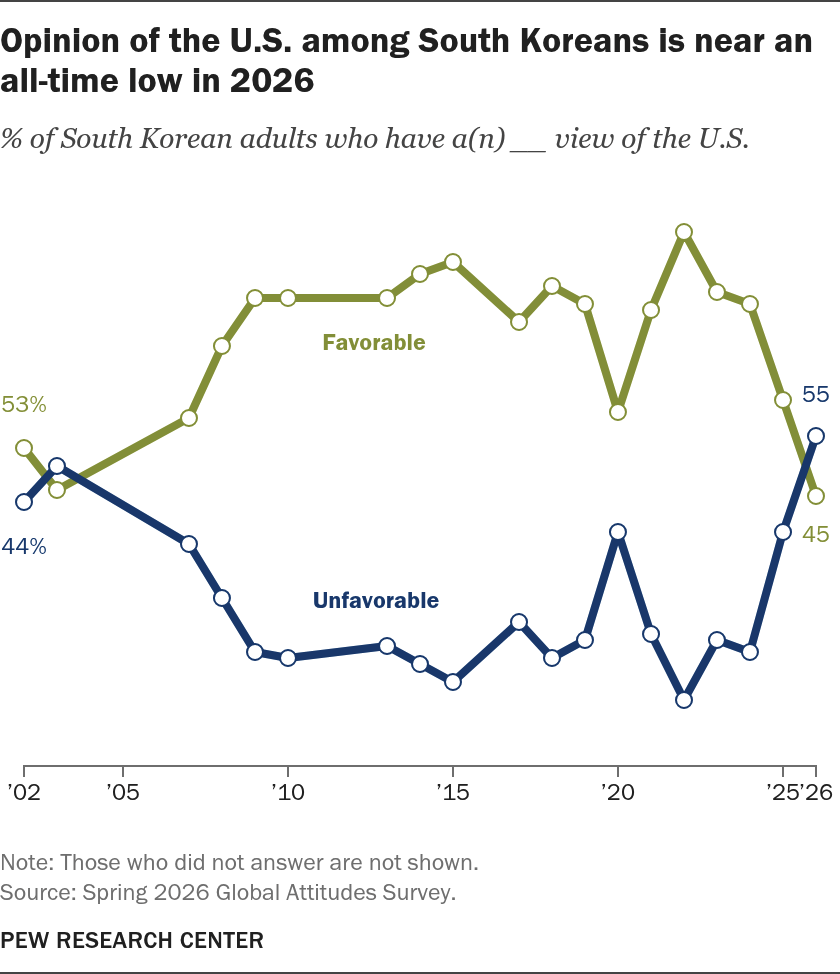
For the first time in over two decades, the majority of the South Korean public views the United States unfavorably. According to the 2026 Global Attitudes Survey, 55% of South Koreans now hold an unfavorable view of the U.S., a sharp increase from 39% just one year ago. Even more striking is the intensity of this sentiment: 18% of respondents expressed a "very unfavorable" view, doubling the 9% recorded in 2025.
The decline in favorability is not merely a recent phenomenon; it is a rapid erosion. In 2018, during the second year of Donald Trump’s first term, 80% of South Koreans viewed the U.S. favorably. By 2022, that figure reached a high of 89%. However, the trajectory has reversed sharply, with favorability dropping to 45% in the most recent polling.
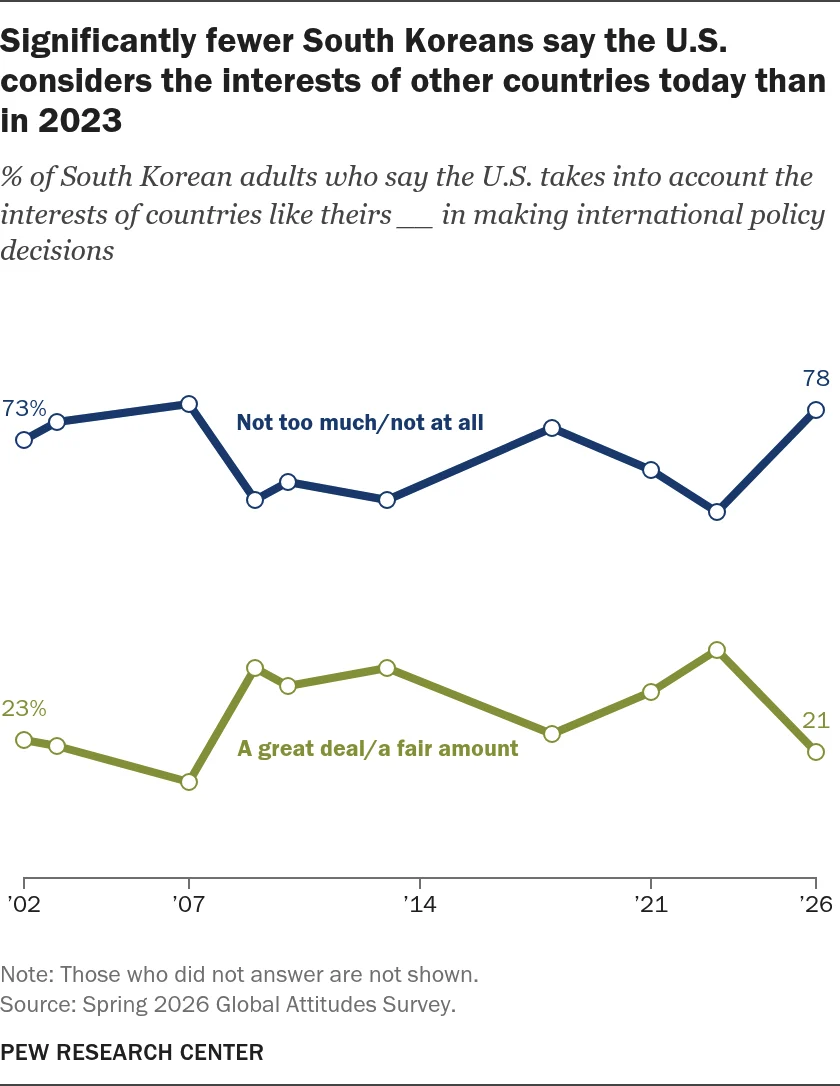
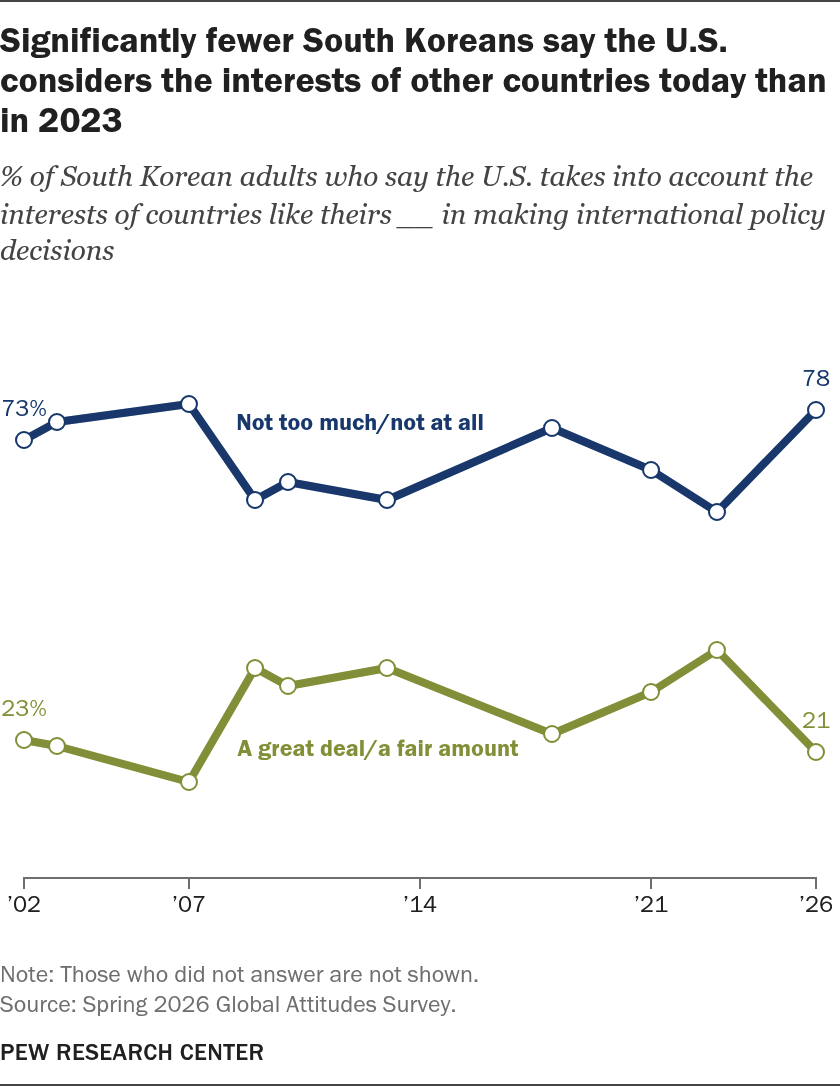
This disillusionment extends beyond general sentiment into the perceived reliability of the U.S. as a partner. Only 57% of South Koreans now consider the U.S. a reliable partner, a significant decline from the 83% recorded in 2022. Furthermore, the perception that the U.S. considers the interests of countries like South Korea when making international policy decisions has plummeted to 21%, down from 38% in 2023.
A Chronology of Friction: From Trade to Theater
The current diplomatic freeze is the culmination of a series of escalatory events that began in early 2026.
- January 2026: The Trump administration announced a 25% tariff hike on specific South Korean imports, aimed at pressuring Seoul into a more favorable trade agreement. The move sparked widespread public outcry and political debate within the South Korean National Assembly.
- February 2026: Following months of legislative deadlock, the South Korean government reluctantly approved the U.S.-demanded trade deal to avoid further economic fallout. Public disapproval, however, remained rampant, with 85% of citizens expressing opposition to President Trump’s handling of these trade disputes.
- March 2026: Amidst the geopolitical fallout, President Trump criticized South Korea’s reluctance to engage in U.S.-led military operations in Iran. Consequently, the Pentagon received orders to scale back the long-standing annual joint military exercises, which have served as a deterrent against North Korean aggression since the post-war era.
- August 2026: President Lee Jae Myung, in an address to the nation, openly advocated for "military independence," citing the unpredictability of the U.S. security umbrella and the need for South Korea to exercise greater control over its own operational command (OPCON).
The "Tripwire" Doctrine and Modern Security
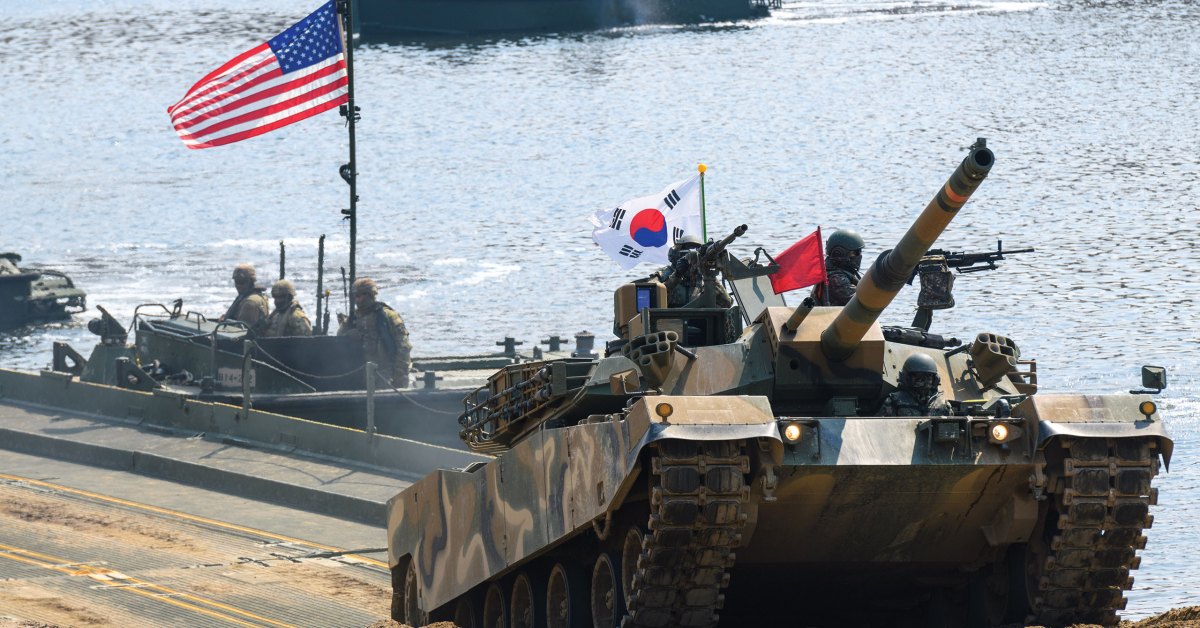
The U.S. military presence in South Korea, currently numbering approximately 23,400 active-duty personnel, has long functioned as a "tripwire." This strategy relies on the premise that the physical presence of American troops guarantees an immediate, large-scale U.S. response to any North Korean incursion.
While the troop levels have remained relatively stable—hovering between 23,000 and 30,000 for over a decade—the political utility of this force is being questioned. The decision to scale back joint exercises threatens to weaken the operational readiness that has defined the alliance. For the South Korean public, this reduction is not viewed as a mere logistical adjustment, but as a potential withdrawal of the U.S. commitment to regional stability.
The survey data highlights a concerning trend: the percentage of South Koreans who believe the U.S. contributes to global peace and stability has fallen from 74% in 2023 to just 47% in 2026. This loss of faith in American international leadership is a pivotal factor in the changing landscape of the alliance.
Official Responses and Political Repercussions
The rhetoric from both Washington and Seoul has intensified. President Trump’s administration has characterized its actions as "transactional," emphasizing that the era of open-ended security guarantees is over. In contrast, the administration of President Lee Jae Myung is under immense pressure to defend its sovereignty.
Lee’s push for military independence is a direct response to the perceived instability of the Washington-Seoul relationship. By seeking greater control over operational commands, the South Korean government is attempting to assure its citizens that they are not merely pawns in a broader U.S. strategy, but active participants in their own defense.
However, despite these deep-seated grievances, the U.S. remains the most important ally for South Korea in the eyes of its citizens. 84% of respondents still identify the U.S. as their primary security partner, trailing behind only Israel in international comparisons. This creates a paradox: the South Korean public is increasingly frustrated with the U.S. administration, yet remains acutely aware of the existential threat posed by North Korea and the necessity of the American defense shield.
Implications for the Future of the Pacific
The implications of this data are profound. If the decline in public favorability continues, it may empower political factions in South Korea that advocate for a more independent, perhaps even neutral, foreign policy. This "strategic autonomy" could lead to a diversification of alliances, potentially strengthening ties with other regional powers or increasing domestic investment in advanced defense technologies, including indigenous missile programs.
Furthermore, the U.S. administration faces a strategic dilemma. If it continues to leverage trade and security commitments as bargaining chips, it risks alienating one of its most vital democratic partners in Asia. The "transactional" approach favored by the Trump administration is clearly yielding immediate concessions on trade, but at the cost of long-term diplomatic capital and regional influence.
As the 2026 calendar year progresses, the focus will remain on whether these trends in public opinion force a recalibration of policy. Will Washington seek to mend fences to ensure a unified front against regional threats, or will the "America First" doctrine continue to prioritize bilateral economic gains over the integrity of the Pacific security architecture?
For now, the alliance remains intact on paper, but the social contract that underpins it is fraying. The South Korean public, once a staunch supporter of the U.S.-led global order, is signaling a fundamental shift in its worldview—one that is increasingly skeptical, cautious, and insistent on self-reliance.

Methodology and Context
This analysis is based on the Spring 2026 Global Attitudes Survey, which sampled 1,045 adults in South Korea between March 3 and April 4, 2026. The survey is designed to be nationally representative. For further reading, see the full methodology and survey topline data provided by the Pew Research Center. The data underscores the necessity for policymakers to account for shifting public sentiment when managing high-stakes international alliances.
About the Author