In the contemporary landscape of industrial design, the intersection of architecture and furniture fabrication often results in pieces that are as structural as they are aesthetic. Few designers exemplify this fusion as naturally as Tokyo-based architect Keiji Ashizawa. Known for his "honest" approach to materials and a penchant for structural clarity, Ashizawa’s career is defined by a unique vocational trajectory: before he became a celebrated architect, he was a metalworker.
This background in steel fabrication has provided Ashizawa with a granular understanding of how materials behave under tension and load, a perspective that is profoundly evident in his two experimental mobile drawer designs: the Bon Drawer and the Slybox. Though these pieces were prototyped as a study in minimalist engineering, they remain a masterclass in how architecture—the art of space—can be scaled down to the intimate, functional realm of mobile storage.
The Genesis: A Background in Fabrication
To understand the DNA of the Bon Drawer and Slybox, one must first examine the formative years of Keiji Ashizawa. Unlike many architects who enter the profession through a purely academic route, Ashizawa spent his early professional life on the floor of a metalworking shop.
During this period, he was not merely sketching buildings; he was welding joints, bending steel, and understanding the physical limitations of metal. This hands-on immersion taught him the "language of steel"—the ability to see a material not just as a static element, but as a dynamic system of support and weight.
When Ashizawa eventually founded his own studio, Keiji Ashizawa Design, this expertise became his signature. His architectural work is frequently characterized by slender steel members, transparency, and a lack of ornamentation. When he turns his attention to furniture, he treats the object as a small-scale building. He does not hide the screws or the welds; he celebrates them. This philosophy is the bedrock upon which his experimental drawer units were built.
Anatomy of the Prototypes: Bon Drawer and Slybox
Ashizawa’s foray into mobile storage units was driven by a challenge: how to minimize the steel skeleton of a piece of furniture while maximizing its load-bearing capacity and mobility.
The Bon Drawer: Gestural Elegance
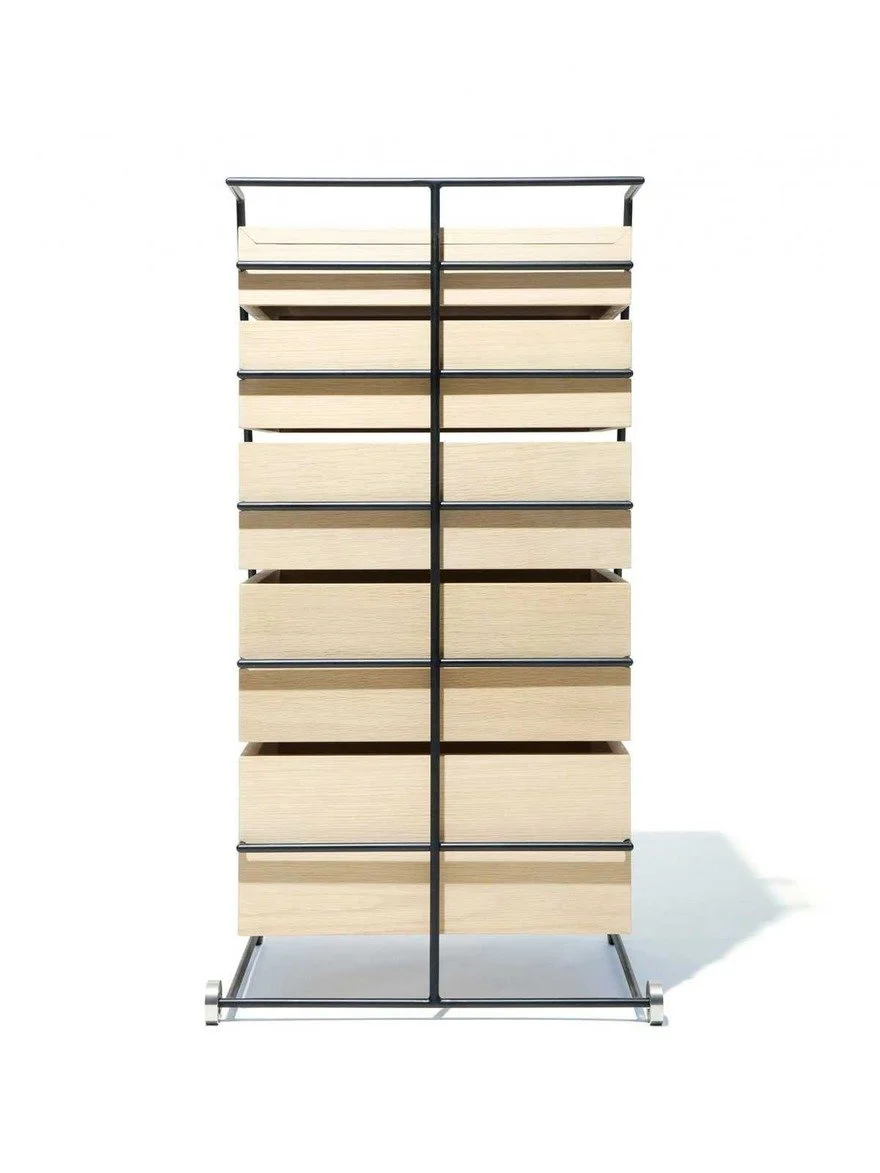
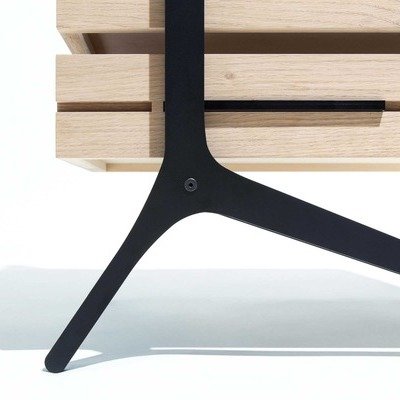
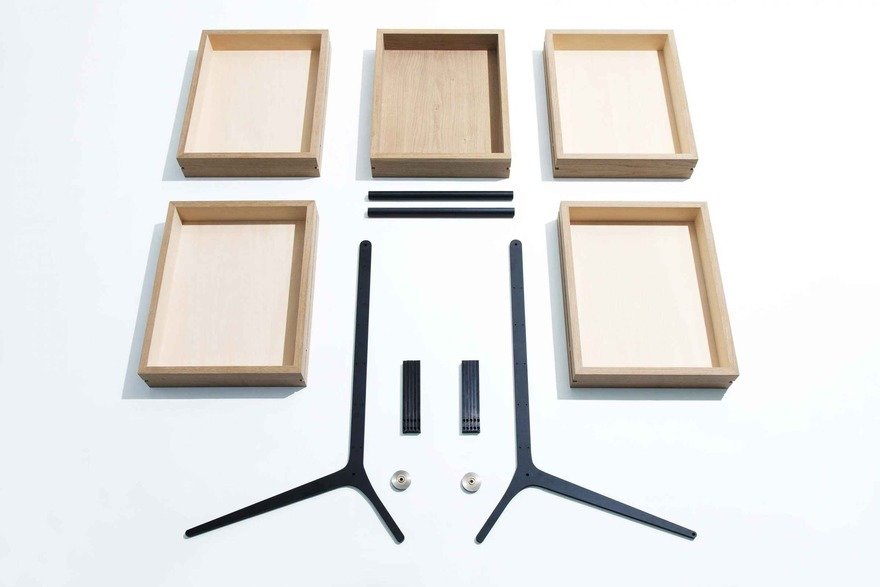
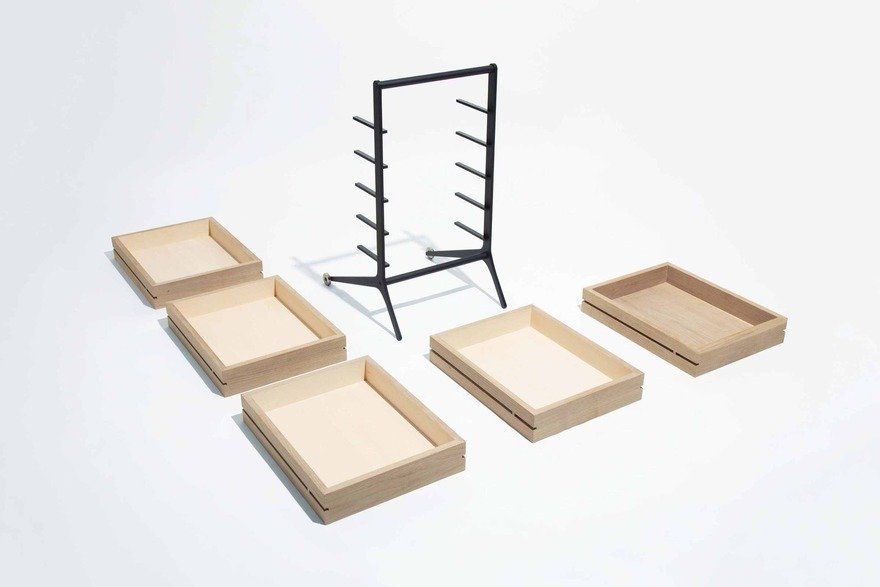
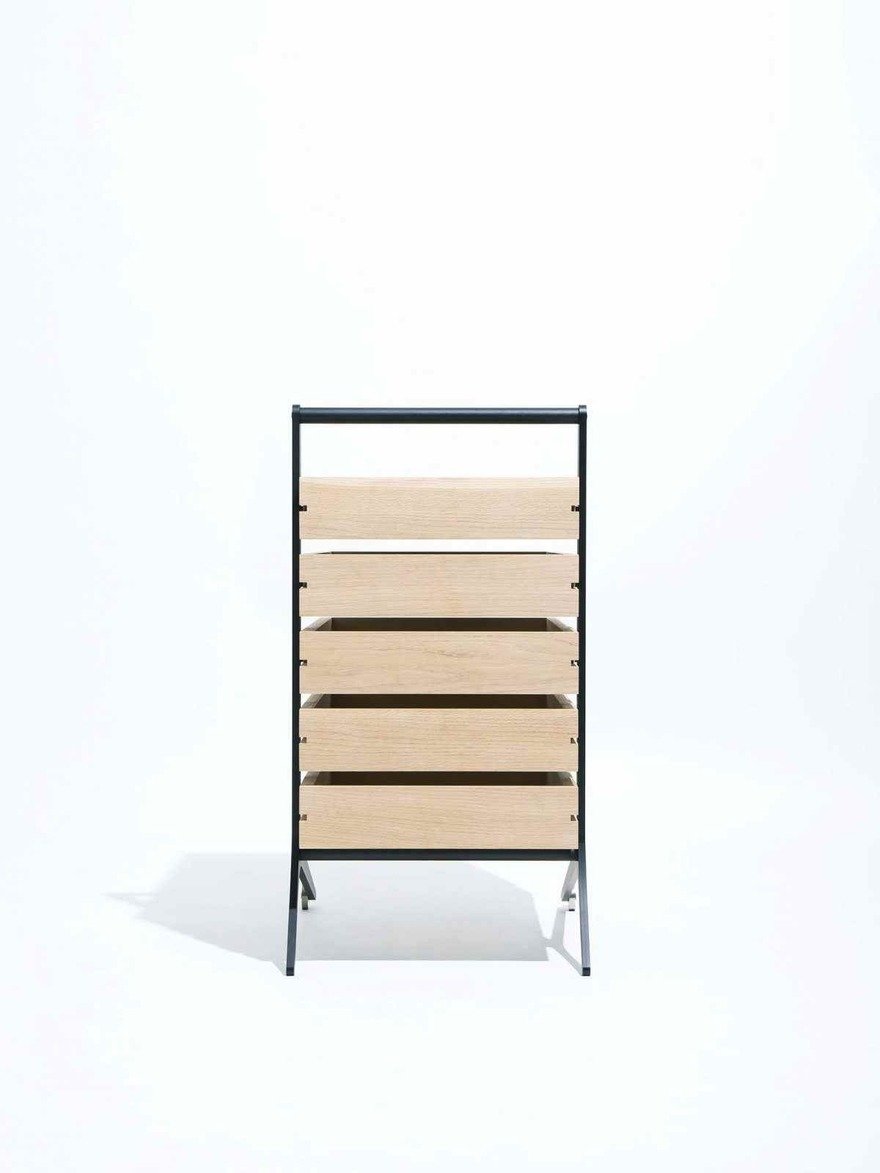
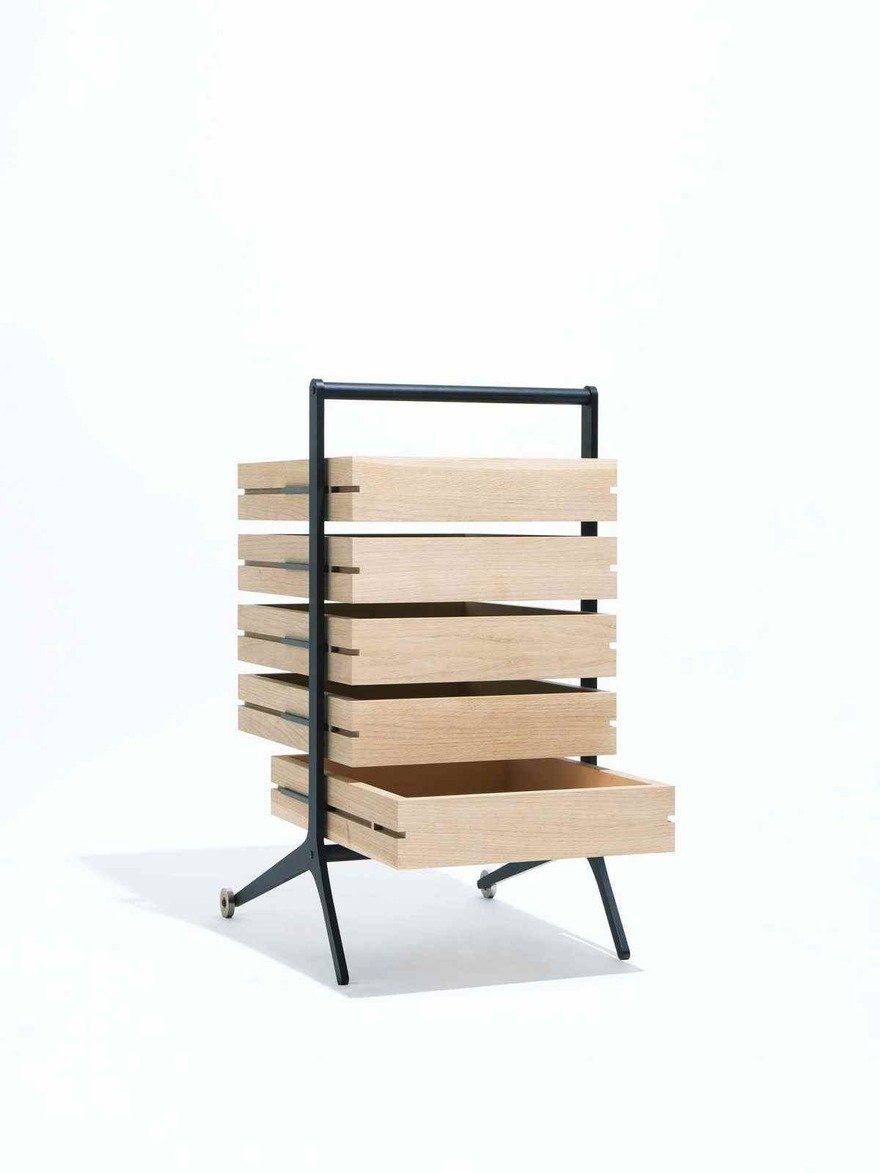
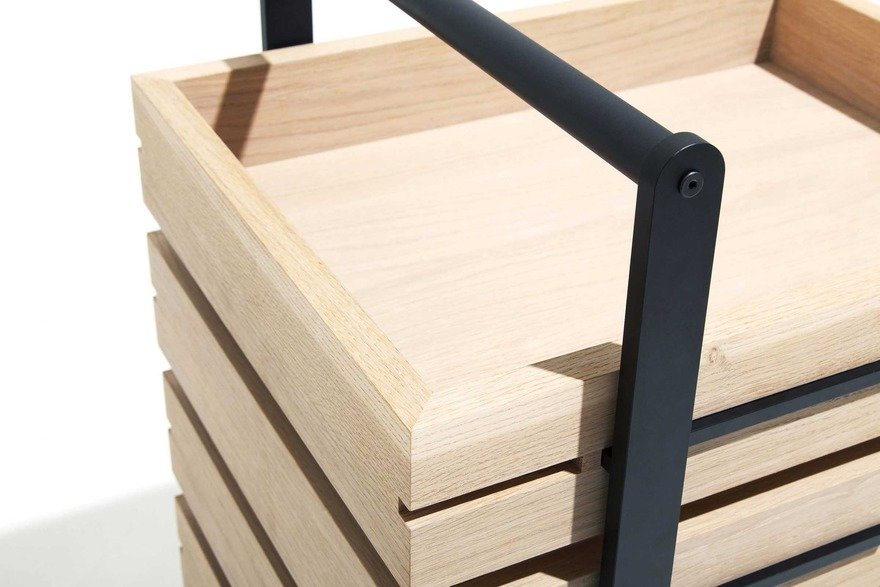
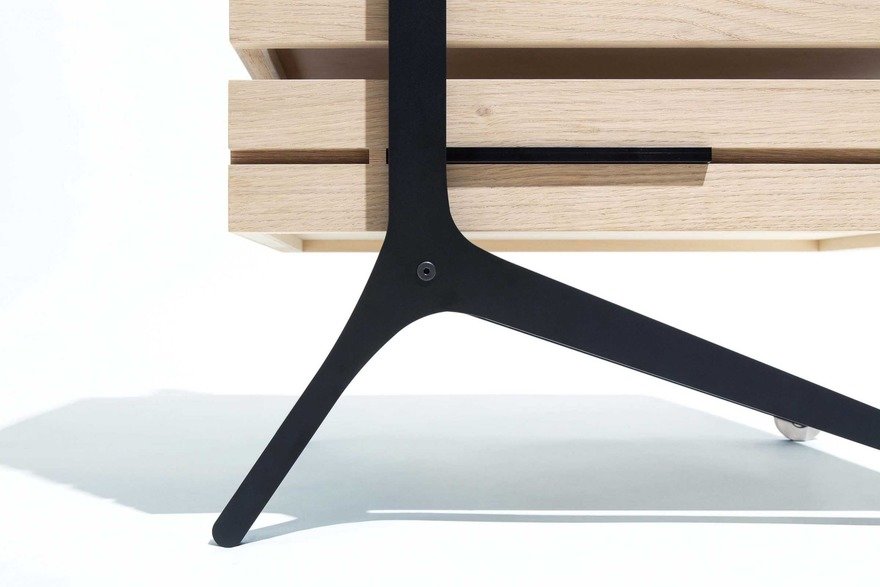
The Bon Drawer is a study in skeletal grace. At its core, it relies on two sweeping, gestural side supports connected by a pair of horizontal tension bars. The structural genius of the piece lies in its internal rail system. Rather than using conventional heavy-duty drawer slides, which require bulky cabinetry, Ashizawa utilized five small square-stock rails welded to the support frame. These rails correspond precisely with grooves carved into the wooden drawers.
The result is a floating effect. The drawers appear to be suspended in mid-air, held by nothing more than the thin steel lines of the frame. To ensure the unit remains practical, Ashizawa integrated a wheel-and-handle system: two wheels mounted at the rear allow for easy transport, while the uppermost crossbar serves as a tactile, ergonomic handle.
The Slybox: A Refinement of Scale
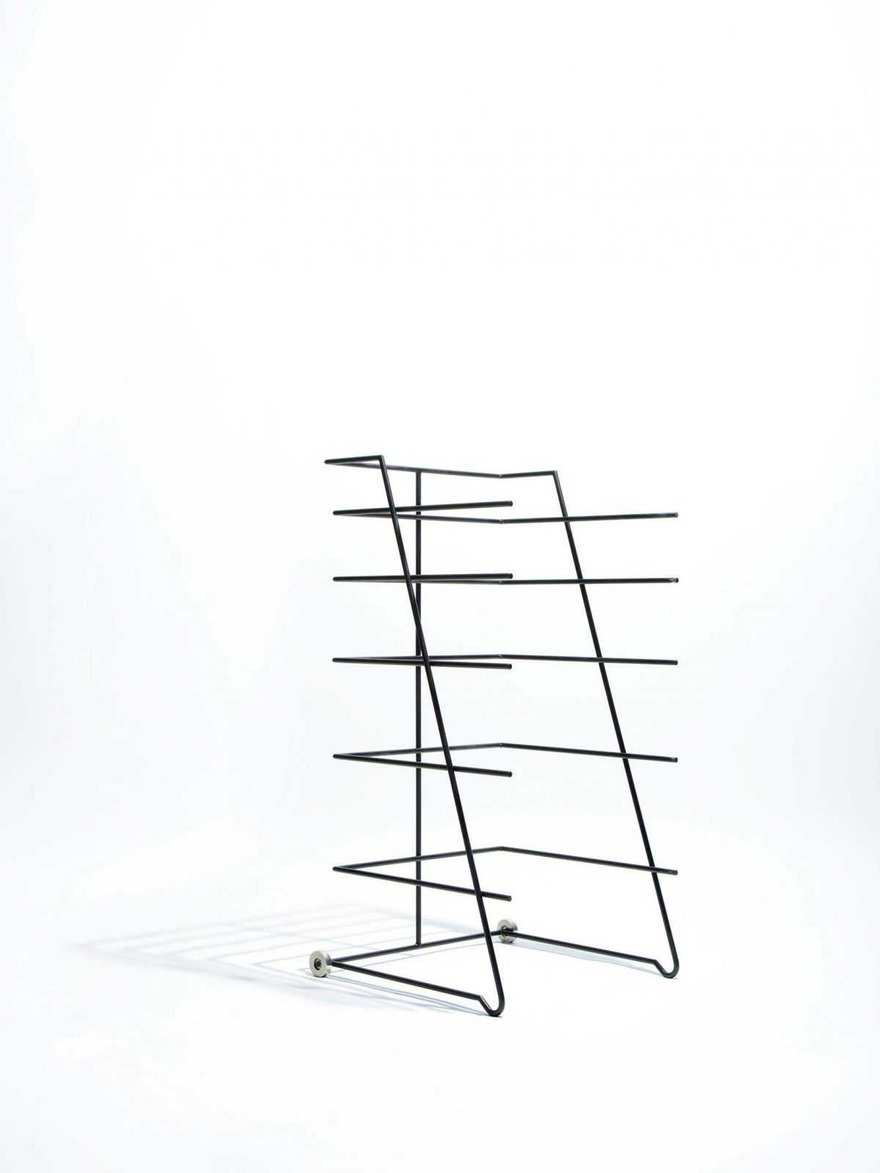
If the Bon Drawer is about structural expression, the Slybox is about refinement and adaptability. Using even thinner tube stock, the Slybox retains the mobile, handle-equipped architecture of its predecessor but shifts the focus toward vertical utility.
The most striking feature of the Slybox is the graduation of the drawer sizes. By varying the depths of the drawers, Ashizawa allows for the storage of diverse objects, from documents to larger desk accessories. Furthermore, the topmost drawer is equipped with a flip-up lid, transforming the unit from a simple storage box into a temporary tabletop or a small pedestal. This modular thinking transforms the piece from a static storage solution into a dynamic piece of workspace equipment.
Supporting Data: The Mechanics of Minimalist Steel
In the realm of industrial furniture, "minimalist" is a term often used to describe aesthetics, but for Ashizawa, it is a structural mandate. By utilizing high-strength steel alloys, he is able to achieve a level of rigidity that would require double the mass if constructed in wood or lower-grade metal.
- Load Distribution: In the Bon Drawer, the horizontal crossbars serve as both handles and lateral stabilizers. This triangulation prevents the "racking" or swaying that typically plagues tall, narrow furniture pieces.
- Tolerance Levels: The integration of square-stock rails into the grooves of the wooden drawers requires extremely tight tolerances. This is where Ashizawa’s metalworking experience proved essential; the gap between the metal rail and the wooden groove is mere millimeters, ensuring a smooth, friction-reduced glide without the need for expensive mechanical slides.
- Material Efficiency: By limiting the structure to a thin-gauge tube frame, Ashizawa reduces the carbon footprint of the materials used. The prototypes represent an effort to do more with less—a core principle of sustainable design that is becoming increasingly vital in the modern furniture industry.
Industry Implications and Future Potential
While the Bon Drawer and Slybox remain prototypes, their impact on the design community is significant. They serve as a bridge between the precision of Japanese craftsmanship and the functionalism of mid-century industrial design.
Why They Didn’t Enter Production
The transition from a prototype to a mass-produced item is fraught with economic hurdles. For pieces as intricate as these, the cost of manufacturing—specifically the precision welding required for the rails and the custom joinery for the drawers—often exceeds the price point of the average consumer market. In many cases, designers like Ashizawa choose to maintain the integrity of their vision by keeping such pieces as limited editions or design studies rather than watering them down to suit a factory assembly line.
The Influence of "Architect-Designed" Furniture
The trend of architects moving into furniture design is not new—from Le Corbusier to Eames—but the "Architect-as-Maker" movement, which Ashizawa represents, is gaining momentum. This movement emphasizes the importance of the process of making. It suggests that if a designer understands how to weld, cast, or join, they are better equipped to design objects that are not just beautiful, but inherently logical.
The Slybox and Bon Drawer offer a blueprint for a new type of office furniture: modular, mobile, and lightweight. As the modern workspace continues to evolve—moving away from fixed desks toward agile, activity-based environments—the need for furniture that can be moved at a moment’s notice has never been higher.
Conclusion: A Legacy of Structural Honesty
Keiji Ashizawa’s mobile drawer designs stand as a testament to the idea that true elegance is found in the removal of the unnecessary. By stripping away the outer casings typically associated with drawer units, he forces the user to confront the structure itself.
Though these specific units may never occupy the aisles of a retail showroom, they serve as a powerful reminder of the value of cross-disciplinary expertise. When an architect is also a craftsman, the result is not merely an object; it is a solution. These experimental drawers remain a hallmark of Ashizawa’s career, capturing a moment where technical skill met aesthetic curiosity, resulting in a design that is, quite literally, moving.
For students and professionals of design alike, the Bon Drawer and Slybox offer a clear lesson: to create something that lasts, one must first understand the physics of what holds it together. Ashizawa’s work continues to inspire because it does not pretend to be anything other than what it is: a honest, beautiful, and functional marriage of steel and wood.
About the Author