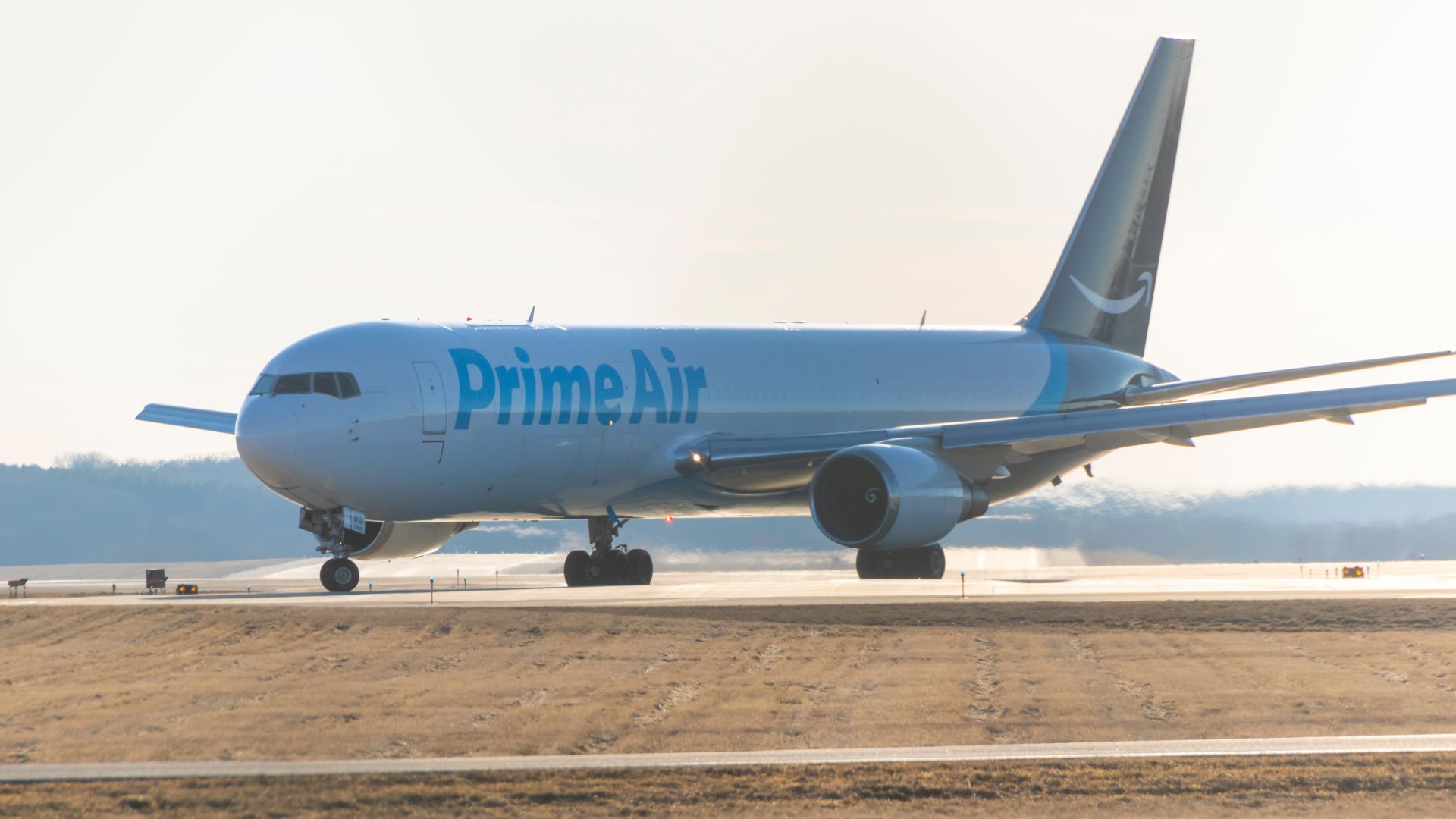
MIAMI — The aviation industry and federal investigators are grappling with a scene of "utter devastation" following a catastrophic runway excursion at Miami International Airport (MIA) that claimed five lives and left several others injured. The incident, involving a Boeing 767-300 converted freighter chartered by Amazon, has triggered a high-stakes investigation by the National Transportation Safety Board (NTSB) to determine why a routine landing turned into a fatal encounter with ground infrastructure.
As authorities comb through the wreckage and analyze the flight’s final telemetry, a chilling narrative of technical anomalies and operational failures has begun to emerge.
The Sequence of Events: A Landing Gone Wrong
The Boeing 767-300, operated by Amazon contractor 21 Air, arrived at Miami International on Sunday afternoon, carrying a cargo manifest that included over 32,000 pounds of contact lenses—a commodity heavily manufactured in Puerto Rico. What should have been a standard arrival became a harrowing sequence of events as the aircraft failed to adhere to conventional landing protocols.
According to NTSB investigator-in-charge Chihoon Shin, the aircraft overshot the standard touchdown zone of the runway. The jet struggled to achieve stable contact with the tarmac, failing to get all three landing gear assemblies firmly on the ground before it careened off the runway surface. In a violent exit from the landing strip, the heavy freighter plowed through multiple fences and struck two vehicles parked in the vicinity before finally coming to a halt in a grassy area situated across a public road.
The impact was absolute. The resulting debris field and structural damage left five people dead, with emergency responders characterizing the scene as one of total destruction.
Chronology of the Final Moments
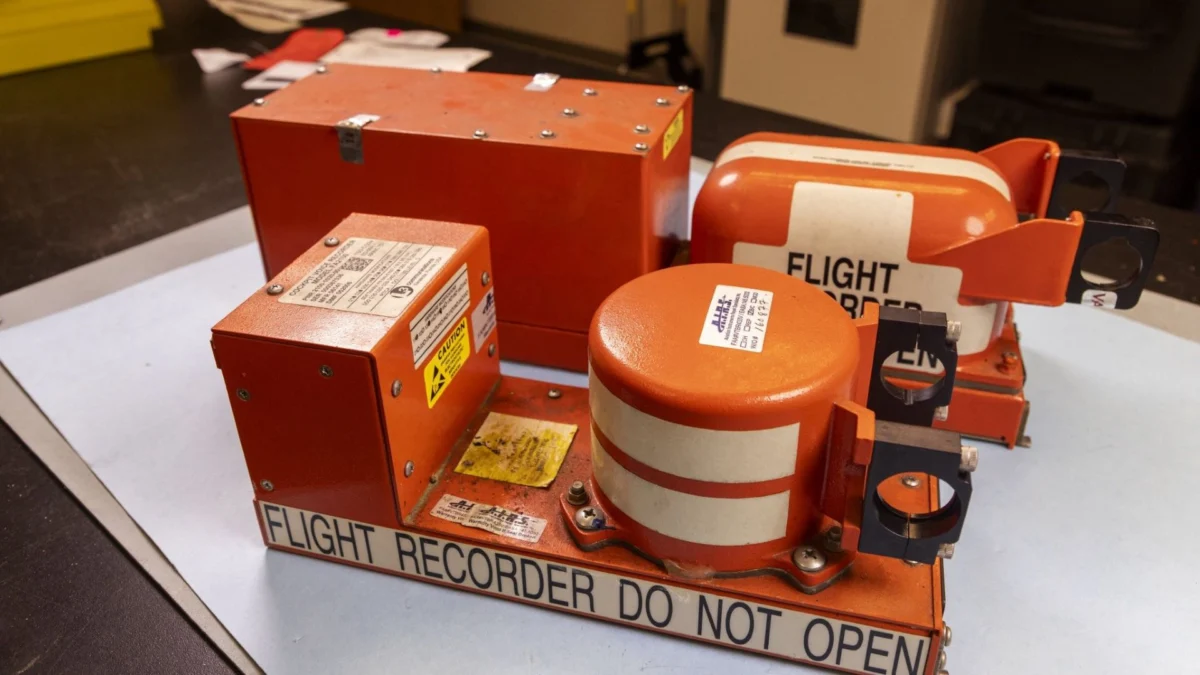
The NTSB’s preliminary review of the flight data recorder (FDR) provides a granular, second-by-second account of the aircraft’s erratic behavior during its final approach.
- Initial Touchdown: The aircraft made its first contact with the runway using its nose and right main landing gear while traveling at a ground speed of 181 mph.
- Deceleration Delay: It took seven full seconds after the initial contact for the flight crew to engage the brakes. Upon engagement, the ground speed dropped to 168 mph.
- Secondary Contact: Four seconds after the brakes were applied, the left main landing gear finally touched down, with the plane recording a ground speed of 154 mph.
- The Critical Error: Only four seconds after the full gear deployment, the flight data indicates that the brakes were released. Simultaneously, the throttles were advanced to a thrust level consistent with a "go-around" maneuver—an attempt to abort the landing and return to the air.
- Final Sequence: The surge in power was short-lived; the throttles were quickly pulled back to idle, and the brakes were reapplied, bringing the aircraft to a final halt at 75 mph.
Investigators have noted with alarm that critical systems designed to assist in rapid deceleration were never deployed during the landing sequence. The decision to advance the throttles to full power just seconds before the crash remains a focal point of the inquiry.
The Human Factor: Pilots and Operational Oversight
The two pilots aboard the flight were employed by 21 Air, a firm that serves as a key logistics partner for Amazon’s massive cargo network. The NTSB has identified the crew as Captain Joseph Carol, 55, and First Officer Jaime Felipe Silva Molina, 37.
Professional records indicate that Captain Carol was experienced, with 7,145 total flight hours and a type rating for the 767-300 obtained as recently as May. First Officer Molina, who added the 767 type rating to his license in April 2025, brought 2,655 hours of experience to the cockpit. Both pilots exceeded the Federal Aviation Administration’s (FAA) minimum requirement of 1,500 hours for commercial airline operations.
As part of the ongoing probe, NTSB Chairwoman Jennifer Homandy announced that investigators are conducting formal interviews with the flight crew. Additionally, leadership from 21 Air—including the chief pilot and assistant chief pilot—are being brought in to explain the company’s internal safety culture and training standards. Investigators have already spoken with the 21 Air flight dispatcher, who was responsible for the preflight planning, weather monitoring, and the tracking of the ill-fated route.
Official Responses and Data Analysis
The NTSB is currently utilizing its state-of-the-art facilities in Washington, D.C., to conduct a deep-dive analysis of the cockpit voice recorder (CVR) and the FDR. A readout of the CVR is expected to be released shortly, which officials hope will provide vital context regarding the verbal communication—or lack thereof—between the captain and the first officer during the final moments of the flight.
"We are looking for the ‘why,’" said a spokesperson for the NTSB. "The data tells us what happened, but the crew accounts will help us fill in the blanks about the intent and the decision-making process that led to these actions."
On the ground in Miami, the recovery phase has been painstaking. Investigators spent Tuesday collecting perishable evidence, including drone footage of the site, high-resolution photography, and physical measurements of tire skid marks left on the runway.
The logistical impact on Miami International Airport has been significant. Following the crash, two of the airport’s four runways were shuttered, causing widespread delays and cancellations. While a section of Runway 8 was cleared for limited, easterly departures by late Tuesday, the incident continues to ripple through the regional logistics chain.
Broader Implications for Cargo Safety
This accident arrives at a time when the demand for air cargo—driven by the rapid expansion of e-commerce giants like Amazon—is at an all-time high. The incident raises uncomfortable questions regarding the safety protocols of third-party contractors and the pace of operations within the air cargo sector.
Industry experts are watching the NTSB’s inquiry closely. The primary concern is whether the incident was the result of a singular human error, a systemic failure in training, or a mechanical quirk of the converted 767 freighter.
For 21 Air, the pressure is immense. The carrier has been actively expanding its operations, recently signaling its intent to acquire larger Boeing 777 cargo jets to better access the long-haul market. The NTSB’s final report will likely determine not only the cause of this specific tragedy but also whether 21 Air’s safety procedures, maintenance schedules, and pilot training regimens meet the rigorous standards expected of modern commercial aviation.
As the investigation proceeds, the aviation community is left to mourn those lost and to await the lessons that will undoubtedly be drawn from this disaster. The NTSB remains committed to identifying the root cause to prevent such a catastrophic runway excursion from ever occurring again.
About the Investigation
- Lead Agency: National Transportation Safety Board (NTSB)
- Key Focus: Evaluation of flight crew decision-making, mechanical functionality of the Boeing 767-300, and adherence to standard landing operating procedures (SOPs).
- Ongoing Activity: Analysis of CVR/FDR data, interviews with 21 Air management, and site forensic reconstruction.
- Public Impact: Ongoing runway restrictions at MIA; potential long-term scrutiny of Amazon’s third-party logistics contractor safety standards.
About the Author