In the world of industrial design, few objects present as persistent a challenge as the humble pepper mill. It is a tool that requires a precise balance of mechanical efficiency and ergonomic intuition. When a user reaches for a grinder, the object must immediately communicate its function—where to grip, how to twist, and where the force should be applied.
With his latest collaboration with the iconic Italian design house Alessi, German industrial designer Konstantin Grcic has sought to resolve this perennial challenge through a stark, industrial vocabulary. The resulting product, the KG01, is a masterclass in reductive geometry and material honesty, transforming a kitchen staple into an architectural statement.
Main Facts: The Anatomy of the KG01
The KG01 is not merely a tool for dispensing salt, pepper, or spices; it is a study in how form dictates behavior. Standing in stark contrast to the often-ornamental nature of kitchenware, the KG01 leans into a utilitarian aesthetic that feels pulled directly from a precision workshop rather than a culinary boutique.
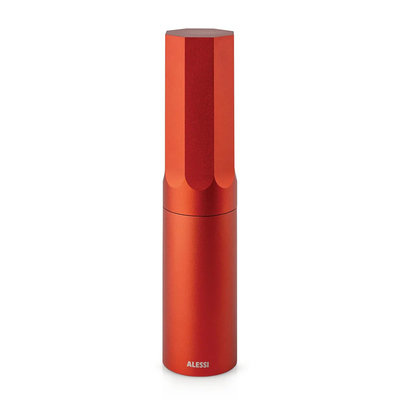
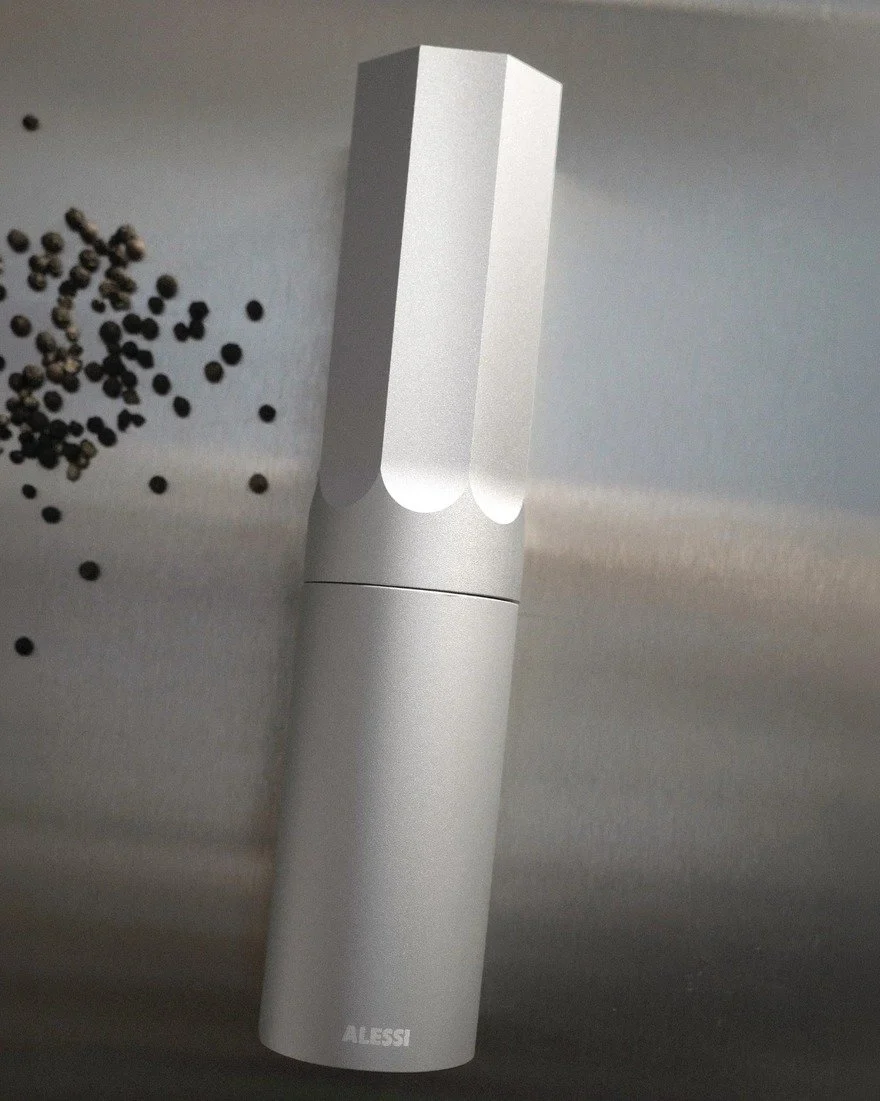
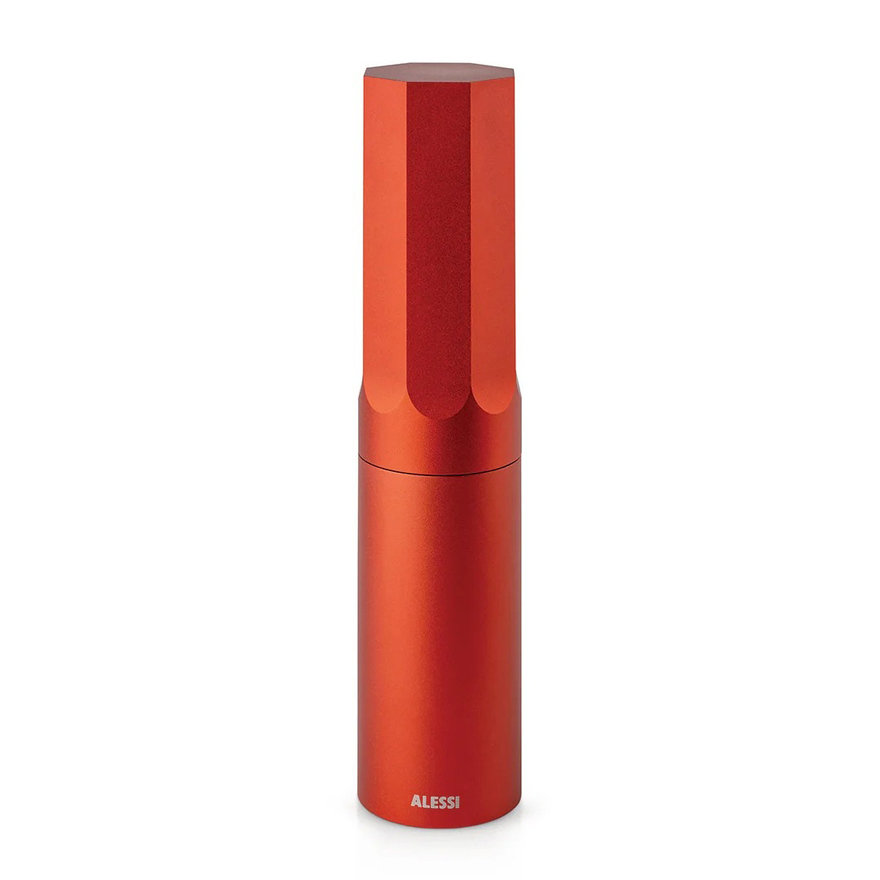
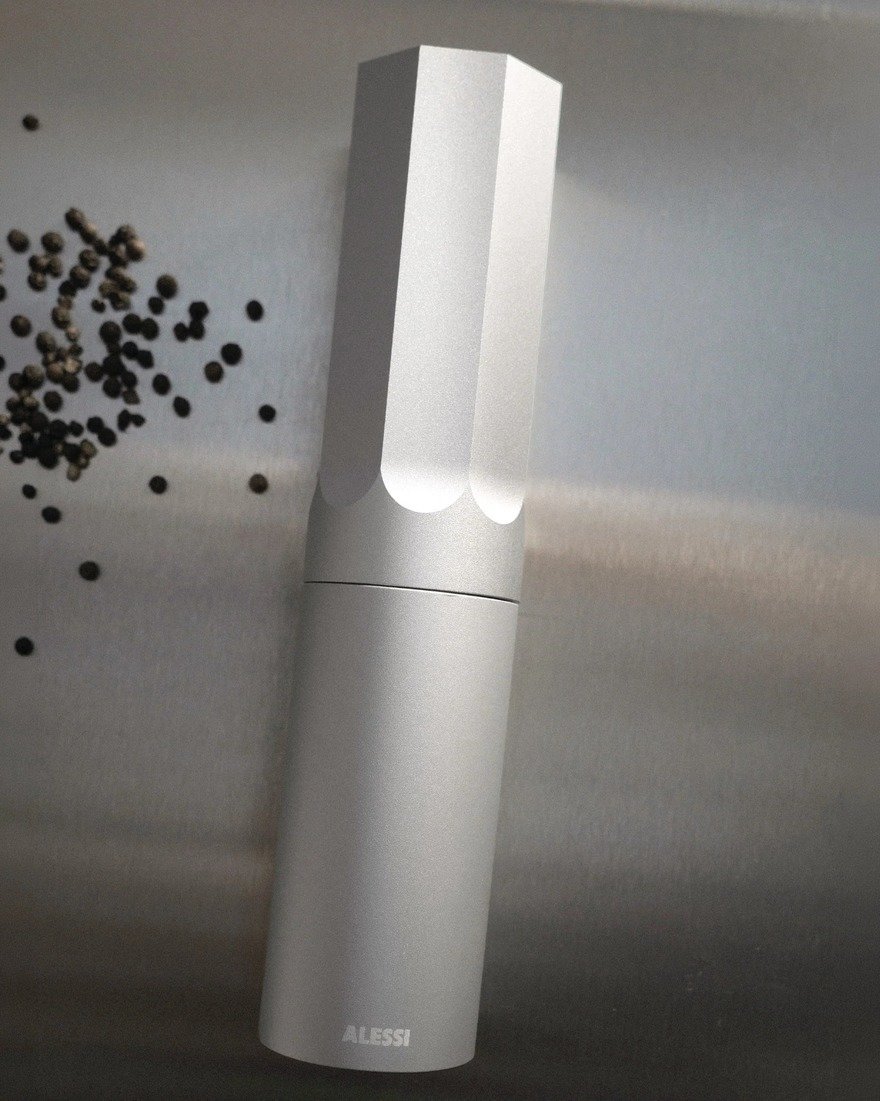
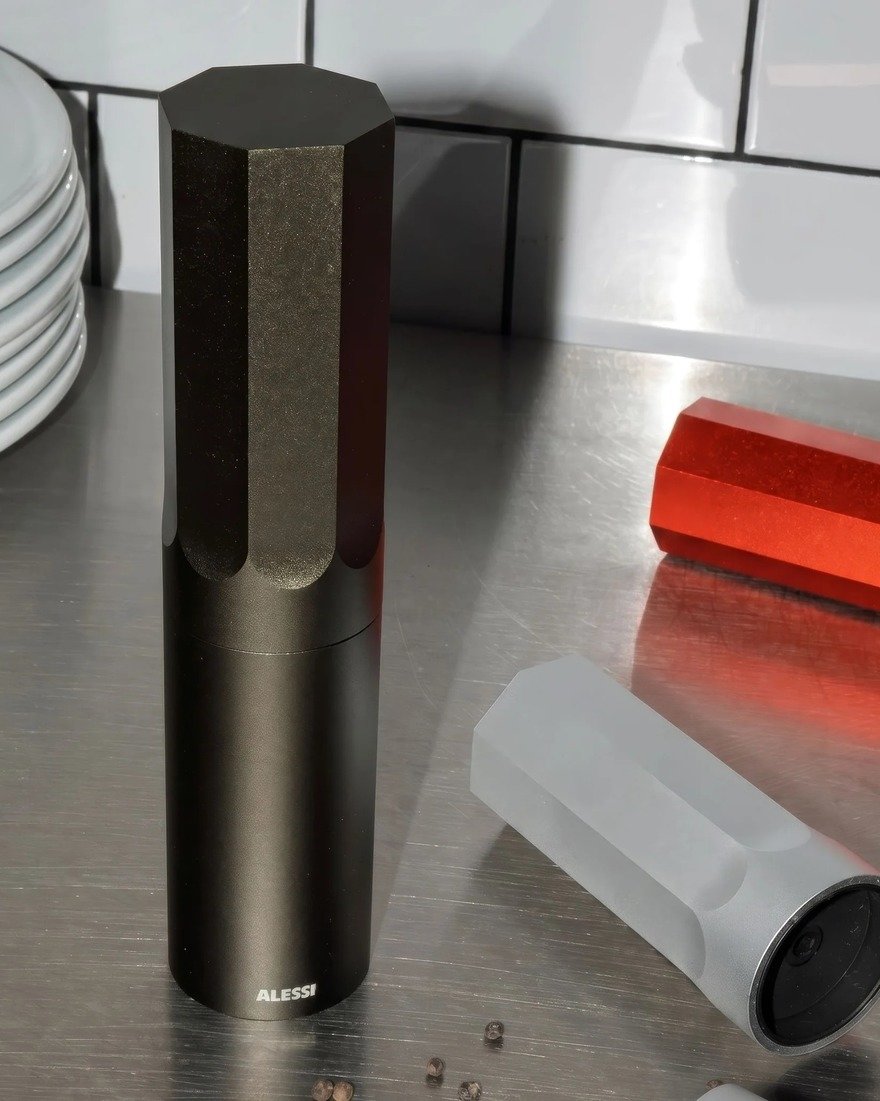
The primary innovation of the piece lies in its structural transition. The grinder features a sleek, cylindrical body that seamlessly shifts into an octagonal profile. This transition is not merely decorative; it is functional signaling. By altering the geometry of the upper section, Grcic provides the hand with a natural, mechanical purchase point. The shift from a round base to an octagonal crown intuitively informs the user exactly where the twisting motion must occur to activate the internal mechanism.
Constructed from high-grade, machined aluminum, the grinder carries a weight and presence that belies its minimalist appearance. The surface is treated with a specialized sandblasted finish, a detail that serves to soften the aggressive industrial look of the metal while providing an unexpected, velvety tactile experience. At a retail price of €90 (approximately $104 USD), the KG01 positions itself in the premium tier of kitchen accessories, bridging the gap between functional household tool and collectible design object.
Chronology: A History of Alessi’s Culinary Innovation
To understand the significance of the KG01, one must place it within the broader historical narrative of Alessi. Founded in 1921 by Giovanni Alessi in Omegna, Italy, the company began as a workshop for brass and nickel silver fruit bowls and trays. Over the decades, Alessi evolved into a “factory of dreams,” famously commissioning high-profile designers—from Philippe Starck to Alessandro Mendini—to push the boundaries of what domestic objects could be.
Konstantin Grcic has long been a key figure in this narrative. Known for his "no-nonsense" approach to design, Grcic’s work often interrogates the relationship between production methods and user experience. His previous collaborations with Alessi have frequently focused on refining existing typologies. The development of the KG01 began with a brief centered on the mechanical requirements of grinding spices.
Designers at Alessi often spend months, if not years, iterating on the internal ceramic or steel grinding mechanisms before the exterior form is finalized. The KG01 project followed this rigorous path, moving from early CAD renderings that prioritized ergonomics to the final production model that reflects the current "industrial-minimalist" trend sweeping European design studios. The shift from wood or plastic—the traditional materials for pepper mills—to machined aluminum reflects a modern shift toward longevity and sustainable material usage in home goods.
Supporting Data: Materiality and Ergonomics
The choice of aluminum as the primary medium for the KG01 is a deliberate departure from the status quo. Aluminum, when sandblasted, offers a unique set of physical properties:
- Thermal Conductivity: The material feels cool to the touch, reinforcing the "industrial" character of the product.
- Surface Durability: Unlike wood, which can absorb moisture and oils from the kitchen environment, the sandblasted aluminum surface is resistant to staining and wear.
- Haptic Feedback: The sandblasting process creates a microscopic texture that increases the coefficient of friction. This is crucial for a grinder; it ensures that even with damp or greasy hands, the user can maintain a secure grip during the torque-heavy motion of grinding peppercorns or coarse sea salt.
From an ergonomic standpoint, the transition from the cylinder to the octagon is the most critical design feature. According to human-factors research in industrial design, the human hand naturally seeks "stops" or "shoulders" on a tool to prevent slipping. By providing eight distinct faces on the upper portion, Grcic has created a shape that naturally locks into the webbing of the thumb and fingers, allowing for maximum torque with minimal effort.
Official Responses: The Alessi Philosophy
In the official documentation accompanying the launch, Alessi highlights the intuitive nature of the piece. "The transition from the cylindrical body to an octagonal profile intuitively guides the twisting motion," the company states. This statement underlines the Alessi ethos: that design should not require an instruction manual.
For Alessi, the KG01 is not just a device for the kitchen; it is a manifestation of the company’s ongoing dialogue with the history of the "industrial object." By stripping away the bells and whistles often found on spice grinders—such as external adjustment knobs or transparent viewing windows—Grcic has returned the object to its essence. The Alessi brand, in promoting this product, is betting on the consumer’s desire for "silent design"—objects that function perfectly without demanding unnecessary visual attention in the kitchen space.
Implications: The Future of Kitchenware Design
The release of the KG01 serves as a bellwether for a broader trend in industrial design: the return to "Hard-Edged Minimalism." For the better part of the last decade, kitchenware design was dominated by "soft" aesthetics—rounded corners, pastel colors, and wood accents. Grcic’s work suggests a pivot toward the raw, the metallic, and the geometric.
Furthermore, the price point and material choice signal an increasing demand for "investment pieces" in the domestic sphere. Consumers are moving away from disposable, low-cost plastic grinders that must be replaced annually. They are gravitating toward objects that possess a "heirloom" quality—items that, like the KG01, are engineered to survive decades of daily use.
The Impact on the Market
While the availability of the KG01 in certain markets, such as the United States, remains subject to regional distribution logistics, its impact is already being felt in the design community. Critics have praised the grinder for its refusal to mimic organic forms, choosing instead to celebrate the machine-made nature of its production.
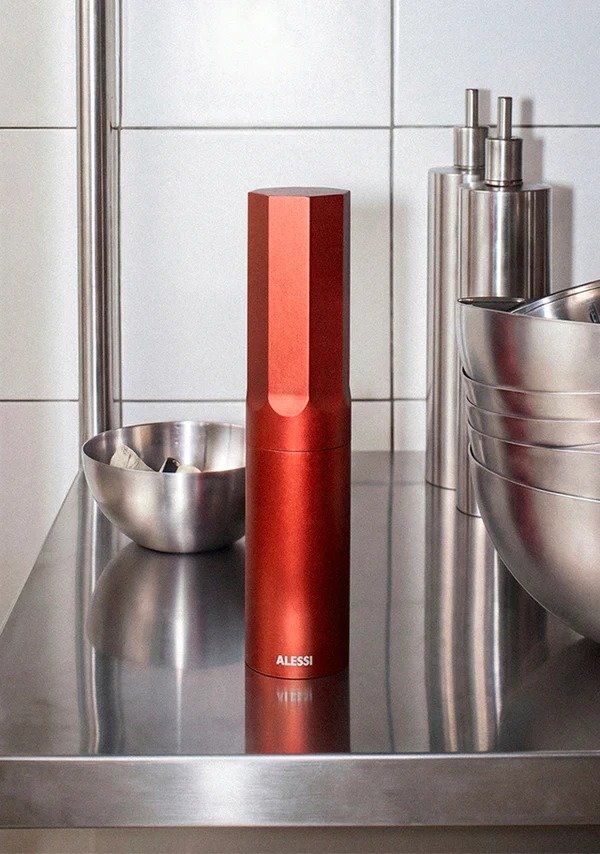
As the kitchen becomes an increasingly central space for social interaction and display, the design of tools like the KG01 becomes a way for the homeowner to signal their appreciation for rigorous, thoughtful engineering. By turning the mundane task of grinding pepper into a tactile experience that highlights the precision of metalworking, Konstantin Grcic has successfully elevated a utilitarian necessity into an object of quiet, industrial beauty.
In conclusion, the KG01 is a testament to the idea that true design innovation does not always require adding new features or smart technology. Sometimes, it simply requires a better understanding of how a hand meets an object, and how the geometry of that object can facilitate the user’s intent. In this, Grcic and Alessi have succeeded in creating a new standard for the modern kitchen.
About the Author