The global container shipping industry, having navigated a period of extraordinary profitability and operational complexity over the past several years, is bracing for a fundamental shift in market dynamics. According to the latest insights from BIMCO’s Container Shipping Market Overview & Outlook, the tailwinds that have propelled the sector throughout 2026—characterized by geopolitical volatility and elongated sailing routes—may soon be eclipsed by a structural imbalance between supply and demand. As the industry looks toward 2027, the confluence of a historic vessel delivery wave and the potential normalization of key maritime corridors presents a challenging outlook for carriers and stakeholders alike.
The State of the Market: A Tenuous Balance
For much of 2026, the container shipping market has defied expectations of a downturn. While global economic conditions remain uneven, the demand for containerized goods has remained surprisingly resilient. During the first seven months of 2026, global container volumes grew by 5.1% year-over-year. This growth has been largely driven by East and Southeast Asian exports, which accounted for more than 50% of the total volume increase.
However, this demand has been met with a unique operational constraint: the diversion of vessels around the Cape of Good Hope to avoid the Red Sea. This necessity has functioned as a massive, involuntary capacity absorption mechanism. By forcing ships to travel longer distances, carriers have effectively soaked up excess supply, preventing a crash in freight rates.
But as Niels Rasmussen, Chief Shipping Analyst at BIMCO, notes, this "artificial" support structure is increasingly fragile. "Disruptions and strong growth in head-haul trades continue to support the container shipping market in 2026, but accelerating fleet growth could weaken the supply/demand balance in 2027," Rasmussen warns.
Chronology of Capacity: From Shortage to Surplus
To understand the predicament of 2027, one must look at the historical trajectory of fleet expansion. In the past five and a half years, the global containership fleet has grown by approximately 10 million TEUs (Twenty-foot Equivalent Units), pushing the total capacity past the 34-million TEU threshold.
The Orderbook Surge
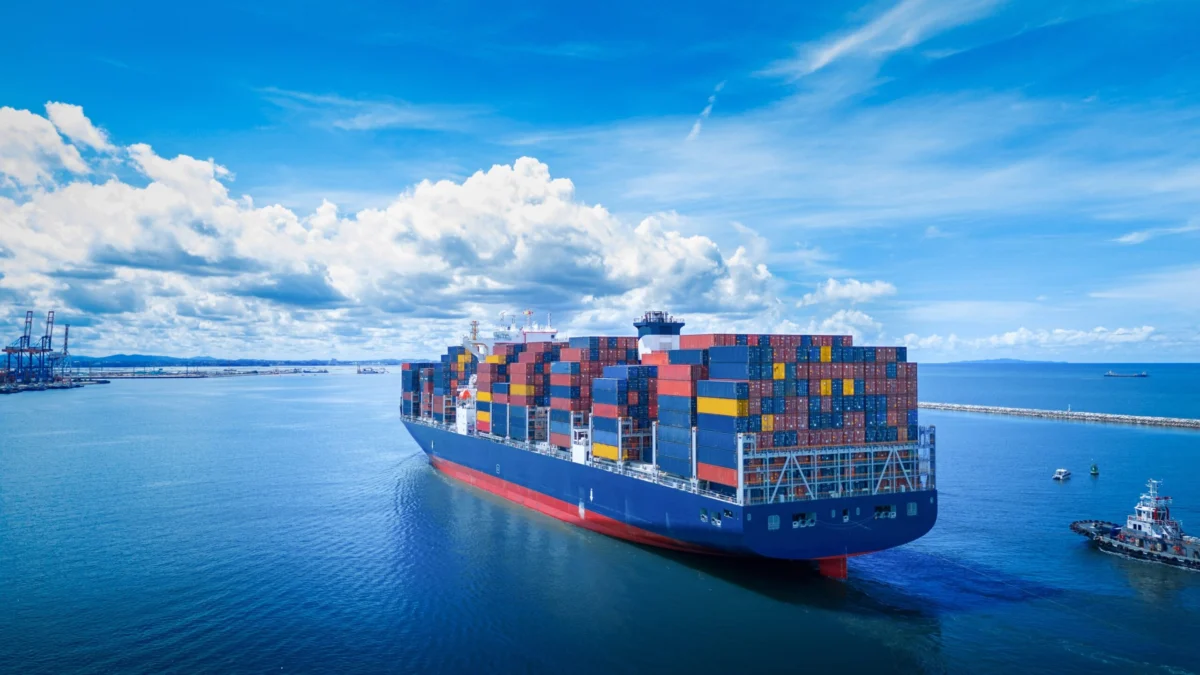
The current orderbook is unprecedented in both scale and composition. Carriers have committed to more than 14 million TEUs of new capacity, an amount equivalent to roughly 42% of the existing global fleet. Unlike previous cycles, the industry is seeing limited vessel recycling. As older, less efficient ships are retained to maintain service coverage, they are not leaving the market to offset the influx of new, massive, energy-efficient tonnage.
- 2026 Snapshot: Fleet capacity is projected to grow by 4.6%. During this year, the market has successfully absorbed this growth due to the "long-haul" effect of Suez diversions.
- 2027 Outlook: Fleet growth is set to accelerate sharply to 9%. This influx of new vessels arrives at a time when the "Cape of Good Hope" buffer may begin to erode, setting the stage for a significant oversupply of capacity.
Supporting Data: Demand vs. Supply
The core of the 2027 concern lies in the divergence between supply-side growth and demand-side reality. While supply is slated to expand by roughly 5% to 6% under current projections, the growth in container demand is expected to remain sluggish.
The Strait of Hormuz Scenarios
BIMCO has modeled two distinct paths for 2027, predicated on the status of the Strait of Hormuz—a vital chokepoint for global energy supplies:
- The "SoH Closed" Scenario: If the waterway remains effectively closed throughout 2027, the resulting energy supply constraints and price volatility are expected to suppress global economic growth. In this environment, container demand growth is forecast to be a meager 0.5% to 2.5%.
- The "SoH Open" Scenario: Should transit conditions return to normal, the global economy would benefit from more stable energy costs, leading to a projected demand growth of 2.5% to 4.5%.
In both instances, the supply of ships is outpacing the appetite for cargo. A prolonged closure of the Strait of Hormuz acts as a double-edged sword: while it keeps some vessels out of the general market, it simultaneously damages the macroeconomic environment required to sustain shipping demand.
Official Responses and Strategic Shifts
Major carriers are already preparing for a transition in routing strategies, which could significantly alter the capacity landscape. Companies such as Maersk and Hapag-Lloyd have begun to test the waters, shifting some services back to the Suez Canal through the Gemini Cooperation. COSCO SHIPPING Lines has also been observed re-introducing large-vessel transits through the Suez.
This strategic pivot is not merely about convenience; it is about efficiency. If the industry shifts back toward the Suez route, the "Cape of Good Hope" effect will evaporate. When voyages become shorter, the same number of ships can perform more rotations in a single year, effectively increasing the "active" capacity of the global fleet without a single new ship being launched.
BIMCO estimates that a gradual normalization of Suez routings could reduce ship-demand growth by five percentage points compared to current forecasts. If a full return to Suez occurs, ship demand could be as much as 10% lower than in a scenario where Cape of Good Hope diversions continue indefinitely.
Implications for the Global Supply Chain
The implications of this potential 2027 "supply shock" are profound for both carriers and shippers.
For Carriers: The Margin Squeeze
For shipping lines, the transition from a seller’s market to a buyer’s market is fraught with risk. The massive capital expenditure invested in the current orderbook must be serviced. If freight rates soften due to overcapacity, the profitability margins seen in 2024 and 2025 could vanish, forcing carriers to reconsider their service speeds (slow steaming) or the frequency of port calls to mitigate the surplus of available tonnage.
For Shippers: A Return to Stability?
For global shippers and beneficial cargo owners (BCOs), the 2027 outlook may offer a silver lining. A market characterized by overcapacity typically results in more competitive freight rates and greater reliability in service scheduling. However, this comes with the caveat of potential instability; if carriers face a prolonged financial crisis, they may be forced to consolidate, withdraw from less profitable trade lanes, or drastically reduce service levels, which could create "service deserts" for smaller markets.
Macroeconomic Ripple Effects
The correlation between shipping capacity and global trade is an indicator of broader economic health. If the shipping industry enters a period of deep stagnation, it often reflects a slowdown in consumer spending and manufacturing output. The combination of high energy prices—linked to the Hormuz situation—and the oversupply of shipping capacity suggests that the global economy may face a "cooling off" period that extends well beyond the maritime sector.
Conclusion: A Turning Point
The container shipping industry is approaching a critical juncture. The decisions made by carriers regarding vessel deployment, the evolution of geopolitical tensions in the Middle East, and the pace at which the Suez Canal regains its status as the world’s primary maritime artery will define the next chapter of global trade.
As Niels Rasmussen aptly summarizes: "While the supply/demand balance has strengthened during 2026, we expect that increased supply growth will drive a weakening of the markets during 2027, especially if a return to Suez Canal routings weakens ship demand."
For the stakeholders of the global economy, 2027 will not just be another year in the shipping cycle; it will be a test of the industry’s ability to manage its own expansion against the backdrop of an uncertain and increasingly volatile world. Whether the market experiences a soft landing or a period of acute turbulence will depend on the speed of the fleet’s integration and the resilience of global consumer demand.
About the Author