For decades, the manufacturing sector has been revolutionized by the philosophy of "Lean." From the assembly lines of automotive giants to the precision workshops of electronics manufacturers, the adoption of 5S methodologies, Kanban workflows, and waste-elimination strategies has become the gold standard for efficiency. Yet, a persistent paradox exists: while production floors have been streamlined, maintenance departments often remain trapped in reactive, inefficient cycles.
Nowhere is this gap more evident than in the management of compressed air systems. Often referred to as a plant’s "fourth utility"—alongside electricity, water, and natural gas—compressed air is essential to industrial operations, yet it is frequently the most overlooked source of systemic waste. By extending lean principles to maintenance procedures, facilities can transition from costly, reactive "firefighting" to a proactive, data-driven culture that significantly slashes operational expenses and bolsters uptime.
The Core Problem: Why Maintenance Remains a Blind Spot
The integration of lean into maintenance is not merely about tidiness; it is about the radical elimination of non-value-added activities. In many industrial environments, maintenance is viewed as a cost center that only springs into action when a machine fails. This "run-to-failure" or "fixed-interval" mindset is the antithesis of lean.
When maintenance is performed strictly on a calendar basis, organizations suffer from "over-processing"—the act of replacing perfectly functional components simply because a specific number of days have elapsed. Conversely, failing to address minor issues until they cascade into system-wide shutdowns is the ultimate form of waste. To achieve true operational excellence, plants must pivot toward predictive, condition-based maintenance that aligns with lean production goals.
Ten Pillars of Lean Maintenance for Compressed Air Systems
Applying lean to compressed air is a journey of incremental improvement. The following ten strategies provide a roadmap for facility managers looking to optimize their systems.
1. The Strategy of Incrementalism: "Slow Down to Speed Up"
Lean is not a race; it is a discipline. Organizations often fail by attempting a total system overhaul overnight. Instead, start by focusing on energy costs. The purchase price of a compressor is a mere fraction of its total cost of ownership; the real expense lies in the electricity it consumes over its lifecycle. By starting small—investing in inexpensive flow monitors one quarter and scaling to comprehensive energy auditing the next—managers can build momentum without overwhelming their budgets.
2. Prioritizing Mission-Critical Functions
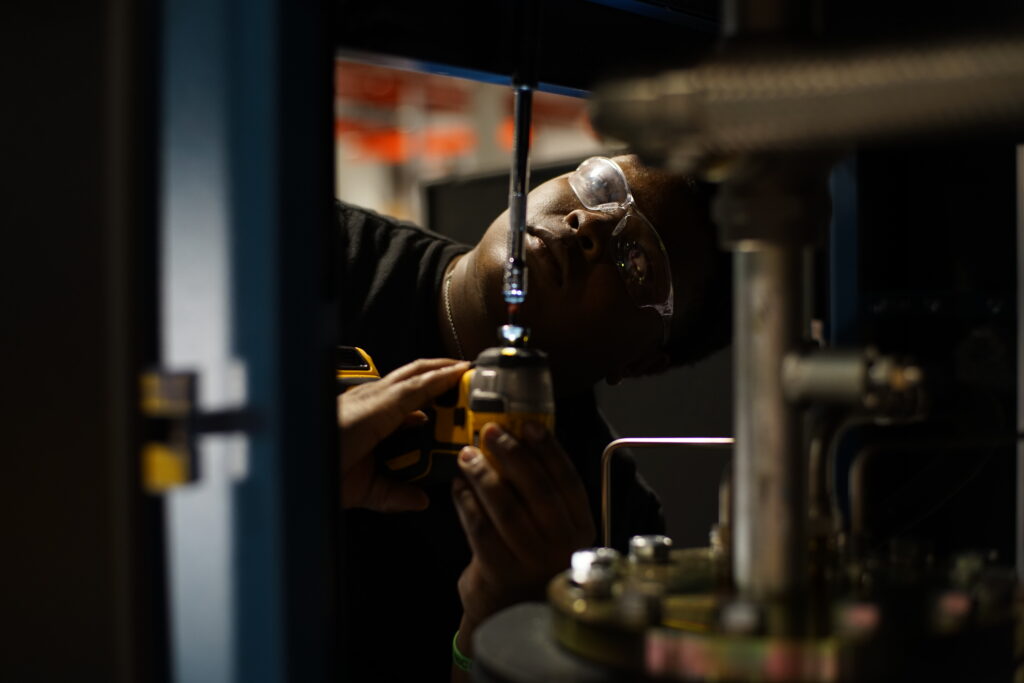
Not all equipment is created equal. Lean maintenance demands that you focus your limited resources on the assets that directly impact production output. Utilizing Overall Equipment Effectiveness (OEE) as a foundational metric, maintenance teams should categorize their assets based on their impact on unplanned downtime. If an air compressor serves a line that is the bottleneck of your entire facility, it deserves a higher frequency of monitoring and a more robust predictive strategy than a non-essential backup unit.
3. Redefining Preventive Maintenance (PM)
The traditional calendar-based PM schedule is often a low bar that masks inefficiency. True lean maintenance treats PM as a minimum requirement rather than a best practice. By shifting toward condition-based maintenance—using real-world data to trigger service events—you eliminate the waste of premature part replacement. If the machine is running optimally, let it run. When the data indicates a decline in performance, that is the moment to act.
4. Hunting the "Purest Form of Waste": Leaks
In compressed air systems, leaks are the most egregious form of waste. It is not uncommon for a neglected system to lose 20% to 30% of its total output to leaks. Every cubic foot of air lost to a crack in a hose or a faulty fitting is a direct hit to the bottom line. Beyond the air loss, leaks force compressors to cycle more frequently, driving up electricity costs and accelerating component wear. A lean approach requires an ongoing, aggressive leak-detection program.
5. Visibility and Baseline Metrics
You cannot improve what you cannot measure. The "North Star" of compressed air efficiency is specific power, measured in cubic feet per minute per kilowatt-hour (cfm/kWh). Establishing a baseline for this metric allows you to track efficiency shifts over time. Following the Lean Six Sigma DMAIC process (Define, Measure, Analyze, Improve, Control) is essential here. As IoT and AI-driven sensors become more affordable, they provide the ability to capture subtle performance data that human operators might miss, allowing for intervention before a catastrophic failure occurs.
6. The 5S Discipline in the Compressor Room
The 5S methodology (Sort, Set in order, Shine, Standardize, Sustain) is as vital in the maintenance shop as it is on the production floor. A dirty, cluttered compressor room is more than an aesthetic issue; it is a functional hazard. Dust accumulation on heat exchanger fins can cause overheating, while oil spills left uncleaned mask the presence of new, developing leaks. Furthermore, a clean, organized parts crib prevents the waste of searching for components or, worse, the disposal of parts for obsolete machines that are no longer in service.
7. Sustainability: Don’t Build What You Can’t Maintain
The most common failure in lean implementation is the "reversion to the mean"—where a team adopts a new process only to abandon it months later. If a new maintenance protocol is too complex for the current staff or requires equipment that cannot be serviced locally, it is destined to fail. Start small and ensure that every process implemented is sustainable within the current organizational culture.
8. The Hunt for Root Causes
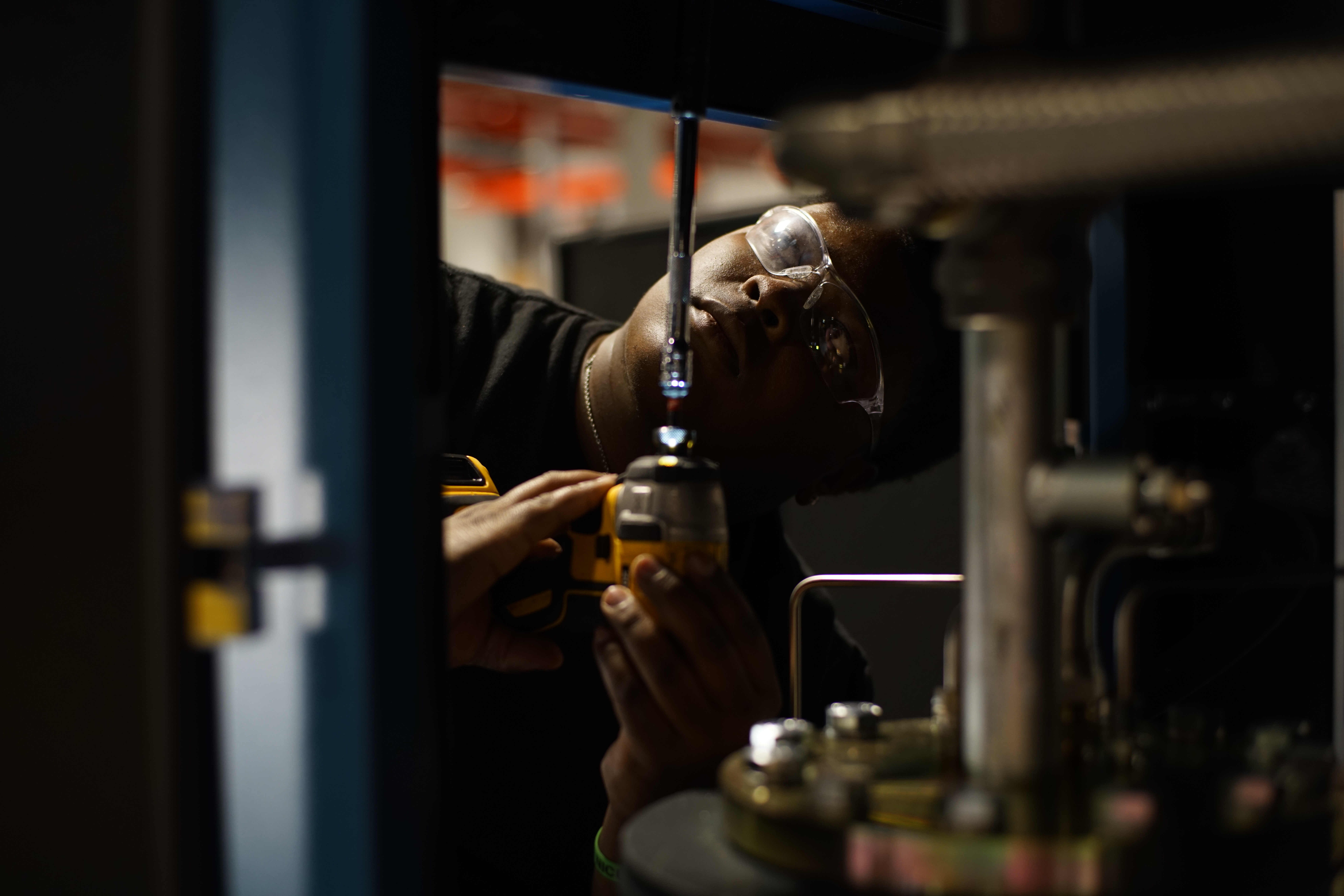
When a problem arises—such as oil carryover in a compressed air line—the temptation is to treat the symptom (e.g., replacing the downstream filter). A lean practitioner digs deeper. Is the scavenge line clogged? Is the oil reservoir overfilled? Is a low-quality, "pirated" part causing the premature failure? Without identifying the root cause, you are merely paying for the same repair repeatedly.
9. The Power of Visual Management
Even with advanced sensors, human observation remains a critical asset. A night watchman or a cleaning crew member who knows what a "normal" machine sounds and looks like is an extension of your maintenance team. Keep your KPIs simple. If a dashboard requires a data science degree to interpret, it is useless on the floor. Use visual cues—like flashing status lights—that make it immediately obvious when a system is deviating from its optimal state.
10. Leveraging Expert Partnerships
There is no shame in seeking external expertise. Compressed air consultants possess the specialized knowledge to conduct comprehensive air audits, identify hidden inefficiencies, and assist in the integration of predictive maintenance software. A partnership based on trust allows your internal team to focus on daily operations while the expert provides the long-term strategic guidance necessary to scale your lean program.
The Role of the CMMS: The Backbone of the Transition
A Computerized Maintenance Management System (CMMS) is the engine that drives a lean maintenance program. It acts as the central repository for every diagnostic test, oil sample, and filter change. However, a CMMS is only as valuable as the data fed into it. To move from reactive to predictive maintenance, teams must:
- Digitize all historical data: Move away from paper logs to cloud-based tracking.
- Automate work orders: Link sensor alerts directly to the CMMS to ensure that maintenance is triggered by machine performance, not the calendar.
- Analyze trends: Use the system to identify recurring issues across multiple compressors to pinpoint systemic, rather than isolated, problems.
Implications for the Future of Manufacturing
The shift toward lean maintenance is not just about saving money on utility bills; it is about transforming the maintenance department into a strategic partner in the company’s success. As industrial plants become increasingly digitized, the ability to process data and act upon it in real-time will define the competitive landscape.
Companies that successfully integrate these lean principles into their maintenance workflows will see a measurable decline in total cost of ownership, a significant increase in equipment lifespan, and a more engaged workforce that understands the value of their contribution to the plant’s overall efficiency. By treating maintenance with the same rigor as production, industrial leaders can ensure that their infrastructure is not just operational, but truly optimized for the demands of the 21st century.
About the Author