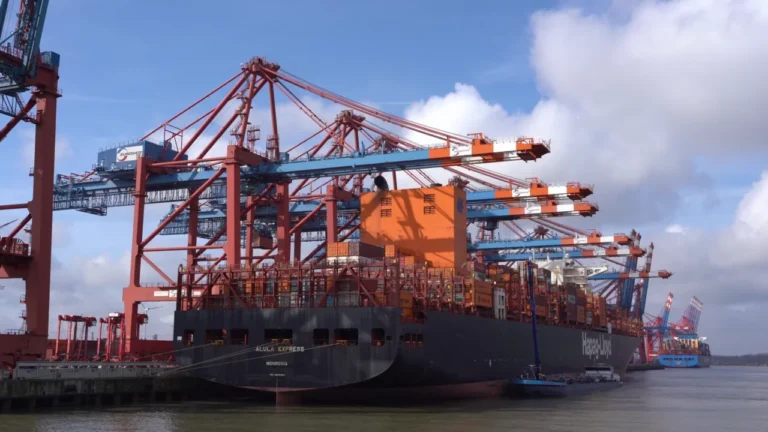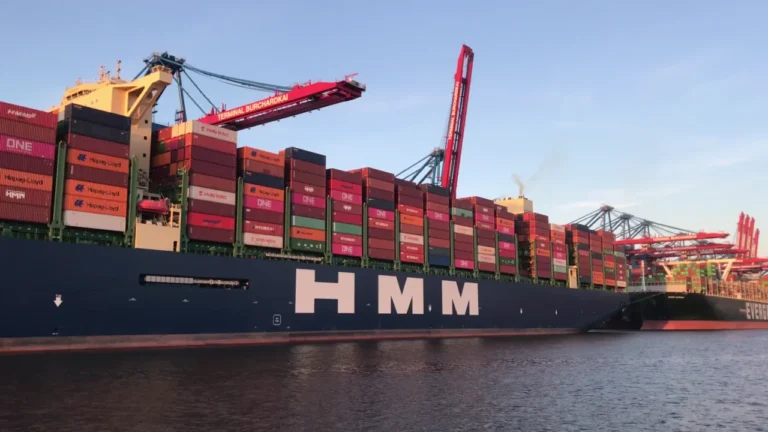
The Port of Los Angeles, the busiest container gateway in the Western Hemisphere, has officially reached a historic milestone in its two-decade-long environmental crusade. According to the recently published 2025 Inventory of Air Emissions, the port has recorded its lowest-ever emissions per container, underscoring a transformative era in maritime logistics where high-volume trade no longer necessitates a proportional increase in environmental degradation.
This achievement marks the latest chapter in a sustained, twenty-year trajectory of aggressive pollution reduction. By decoupling economic productivity from environmental impact, the Port of Los Angeles has set a global benchmark, proving that the world’s most active shipping hubs can effectively modernize their infrastructure while simultaneously slashing the carbon footprint of global commerce.
A Two-Decade Evolution: The Chronology of Change
The story of the Port of Los Angeles’ environmental shift began in earnest in 2005. At that time, the port was a major contributor to regional smog and particulate pollution in the San Pedro Bay area. Recognizing that its operational expansion was tethered to the health of the surrounding communities, the port authority initiated a series of radical policy overhauls.
The Foundation: 2005–2017
The early years of this initiative focused on "low-hanging fruit"—retiring the oldest, most polluting heavy-duty trucks, mandating cleaner marine fuels for incoming vessels, and optimizing rail logistics. This period established the baseline metrics that the port still uses to measure its success today. By 2017, the port had already achieved significant reductions, but the challenges remained immense as global trade volume continued to swell.
The Clean Air Action Plan (CAAP) Update: 2017–2024
In 2017, the Port of Los Angeles, in tandem with the Port of Long Beach, undertook a comprehensive update to the Clean Air Action Plan (CAAP). This was a pivotal moment in the port’s history, as it shifted the strategic focus from mere emission mitigation to the pursuit of zero-emissions operations. The updated plan accelerated the adoption of electric cargo-handling equipment, expanded shore-power capabilities for docked ships, and incentivized the use of cleaner-burning fuels across the harbor craft fleet.
The 2025 Milestone: A New Benchmark
The findings for 2025 are particularly noteworthy because they occur during a year of high demand, with the port processing nearly 10.2 million Twenty-Foot Equivalent Units (TEUs). Despite this surge in throughput, the port managed to drive down diesel particulate matter (DPM), nitrogen oxides (NOx), sulfur oxides (SOx), and greenhouse gases (GHG) across almost every operational category, proving the efficacy of the infrastructure investments made over the previous seven years.
Supporting Data: The Quantitative Impact of Innovation
The breadth of the port’s success is best understood through its granular data, which tracks emissions across five distinct sectors: trucks, cargo handling, harbor craft, ocean-going vessels, and rail.
Heavy-Duty Trucks: The Road to Decarbonization
The transition to cleaner trucking has been one of the port’s most successful programs. In 2025 alone, the displacement of older diesel units with cleaner, more efficient alternatives led to a 16% reduction in DPM and a 25% reduction in NOx in a single 12-month window. Since 2005, the progress is staggering: DPM levels have plummeted by 98%, with NOx and SOx dropping by 94% and 97% respectively.
Cargo-Handling Equipment (CHE)
The port is rapidly electrifying its yard operations. The inventory reveals that the number of electric cargo-handling units rose by 20% in 2025. Today, zero-emission equipment constitutes 14% of the total fleet, while hybrid units have increased tenfold compared to 2017 levels. These shifts have collectively reduced DPM by 83% and NOx by 87% since the program’s inception.
Harbor Craft and Marine Innovation
Harbor craft—the tugs, barges, and ferries that navigate the port—have benefited from a fleet-wide turnover and the widespread adoption of renewable diesel. By 2025, over 55% of the harbor craft fleet met stringent Tier 3 and Tier 4 emissions standards, compared to just 20% in 2017 and 0% in 2005. This transition has been critical in maintaining efficiency while cutting DPM by 69% and SOx by 86% relative to 2005 levels.
Ocean-Going Vessels and Rail
Ships remain the largest source of emissions, yet they have seen the most dramatic relative improvements due to shore-power mandates and the use of cleaner fuels. With 34% fewer ship arrivals than in 2005, combined with better technology, SOx emissions from vessels are down a massive 98%. Simultaneously, the rail sector has seen a 52% reduction in NOx since 2005, driven by the deployment of newer, more efficient locomotives and optimized rail-yard operations.
Official Responses: Leadership Perspectives
The release of the 2025 inventory has prompted reflection from the port’s executive leadership. Los Angeles Harbor Commission President Beatrice Hsu emphasized that while the 20-year milestone is cause for celebration, it is not a destination. "These results demonstrate the success of our long-term strategy, but they also serve as a reminder that we are still on a journey," Hsu stated. "The path to a true zero-emissions future requires constant vigilance, innovation, and a willingness to challenge the status quo."
Gene Seroka, Executive Director of the Port of Los Angeles, echoed this sentiment, framing the data as a victory for the logistics industry at large. "We have proven that high-volume cargo handling and environmental stewardship are not mutually exclusive," Seroka noted. "This progress is the result of years of dedicated investment and collaboration between our terminal operators, labor partners, and regulatory agencies. Our focus now is to double down on the technologies that will push us toward that ultimate goal of zero emissions."
Implications for the Future of Global Logistics
The success of the Port of Los Angeles has far-reaching implications for global maritime policy. By maintaining a rigorous, annual, third-party verified inventory of air emissions, the port has created a transparent framework that other global hubs—from Singapore to Rotterdam—are increasingly looking to emulate.
Technology and Infrastructure
The primary implication of the 2025 report is that technological maturity is reaching a critical tipping point. The increased availability of electric cargo-handling equipment and the feasibility of large-scale shore-power installations indicate that the logistics industry is no longer in a purely experimental phase. The focus has moved toward scaling these solutions across entire supply chains.
Green Shipping Corridors
The port is currently championing the development of "Green Shipping Corridors," which are essentially zero-emission trade routes between major international ports. By collaborating with Asian trade partners, the Port of Los Angeles aims to ensure that emissions reductions continue even after a ship leaves the San Pedro Bay. This collaborative model, supported by partnerships with the South Coast Air Quality Management District, is the new standard for international environmental governance.
Economic Resilience
Perhaps the most significant takeaway for the business world is the proof that environmental regulation can bolster economic resilience. By reducing reliance on volatile fossil fuels and investing in modern, electric infrastructure, the port has shielded itself against some of the inefficiencies and costs associated with traditional, carbon-heavy operations. The ability to handle 10.2 million TEUs while simultaneously lowering the environmental "cost per container" provides a competitive advantage in a market that is increasingly demanding sustainable supply chains.
Conclusion
The 2025 Inventory of Air Emissions confirms that the Port of Los Angeles has successfully navigated two decades of rapid growth without compromising its commitment to the environment. As the port enters its third decade of the Clean Air Action Plan, the focus will undoubtedly shift toward harder-to-abate sectors, such as long-haul heavy-duty trucking and the full decarbonization of the maritime fleet.
However, the foundation is set. With a 90% reduction in diesel particulate matter and a 98% reduction in sulfur oxides over the last 20 years, the Port of Los Angeles has transformed from a source of regional pollution into a beacon of sustainable industrial progress. For the logistics industry, the message is clear: the future of shipping is green, and the infrastructure to support that transition is already being built.
About the Author