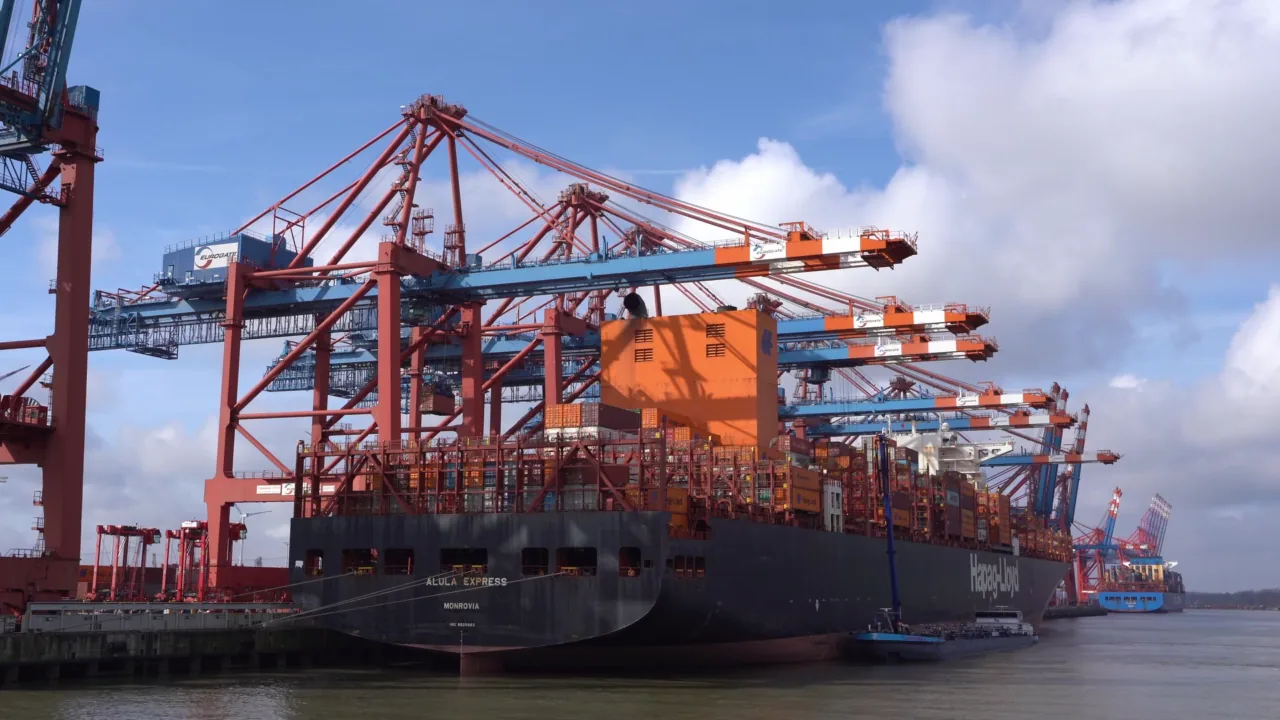
The maritime industry is standing at a pivotal crossroads. As the European Union accelerates its "Fit for 55" legislative agenda, the shipping sector faces a fundamental transformation in its operational costs and fuel selection strategies. Central to this shift is a bold new proposal from the European Commission: the Sustainable Maritime Alternative Propulsion (SMAP) mechanism. By setting aside 110 million carbon allowances from 2028 through 2040, the EU aims to bridge the daunting price chasm between traditional fossil fuels and emerging green alternatives. However, as recent analysis from Rystad Energy reveals, this financial support is far from universal, creating a new, complex hierarchy of fuel viability that will dictate the future of European trade routes.
Main Facts: The Architecture of the SMAP Mechanism
The SMAP mechanism is designed to act as a financial bridge. Recognizing that renewable fuels like e-ammonia and e-methanol currently command prices far exceeding those of Very Low Sulfur Fuel Oil (VLSFO), the European Commission has proposed a targeted subsidy structure.
The core of the proposal relies on the redistribution of 110 million carbon allowances under the EU Emissions Trading System (ETS). These allowances will be auctioned or allocated specifically to offset the price delta for shipping companies opting for sustainable propulsion. The subsidies are tiered:
- 55% Coverage: Applied to the price gap of biogas and advanced biofuels.
- 90% Coverage: Applied to the price gap of renewable fuels of non-biological origin (RFNBOs), such as e-ammonia and e-methanol.
- 100% Coverage: An additional 10 percentage point "bonus" is awarded if the feedstock for these fuels originates within the European Union.
This mechanism is explicitly designed to favor fuels that demonstrate the highest level of decarbonization potential. However, the geographic and technological restrictions are stringent; for instance, the fuel must generally be produced within the EU or in a nation with a carbon market explicitly linked to the EU ETS. Furthermore, support is halved for voyages entering or departing the EU, emphasizing the bloc’s desire to prioritize short-sea shipping and intra-European connectivity while managing the complexities of international maritime law.
Chronology: The Regulatory Timeline
The maritime industry’s path to decarbonization is governed by a series of cascading deadlines that demand immediate strategic planning:
- 2024–2025 (Preparation Phase): Shipping companies are currently finalizing their fleet transition strategies, factoring in the upcoming inclusion of methane and nitrous oxide in the EU ETS.
- January 1, 2026 (Full ETS Liability): This marks a critical milestone. Shipping firms will be required to surrender ETS allowances covering 100% of their verified in-scope emissions. The inclusion of non-CO2 greenhouse gases significantly raises the stakes for vessels powered by LNG or older diesel engines.
- 2026–2028 (FuelEU Maritime Integration): FuelEU Maritime mandates a progressively stricter reduction in the greenhouse-gas intensity of onboard energy. By this point, the interplay between ETS costs, FuelEU credits, and the impending SMAP subsidies will begin to dictate the true cost of operations.
- 2028 (SMAP Activation): The SMAP mechanism is scheduled to go live, releasing the first wave of the 110 million set-aside allowances to support the transition to green fuels.
- 2028–2040 (The Transition Window): This 12-year period represents the primary window for the maturation of the green fuel market, with the SMAP mechanism providing the necessary safety net to encourage early adoption of high-cost, zero-emission technologies.
Supporting Data: A New Cost Hierarchy
Rystad Energy’s comprehensive analysis indicates that the combination of the EU ETS, FuelEU Maritime, and the proposed SMAP will effectively invert the current cost hierarchy of marine fuels.
The Rise of BioLNG and E-Fuels
On intra-EU routes, the economic outlook for bioLNG is surprisingly favorable. Despite having a market price that is double that of VLSFO before incentives, once the FuelEU credits and the SMAP subsidy are applied, the effective cost drops to roughly 50% of traditional bunker fuel. This makes the investment in LNG dual-fuel vessels—already a common choice for modern fleets—an even more compelling business case.
The E-Ammonia Paradox
Renewable fuels of non-biological origin (RFNBOs) receive the most generous treatment under the new rules. On paper, EU-produced e-ammonia could become the cheapest fuel available on intra-EU routes. However, this remains a theoretical advantage. Currently, the global shipping fleet possesses extremely limited capacity to burn ammonia, and the manufacturing infrastructure for green e-ammonia in Europe is still in its infancy. The policy is effectively trying to create a market for a technology that has not yet reached the scale required for mass adoption.
The Exclusion of Waste-Based Biofuels
Perhaps the most controversial aspect of the SMAP proposal is the exclusion of liquid biofuels derived from used cooking oil (UCO) and animal fats. These fuels, which currently constitute the backbone of the sustainable marine fuel market, will find themselves at a distinct disadvantage.
Under the current rules, UCO-based biofuels satisfy every sustainability criterion established by the EU and earn full credit under the EU ETS and FuelEU Maritime. However, they are ineligible for the SMAP subsidy, which restricts eligibility to "advanced biofuels" listed in Annex IX Part A of the Renewable Energy Directive.
Industry analysts warn that this could lead to a supply-side crisis. By 2030, it is projected that crops and waste lipids will account for approximately 96% of Europe’s biodiesel production capacity. With only about 2% of the market eligible for SMAP support, and with the aviation sector also aggressively bidding for these same waste lipids to meet their own sustainable fuel mandates, the maritime industry may find itself effectively priced out of the liquid biofuel market.
Official Responses and Industry Sentiment
The shipping industry’s reaction to the SMAP proposal has been one of cautious engagement. While major shipping lines appreciate the intent to bridge the price gap, there is palpable concern regarding the technical limitations of the proposed fuels.
The International Maritime Organization (IMO) has recently released safety guidelines for ammonia as a marine fuel, a move seen as a necessary precursor to the adoption of the fuels that the EU is attempting to subsidize. However, trade groups have expressed concern that the "geographic bias" of the SMAP mechanism—favoring EU-produced fuels—could lead to trade frictions with major maritime partners.
Furthermore, the European Commission faces pressure from the biodiesel industry, which argues that the exclusion of waste-based biofuels is counterproductive. By penalizing the only sustainable fuel currently available in scale, the Commission risks stalling the immediate, incremental decarbonization of the existing fleet while waiting for "perfect" fuels that may not be ready for another decade.
Implications: The Strategic Outlook for Shipowners
For shipowners, charterers, and fuel suppliers, the implications of these combined rules are profound. The decision-making process for new vessel orders has shifted from simple engine efficiency to a complex calculus of fuel availability, regulatory eligibility, and subsidy maximization.
- The "Drop-in" Advantage: The strong support for bioLNG makes dual-fuel LNG vessels the most "future-proof" investment for companies operating in European waters. Because bioLNG can be used in existing infrastructure, it offers a pragmatic pathway that hedges against the uncertainty of the e-fuel market.
- Asset Risk: Ships optimized for fuels that are ineligible for SMAP—such as traditional biodiesel—face a significant risk of becoming stranded assets as the cost of compliance with the EU ETS rises, and as competing fuels are artificially made cheaper through subsidies.
- The Infrastructure Gap: The reliance on EU-produced e-fuels highlights a looming infrastructure deficit. If the European Union cannot scale the production of e-ammonia and e-methanol at the speed the legislation demands, shipping companies will be left with high-cost, compliant mandates and no fuel to burn.
- Supply Chain Competition: The competition with the aviation sector for feedstocks is set to intensify. Shipping companies will likely need to engage in long-term, direct-purchase agreements with fuel producers to secure the sustainable biofuels that remain available, regardless of whether they are covered by the SMAP mechanism.
In conclusion, the EU’s proposed SMAP mechanism is an ambitious attempt to force a market shift toward zero-emission fuels. By prioritizing deep-decarbonization fuels like e-ammonia and biogas, the EU is effectively picking "winners" in the race to net-zero. However, the exclusion of widely used waste-based biofuels presents a significant short-term risk to the industry. As the 2026 and 2028 deadlines approach, the shipping sector must move beyond traditional bunker procurement and begin to view fuel as a strategic, long-term investment that is as much about navigating complex European policy as it is about crossing the open sea.
About the Author