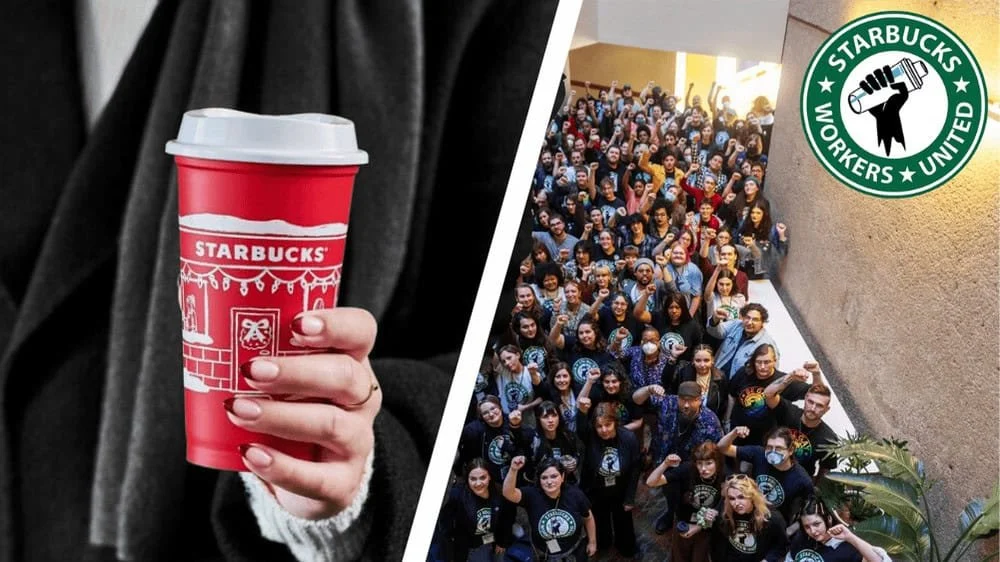
For years, Starbucks has meticulously curated an image as a progressive titan of the service industry—a company that prides itself on "partners," health benefits, and a corporate culture that emphasizes social responsibility. Yet, on November 14, the coffee giant’s most celebrated promotional event, Red Cup Day, transformed from a festive marketing engine into a flashpoint for a burgeoning labor movement.
As the "Red Cup Rebellion" unfolded across 65 stores, the narrative was no longer just about baristas and corporate management; it had evolved into a high-stakes political showdown. With elected officials from the company’s home base of Seattle to the streets of New York City openly calling for boycotts, Starbucks finds itself at a precarious crossroads. CEO Brian Niccol, only months into his tenure, is discovering that the labor disputes he inherited are no longer confined to the breakroom—they have moved into the halls of power.
The Anatomy of the Strike: A Chronology of Conflict
The events of November 14 were the culmination of months of simmering tension. To understand how the situation escalated to this point, one must look at the timeline of the "Red Cup Rebellion."
- November 12: U.S. Senator Patty Murray (D-WA) issued a formal letter to Starbucks CEO Brian Niccol, explicitly urging the company to accelerate good-faith negotiations with Starbucks Workers United. Murray’s intervention signaled that the labor dispute had moved beyond local storefronts and into the federal political arena.
- November 13: The pressure shifted from the administrative to the performative. Seattle Mayor-elect Katie Wilson appeared at the picket lines outside the company’s iconic Reserve Roastery in Seattle. In an unprecedented move, she publicly endorsed a boycott of the coffee giant, signaling a dramatic shift in the relationship between Seattle’s political establishment and its most famous corporate resident.
- November 14 (Red Cup Day): Baristas at 65 locations across the United States walked off the job. The union, Starbucks Workers United, chose this specific day—the company’s highest-traffic promotion of the year—to maximize visibility. Throughout the day, digital platforms were flooded with images of empty stores and picket lines, effectively turning a day intended for brand celebration into a PR crisis.
- The Post-Strike Climate: Following the walkouts, the rhetoric has only intensified. Elected officials, including New York City Mayor-elect Zohran Mamdani, have doubled down on their support for the workers, effectively turning the "No Contract, No Coffee" slogan into a mainstream political rallying cry.
The Shift in Political Calculus
Labor disputes at major retail chains typically remain localized affairs, managed by human resources departments and legal counsel. The Starbucks situation is a glaring exception. The involvement of high-profile political figures like Wilson and Mamdani represents a fundamental shift in how labor movements interact with municipal power.
Why Politicians Are Taking Sides
For progressive politicians, supporting the Starbucks union is no longer a fringe stance; it is a litmus test for alignment with the labor movement. Starbucks is an easy target because of its own marketing. By positioning itself as a "third place" that champions ethical sourcing and worker well-being, the company has set a high bar for its own conduct. When reality fails to match the marketing, the resulting hypocrisy provides a potent narrative for elected officials.
Senator Patty Murray’s involvement is particularly significant. Representing the state where Starbucks is headquartered, Murray’s letter to Niccol was a stark warning: the company is losing the support of its own home-state political establishment. When a company’s local base turns on it, the cost of the status quo becomes exponentially higher.
The "No Contract, No Coffee" Movement
Zohran Mamdani’s explicit call for a boycott in New York City has galvanized a segment of the consumer base that might otherwise have been indifferent to the technicalities of collective bargaining. By tying the act of purchasing a beverage to the moral outcome of the strike, these politicians have effectively weaponized consumer choice. The "No Contract, No Coffee" mantra serves as a simple, digestible call to action that resonates with the broader public, making it increasingly difficult for Starbucks to frame the issue as a mere internal dispute.
The Core Grievances: Beyond the Hourly Wage
While the media coverage focuses on the high-profile boycotts, the workers on the ground are fighting for systemic changes that have been requested for over two years. The frustrations are multifaceted:
- Staffing Levels: One of the most common complaints among baristas is the "under-staffed, over-extended" reality of modern Starbucks operations. As the company pushes for faster drive-thru times and complex, highly customized drink orders, workers report that staffing levels have not kept pace with the workload.
- Predictable Scheduling: In an industry where hours fluctuate based on corporate projections, workers are demanding more stability. For many, the lack of a consistent schedule makes it impossible to manage childcare, education, or secondary employment.
- The Bargaining Stagnation: Perhaps the most significant driver of the strike is the lack of a finalized contract. Despite over 500 stores voting to unionize since 2021, the company has yet to sign a collective bargaining agreement. Workers feel that the company is employing a "wait-and-see" strategy, hoping to exhaust the resolve of the union organizers.
The union’s decision to strike on Red Cup Day was a direct response to this perceived stalling. By hitting the company where it hurts—during a peak promotional event—they have demonstrated that their bargaining power is not just about labor, but about the company’s ability to execute its retail strategy.
CEO Brian Niccol’s Baptism by Fire
Brian Niccol assumed the role of CEO in September 2024, arriving with a reputation for operational brilliance honed at Chipotle. However, the Starbucks landscape is vastly different from the fast-casual burrito chain. At Chipotle, Niccol’s focus was on supply chain efficiency and digital growth. At Starbucks, he has inherited a brand that is deeply intertwined with the social and political identities of its employees and customers.
Niccol’s challenge is twofold: he must improve the operational efficiency of a massive, global supply chain, and he must reconcile a fractured relationship with his workforce. If he continues to approach the union as an obstacle to be "managed" rather than a partner to be negotiated with, he risks deepening the public relations damage. The involvement of politicians suggests that the "operational" solution—simply waiting for the union to fade—is no longer viable.
Implications for the Future of Retail
The Starbucks "Red Cup Rebellion" is serving as a bellwether for the retail industry at large. As other major chains face increased unionization efforts, the Starbucks case is being studied as both a warning and a template.
A New Era of Corporate Responsibility
The trend toward public political involvement in labor disputes suggests that the boundary between private sector management and public interest is blurring. Companies that market themselves on "progressive values" will find that they are held to a standard that includes the treatment of their own staff. For a brand like Starbucks, silence or indifference is no longer an option.
The Cost of Stagnation
The economic cost of the strikes is measurable—lost revenue on Red Cup Day, potential long-term damage to brand loyalty, and the distraction of management from core business goals. However, the intangible costs may be greater. When elected officials join picket lines, the company loses its "social license to operate" in those municipalities.
The Path Forward
For Starbucks to move past this, it will need to pivot from a posture of legalistic resistance to one of genuine, good-faith negotiation. This means finalizing contracts that address the core issues of staffing and scheduling. The "Red Cup Rebellion" has proven that the union is capable of mobilizing not just its members, but the political and public opinion levers necessary to force a change in the company’s trajectory.
As the holiday season progresses, the question remains: will Starbucks choose to double down on its current labor strategy, or will it recognize that the political and social landscape has shifted permanently? If the events of November 14 are any indication, the "No Contract, No Coffee" cry is not fading away. It is a signal that the relationship between the worker and the corporation has entered a new, more confrontational chapter, and the world is watching to see who blinks first.
About the Author