In the modern landscape of product design, the "smart" revolution has been defined by complexity. From connected switches to LED-integrated interfaces, our daily tools increasingly rely on batteries, sensors, and circuit boards to communicate status. However, a groundbreaking development from the Massachusetts Institute of Technology (MIT) suggests that the future of intuitive design may not lie in silicon, but in the precision of light and geometry.
Researchers at MIT’s Department of Electrical Engineering and Computer Science (EECS) have unveiled ShiftLens, an innovative system for 3D-printing lenticular objects that provide clear, visual feedback without a single volt of electricity. By harnessing the physical properties of light refraction and spatial alignment, the team has created a methodology that allows inanimate objects to "talk back" to their users, signaling when they are engaged, locked, or properly calibrated.
The Mechanics of ShiftLens: A Breakdown of the Innovation
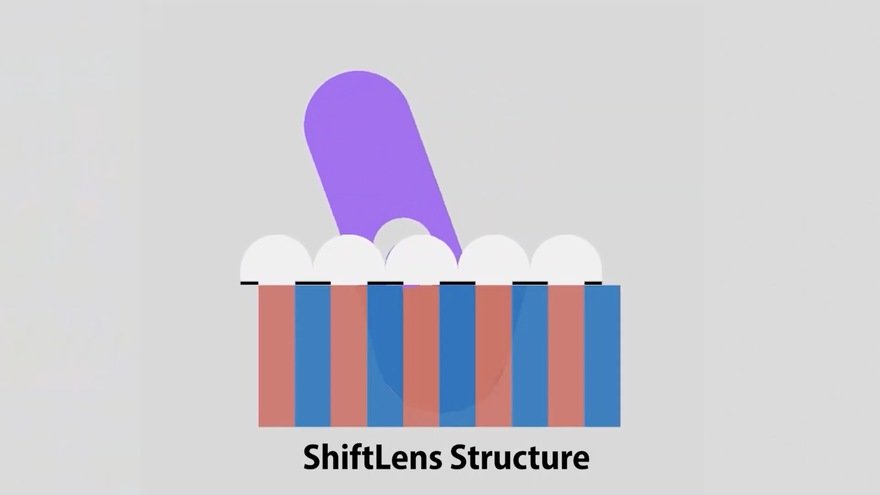
At its core, ShiftLens is an elegant marriage of additive manufacturing and optical physics. Traditionally, lenticular printing—the technology responsible for those "moving" stickers and vintage postcards—relies on a series of thin, magnifying lenses layered over an interlaced image. As the viewer’s angle changes, different slices of the image beneath are magnified, creating the illusion of animation or color shifts.
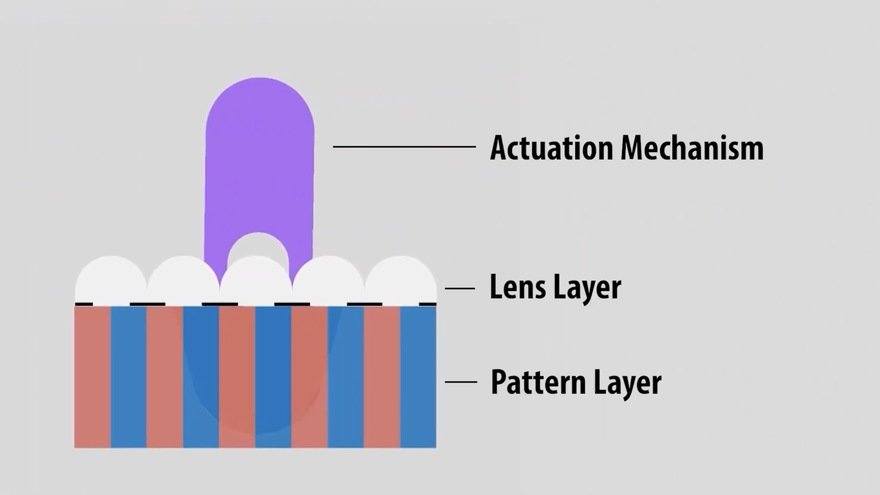
The MIT team has successfully miniaturized and adapted this concept for the 3D printer. The ShiftLens system consists of two primary components:
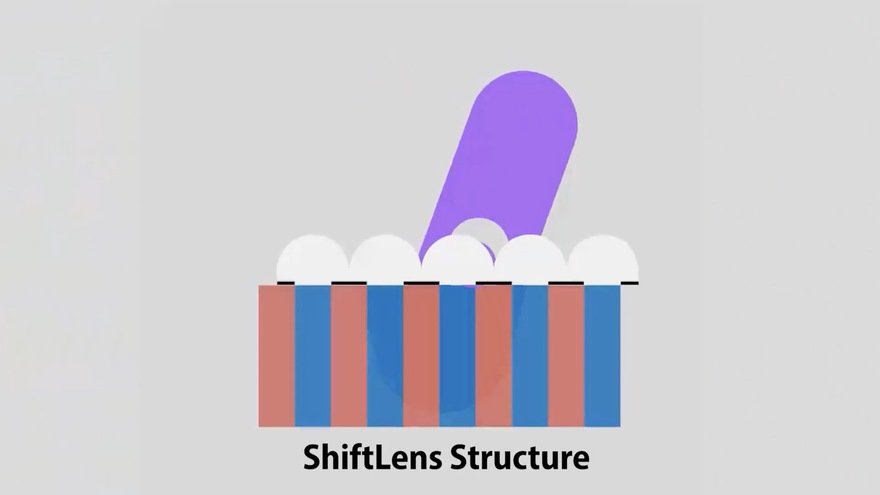
- The Outer Lens Layer: A transparent, 3D-printed housing featuring a series of precision-engineered linear lenses.
- The Pattern Layer: A base layer printed in contrasting colors, featuring a series of stripes meticulously aligned with the focal points of the top lens.
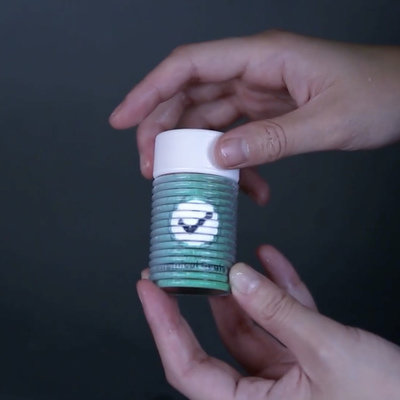
When these two layers are integrated into a moving mechanism, the magic happens. As the user moves the lens layer—perhaps by twisting a cap, sliding a switch, or rotating a cylinder—the refraction pattern changes. The lenses shift their focus across the underlying stripes, causing the object to visually "flip" from one state to another. Whether it is a color shift from red to green, or a geometric shift from a warning symbol to a confirmation checkmark, the change is instantaneous and requires no external power source.
Chronology of Development: From Concept to Physical Prototype
The genesis of ShiftLens lies in the intersection of mechanical engineering and human-computer interaction (HCI). While the concept of lenticular displays is over a century old, applying it to complex 3D-printed geometries presented significant challenges in software modeling and material science.
Phase 1: Conceptualization
The researchers began by questioning the necessity of electronic indicators. In environments where electronics are prone to failure—such as harsh chemical labs, high-humidity industrial settings, or disposable medical packaging—the need for a robust, "low-tech" alternative became the primary design driver.
Phase 2: Design Tool Development
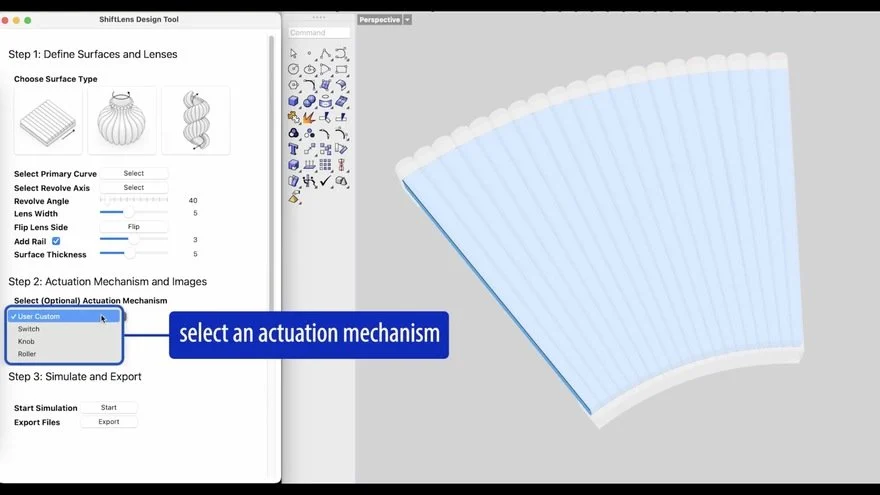
To make the process accessible, the team developed a specialized design tool that integrates directly with Rhino, a popular 3D modeling software. This software allows designers to calculate the precise curvature of the lenses and the exact width of the underlying color stripes based on the intended viewing angle and object geometry. This was the critical hurdle: ensuring that the "animation" remained crisp across curved surfaces rather than becoming blurred or distorted.
Phase 3: Prototyping and Validation
The team moved to additive manufacturing, utilizing high-resolution stereolithography (SLA) printers to achieve the necessary clarity in the transparent lenses. Early prototypes focused on flat surfaces before expanding into cylindrical and complex contoured forms. The final proof-of-concept involved a chemical container that indicates a "locked" state only when the lid is twisted to the precise threshold required for safety, effectively replacing a digital sensor with a mechanical visual cue.
Supporting Data: Why "Low-Tech" Matters
The ShiftLens project is not merely an aesthetic choice; it is a response to the sustainability and reliability crisis in the consumer electronics market. The implications of this research are supported by several key considerations:
- Environmental Sustainability: The "Right to Repair" movement and the growing mountains of e-waste highlight the dangers of over-engineering. By replacing a battery-powered status LED with a ShiftLens element, manufacturers can reduce the use of rare earth minerals, plastic casings for internal components, and the carbon footprint associated with manufacturing microcontrollers.
- Operational Reliability: Sensors fail. Batteries leak. Firmware crashes. In high-stakes environments, such as medical device manufacturing or chemical handling, the failure of an electronic indicator could be catastrophic. A ShiftLens display is passive; it operates as long as the material remains intact, offering a level of "passive reliability" that active electronics cannot match.
- Energy Efficiency: For IoT devices that rely on long-term battery life, every milliampere counts. ShiftLens removes the power draw of status indicators entirely, allowing the device’s energy budget to be dedicated solely to its primary function.
Official Responses and Researcher Insights
Yunyi Zhu, a graduate student within the MIT EECS department and a lead researcher on the project, emphasizes that the goal is to enhance user intuition.
"With our system, an object can tell you whether you are using it properly, without the need for sensors or any complicated electronics," Zhu stated in a recent interview. "The interactive display is mechanical, so you can create a self-contained, multistate, interactive device that a user can control very intuitively."
The team’s perspective shifts the burden of interaction from the "smart" device back to the physical design. By making the interface a physical part of the object’s form factor, the user is provided with immediate, tangible feedback. The response from the design community has been largely positive, with engineers praising the system’s potential for integration into mass-produced items where cost-per-unit is a significant factor.
Implications: The Future of "Smart" Without the "Electronics"
The ShiftLens research serves as a precursor to a new philosophy in design: Mechanical Interaction Design. If we can achieve complex communication—such as progress bars, status updates, and warning indicators—through light and geometry, the necessity of digital displays begins to shrink.
Potential Industry Applications:
- Medical Packaging: Imagine a pill bottle that uses a ShiftLens to show a "Used" icon once the cap is turned, preventing accidental double-dosing without the cost of a smart-cap.
- Industrial Safety: In a manufacturing plant, heavy machinery could have manual override switches that change color from orange to grey when fully engaged, providing a visual safety check for workers from across the floor.
- Consumer Goods: From kitchen appliances to toys, the ability to add "animation" to 3D-printed parts without assembly lines for electronics could revolutionize the hobbyist and small-batch manufacturing sectors.
The Path Forward
The team is currently exploring how to make the design tool more accessible. While there has been no official announcement regarding a public plugin release for Rhino, the academic community is already theorizing ways to translate the ShiftLens methodology to other CAD platforms like SolidWorks or Fusion 360.
As additive manufacturing technologies continue to improve, the precision of the lenses will likely increase, allowing for smaller, higher-resolution displays. We are moving toward a future where our objects are "smart" not because they are connected to a cloud, but because they are designed to be perfectly clear in their function.
In conclusion, ShiftLens represents a significant shift in how we think about the "smart" label. By looking backward at the principles of optics and forward at the capabilities of 3D printing, MIT researchers have reminded us that the most sophisticated interface is often the one that works without a power cord. As we continue to refine our relationship with the objects around us, systems like ShiftLens offer a compelling vision of a more sustainable, durable, and intuitive material world.
About the Author