Podcasting has evolved from a niche hobby into a dominant force in the global media landscape. As the barrier to entry continues to drop, an unprecedented number of business owners, creative entrepreneurs, and thought leaders are flocking to the medium to amplify their voices. Whether you are aiming to build authority in your industry or cultivate a dedicated community, the path to launching a successful podcast has never been more accessible—or more competitive.
The State of the Industry: A Steady Upward Trajectory
The growth of podcasting is not merely anecdotal; it is backed by robust data. According to research from Buzzsprout, the number of podcast listeners surged by 29.5 percent between 2018 and 2021. This growth trajectory shows no signs of plateauing. As of 2022 and beyond, the medium continues to capture a larger share of the "audio-on-demand" market, effectively challenging traditional terrestrial radio and television for the average consumer’s attention span.
For content creators, this represents a significant opportunity. A podcast serves as a multifaceted tool: it is a platform for deep-dive storytelling, a vehicle for SEO improvement, and a direct channel to engage with a target audience. However, the sheer volume of new podcasts necessitates a higher standard of production quality. Today’s listeners are discerning, and audio clarity is often the primary factor in whether a listener returns for a second episode.
The Technical Foundation: Essential Gear for Professional Sound
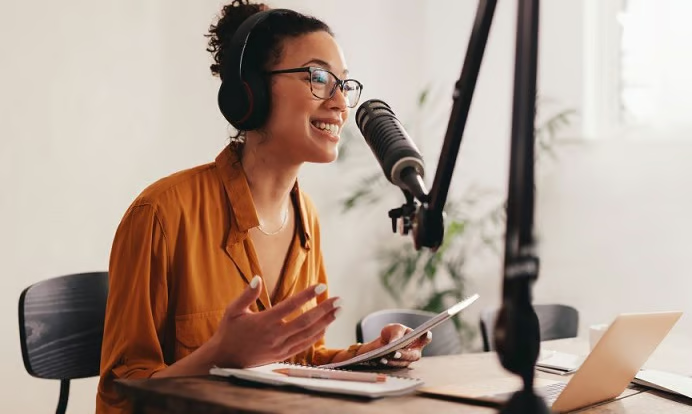
The journey to a successful podcast begins with your recording setup. While the market is flooded with options, the distinction between "amateur" and "professional" often boils down to a few key hardware choices.
Understanding the Microphone Landscape
Before purchasing, you must navigate the technical terminology that defines modern audio equipment. The two primary connection types you will encounter are XLR and USB.
- USB Microphones: These are the gold standard for beginners. They plug directly into your computer, acting as a plug-and-play solution that requires no additional interface.
- XLR Microphones: These require an external audio interface or mixer to connect to your computer. While this adds complexity and cost, it offers superior audio fidelity and allows for a more scalable, professional studio setup.
Furthermore, you must choose between dynamic and condenser microphones. Condenser mics are highly sensitive, capturing crisp vocals and nuanced high frequencies—perfect for a controlled studio environment. Dynamic mics, conversely, are rugged and less sensitive to background ambient noise, making them ideal for less-than-perfect home offices or multi-host recording sessions.
Recommendations for Every Budget
- Budget USB: The Blue Snowball iCE remains a premier entry point, offering remarkable clarity for its price point in a compact, simple design.
- Premium USB: The HyperX QuadCast S is a standout, featuring an anti-vibration shock mount and customizable RGB lighting that appeals to creators who also stream on platforms like Twitch or YouTube.
- Budget Dynamic: The Rode PodMic is widely considered the industry benchmark for affordable, broadcast-quality sound. It is robust, rich in tone, and built to withstand the rigors of frequent recording.
- Premium XLR: The Shure SM7B is the industry standard for professional podcasters. Its internal air suspension and pop filter effectively eliminate the mechanical noise and "breathiness" that can plague amateur recordings.
The Importance of Environment and Monitoring
Even the most expensive microphone will struggle in a poor acoustic environment. Echo, reverberation, and outside interference can destroy an otherwise stellar recording.
Soundproofing vs. Acoustic Treatment
Many beginners confuse soundproofing (blocking noise from entering the room) with acoustic treatment (improving the sound quality within the room). To achieve a professional sound, you should invest in Aokeo Studio Recording Microphone Isolation Shields or DEKIRU Acoustic Foam Panels. These tools mitigate the "room tone" and background reflections, ensuring your voice remains front and center.
The Role of Monitoring
Never underestimate the necessity of studio headphones. While standard earbuds might seem sufficient, dedicated studio headphones like the beyerdynamic DT 770 PRO offer a "flat" frequency response, allowing you to hear exactly what your listeners will hear. This is critical for identifying technical issues—such as plosives, clipping, or feedback—in real-time, preventing the need for costly re-recordings.
The Role of the Mixer: Control and Versatility
As your podcast grows to include multiple hosts or remote guests, a mixer becomes an indispensable tool. A mixer allows you to manage gain levels for multiple microphones individually, ensuring that one guest isn’t significantly louder than another.
For those requiring portability, the Zoom PodTrak P4 has revolutionized remote interviewing. Its built-in "mix-minus" feature solves the age-old problem of audio feedback during remote calls, a common technical hurdle for new creators. For those stationary, the RODECaster Pro serves as an all-in-one production studio, offering sound pads for instant music triggers and professional-grade audio processing.
Post-Production: Crafting the Final Cut
Recording is only half the battle. Your choice of Digital Audio Workstation (DAW) will define your workflow.
- Audacity (Free/Open Source): The best starting point for beginners. It provides all the essential tools for cutting, splicing, and basic noise reduction.
- GarageBand (macOS/iOS): A highly intuitive, user-friendly interface that comes pre-installed on Apple devices. It is perfect for those who want a polished look without a steep learning curve.
- Adobe Audition & Pro Tools: These are the professional industry standards. They provide advanced spectral editing and multi-track mixing capabilities that are essential for high-production-value shows.
Marketing: Building a Community, Not Just an Audience
A podcast is only as good as its reach. Once you have produced a high-quality episode, your focus must shift to a strategic marketing plan.
Social Media Synergy
Your social media presence should be an extension of your show. Use platforms like LinkedIn, Instagram, or TikTok to share "micro-content"—short, punchy video clips or quote cards that highlight the most compelling moments of an episode. Tools like Hootsuite or Buffer can help maintain a consistent posting cadence, ensuring your audience remains engaged between episode drops.
The Power of Email
Social media algorithms can be fickle, but your email list is yours to own. A newsletter allows you to provide deeper value to your listeners, such as show notes, exclusive links, or early access to merchandise. Platforms like MailChimp or Constant Contact provide the necessary infrastructure to manage these relationships effectively.
Implications for Future Growth
The podcasting landscape is currently in a state of professionalization. As the medium matures, the "low-effort" era is coming to a close. Successful podcasters in the coming years will be those who treat their show as a brand, investing not just in the content, but in the technical and strategic infrastructure required to sustain growth.
By focusing on high-fidelity audio, effective sound treatment, and a robust multi-channel marketing strategy, you are not just launching a podcast—you are building a sustainable media asset. The tools, software, and strategies outlined here serve as a roadmap. The rest—the storytelling, the guest curation, and the consistency—is up to you. In an increasingly noisy world, a well-produced podcast is a powerful way to cut through the static and find your audience.
About the Author