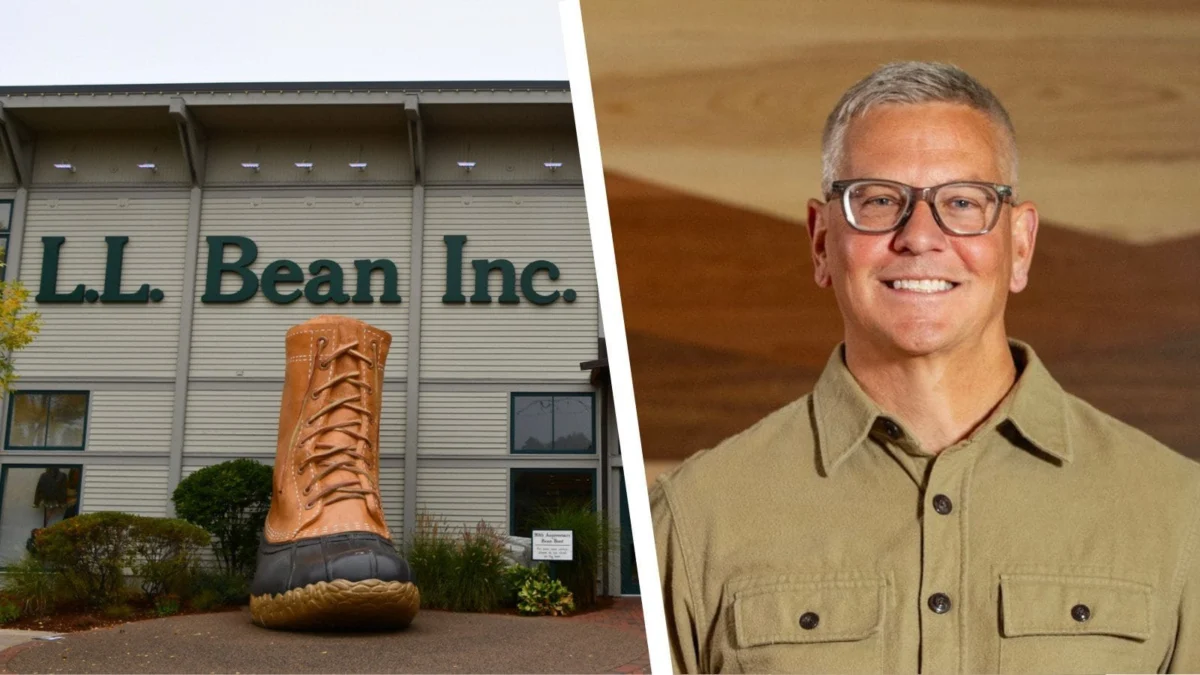
In a move that signals a commitment to continuity and deep-rooted institutional knowledge, iconic outdoor retailer L.L.Bean announced on Friday that Greg Elder, the company’s current chief retail officer, has been tapped to serve as its fifth president and CEO. Elder is set to assume the helm during the first quarter of 2025, a transition period that coincides with the company closing its 114th fiscal year in late February.
The appointment marks the conclusion of a rigorous seven-month executive search that began in July, when outgoing CEO Stephen Smith announced his intention to step down after a decade-long tenure. Smith will remain with the organization in an advisory capacity through March to ensure a seamless leadership transition.
The Chronology of a Leadership Transition
The succession process at L.L.Bean is the culmination of a decade of change under Smith, who steered the Maine-based retailer through the unprecedented disruptions of the COVID-19 pandemic and a broader cultural shift within the organization.
- July 2024: Stephen Smith announces his resignation after ten years of leadership, triggering a nationwide search for a successor.
- Late 2024: The L.L.Bean board of directors evaluates internal and external candidates, emphasizing the need for a leader who understands the delicate balance between maintaining the company’s 114-year legacy and adapting to modern retail demands.
- February 2025: L.L.Bean concludes its fiscal year.
- Q1 2025: Greg Elder officially takes over as CEO, with Stephen Smith transitioning into an advisory role to assist with the handover.
Greg Elder is no newcomer to the organization. Joining the company in 2007, his tenure spans nearly two decades, during which he climbed the corporate ladder through roles including vice president of retail and vice president of stores. Before his time at L.L.Bean, Elder honed his craft at industry stalwarts like Eddie Bauer and the Dayton Hudson Corporation—the retail giant now known as Target. This background provides him with a multi-faceted understanding of the industry, ranging from mass-market retail to specialized outdoor apparel.
Supporting Data and Operational Footprint
L.L.Bean’s reach extends far beyond its historic home in Freeport, Maine. The company currently maintains a robust physical and digital footprint that Elder has been instrumental in managing.
- Retail Network: The company operates 68 brick-and-mortar stores across 19 U.S. states.
- International Presence: Through strategic partnerships, L.L.Bean operates 25 locations in Japan and 14 in Canada, the latter managed in collaboration with the Jaytex Group.
- Flagship Success: The Freeport, Maine flagship store remains a retail titan, drawing approximately 3 million visitors annually, serving as both a commercial hub and a pilgrimage site for outdoor enthusiasts.
- Executive Experience: In his most recent role as Chief Retail Officer, Elder oversaw the store fleet, wholesale partnerships, international operations, and direct-to-business channels. This experience is critical, as it bridges the gap between the company’s heritage "catalog-first" identity and the omnichannel reality of the 21st-century retail environment.
Official Responses and Vision for the Future
The board of directors, led by Shawn Gorman—the great-grandson of founder Leon Leonwood Bean—expressed high confidence in Elder’s ability to steward the company into its next century.
"Greg rose to the top because of his deep respect for our history, incredible knowledge of our business, strong track record of results, and clear vision for the future," Gorman stated. "He embodies the values that have sustained this company for over a century."
For his part, Elder has defined his primary objective as an "evolve and amplify" strategy. While the specifics of this roadmap—such as target geographic expansions or precise financial KPIs—remain under wraps, Elder has indicated that the focus will remain squarely on refining the product assortment and deepening customer relationships.
"Our focus remains on the core pillars that have defined L.L.Bean: quality, customer service, and an unwavering commitment to our outdoor heritage," Elder noted in internal communications. "My priority is to evolve our operations to meet the modern shopper where they are, while amplifying the elements of our brand that make us unique in the marketplace."
Implications for a Heritage Retailer
The appointment of an internal successor like Elder brings both security and scrutiny. In the retail sector, hiring from within is often seen as a move to stabilize the corporate culture and maintain the "soul" of a brand. However, it also raises questions regarding innovation.
The Innovation Paradox
For heritage retailers, the transition of power is rarely just about logistics; it is about relevancy. Elder’s challenge will be to determine if nearly twenty years inside the same corporate structure will facilitate or hinder the bold changes necessary to compete with agile, direct-to-consumer outdoor brands.
Industry analysts point out that while Elder possesses the "operational DNA" required to run the business, he must now demonstrate the capacity for disruption. Does an internal promotion signal a continuation of the status quo, or is Elder uniquely positioned to pivot because he knows exactly where the "friction points" are within the current system?
Omnichannel and Digital Evolution
L.L.Bean has historically been a leader in mail-order retail, but the current retail landscape demands a sophisticated digital presence. Elder’s background as Chief Retail Officer gives him a distinct advantage here, as he has seen how physical stores and e-commerce interact in real-time. The company’s stated commitment to developing "omnichannel capabilities" suggests that the next few years will see a more seamless integration between the digital shopping experience and the in-store expertise for which L.L.Bean is famous.
Cultural Transformation
Under outgoing CEO Stephen Smith, the company underwent what it described as a "cultural transformation." While the company did not release specific metrics regarding this initiative, the change in leadership suggests that the board is looking for a leader who can sustain the cultural morale of the organization while pushing for growth. Elder’s service on the board of the Retail Industry Leaders Association (RILA) and his past involvement with community organizations like the New England Nordic Skiing Association suggest a leader who is well-connected to broader industry trends and values corporate social responsibility.
Looking Ahead
As L.L.Bean approaches its 115th year, the transition from Smith to Elder marks a definitive turning point. The outdoor retail market has become increasingly crowded, with competitors utilizing high-tech fabrics, aggressive social media marketing, and sustainable manufacturing claims to capture the interest of younger, eco-conscious consumers.
Elder’s "evolve and amplify" strategy will likely be tested by the realities of a shifting global economy and changing consumer habits. His success will depend on his ability to honor the legacy of Leon Leonwood Bean—who built the company on the simple, radical promise of a 100% satisfaction guarantee—while ensuring that the brand remains a "must-have" for the next generation of outdoor adventurers.
Whether Elder is the architect of a new era or the guardian of a traditional one will become clearer as he outlines his specific growth objectives in the coming months. For now, the L.L.Bean community—from its Freeport headquarters to its thousands of employees worldwide—waits to see how a man who has spent two decades inside the house will choose to renovate it.
About the Author