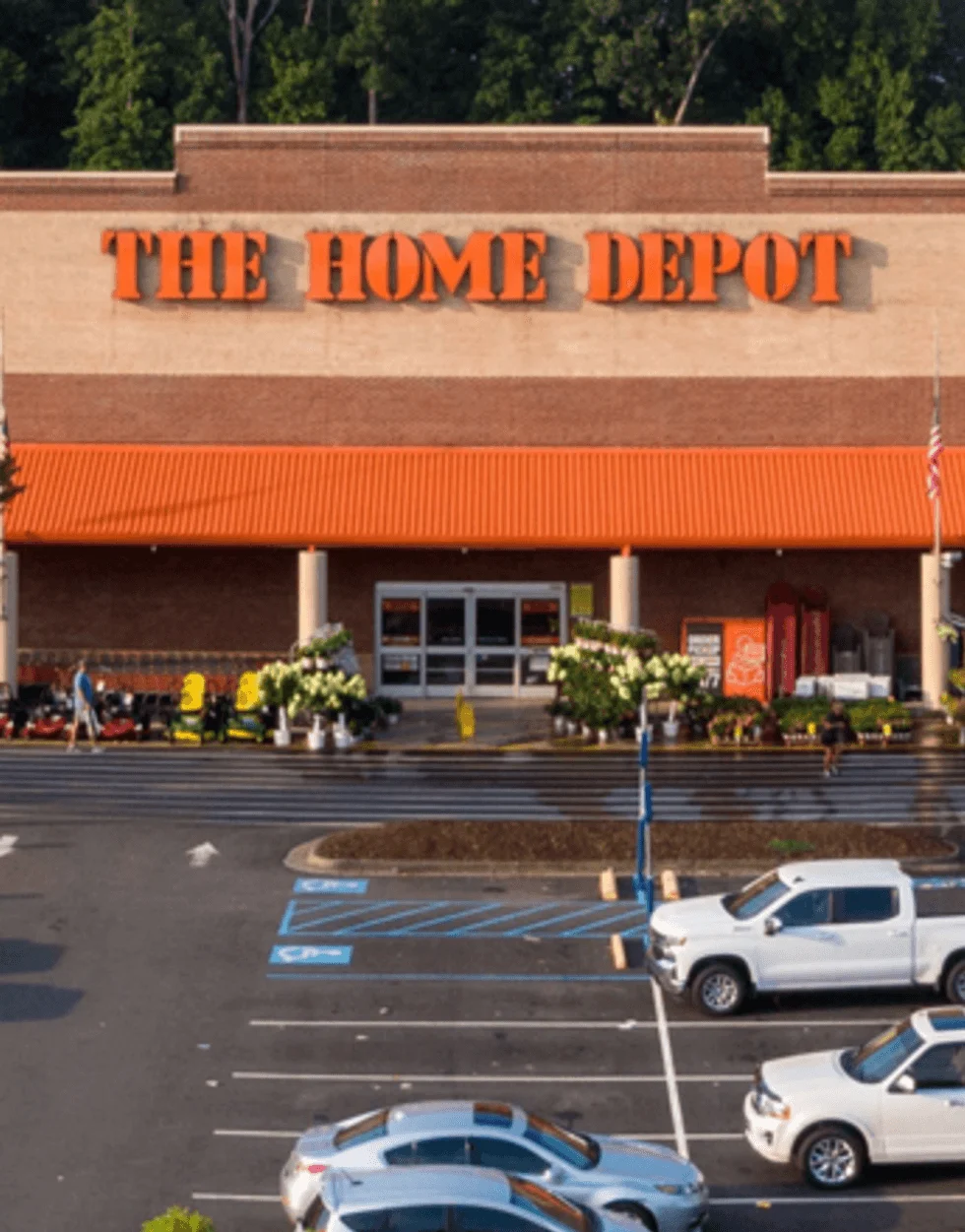
In a major shift that signals the ongoing evolution of the “retail-as-a-warehouse” model, The Home Depot has announced a significant expansion of its express delivery service. By leveraging its vast physical footprint of over 2,000 U.S. stores, the home improvement giant is effectively turning its retail locations into localized fulfillment hubs. This strategic pivot aims to solve the “last-mile” dilemma that has plagued big-box retailers for years: how to provide near-instant gratification to both casual DIYers and professional contractors while maintaining the logistical efficiency of a massive supply chain.
For customers, the result is a new standard for home improvement logistics: the ability to receive qualifying items in three hours or less. This service, which the company describes as being available for a “small flat fee,” is poised to reshape the expectations of consumers who are increasingly accustomed to the rapid fulfillment speeds typically reserved for grocery and small-parcel e-commerce.
The Strategic Shift: Leveraging the Physical Store
The core of Home Depot’s new fulfillment strategy lies in the utilization of its existing real estate. Rather than relying solely on massive, centralized distribution centers located on the outskirts of metropolitan areas, Home Depot is utilizing its stores—often situated in the heart of the communities they serve—as the primary nodes for inventory distribution.
By integrating these stores into a unified supply chain network, Home Depot can bypass the long-haul shipping times that traditionally delay deliveries. When a customer places an order via the company’s digital interface, the internal system routes that request to the closest store with the inventory in stock. This localized approach allows for a drastic reduction in transit time, transforming the store from a traditional showroom into an agile dispatch center.
Chronology: Building the Modern Supply Chain
Home Depot’s current push into express delivery is not an overnight development but the culmination of a multi-year logistical transformation.
Phase 1: The Foundations (2020–2022)
Following the surge in demand during the global pandemic, Home Depot recognized that its traditional "buy-online-pick-up-in-store" (BOPIS) model was merely the first step. The company began investing heavily in its "One Home Depot" strategy, which focused on blurring the lines between digital shopping and physical store utility. This period saw the implementation of sophisticated inventory tracking software, ensuring that the stock levels reflected in the app matched the physical items on the shelves with near-perfect accuracy.
Phase 2: Strengthening the Network (2023–2025)
During this window, the retailer invested billions into upgrading its supply chain. This included the construction of flatbed distribution centers and market delivery centers (MDCs) specifically designed to handle the heavy, bulky, and awkward-to-ship items that are staples of the home improvement industry. These facilities acted as the "middle mile" support for the stores, allowing individual locations to maintain high stock levels of essential goods.
Phase 3: The Express Era (2026–Present)
In August 2026, the company officially unveiled its scaled-up express delivery service. By integrating its localized store inventory with a fleet of delivery partners, the company moved beyond standard next-day shipping into the "three-hour delivery" window. This phase marks the company’s transition from a retail destination to an on-demand logistics provider.
Supporting Data: By the Numbers
The scale of this operation is significant, reflecting the sheer volume of products that Home Depot manages on a daily basis. The company’s data highlights the efficiency of its current network:
- Parcel Delivery: More than 65% of in-stock parcel products are currently eligible for same-day or next-day delivery.
- Big and Bulky: Approximately 55% of the store’s larger, heavier items (such as lumber, large fixtures, or heavy equipment) can be delivered within two days.
- Appliance Logistics: The company has streamlined its next-day delivery service for major household appliances, including refrigerators, washers, and dryers—items that typically require specialized handling and installation.
- The $25 Threshold: To encourage digital adoption, Home Depot currently provides free same-day delivery on qualifying orders of $25 or more, provided the order is placed by 4 p.m. local time.
These figures illustrate a massive logistical undertaking. By moving the fulfillment process closer to the consumer, Home Depot is not only reducing the carbon footprint associated with long-distance shipping but also drastically improving the customer experience.
Official Responses: Aligning with the Customer
The leadership at The Home Depot has framed this development as a direct response to the shifting habits of their diverse customer base. Jordan Broggi, the company’s EVP of Interconnected Retail, emphasized that the goal is to provide a seamless experience for those whose projects simply cannot wait.
"Customers expect products to be available when and where they need them, and Express Delivery helps us meet that expectation with a fast, reliable solution," Broggi stated during the rollout announcement.
He highlighted the dual-pronged nature of the service:
- The DIYer: For the homeowner in the middle of a weekend project, the ability to order a missing bag of fertilizer or a specific hardware component without abandoning their work is a significant pain-point solution.
- The Professional (Pro): For contractors working on time-sensitive jobs, waiting for parts is not just an inconvenience—it is a financial loss. By providing rapid access to adhesives, caulk, and essential consumables, Home Depot is positioning itself as an indispensable partner for the professional trades.
Implications: The Future of Retail Logistics
The expansion of Home Depot’s express delivery service has profound implications for the retail sector at large.
1. Competitive Pressure on Competitors
Big-box retailers and specialized hardware chains are now under immense pressure to match this level of service. As Home Depot sets the bar at three hours, competitors who rely on 2-5 day shipping windows may find their market share slipping. This could lead to an industry-wide "race to the top" regarding logistics, where the physical store becomes the most valuable asset a company owns.
2. The Evolution of the "Pro" Customer
Professionals represent a massive portion of Home Depot’s revenue. By catering specifically to their need for speed, Home Depot is deepening its relationship with the trade industry. If a contractor knows they can receive a job-critical part within hours, they are less likely to source their materials from niche suppliers or secondary wholesalers, further cementing Home Depot’s role as the primary vendor for the American construction industry.
3. Sustainability and Urban Planning
While the convenience of rapid delivery is undeniable, it also raises questions regarding urban logistics. The reliance on local store networks for fulfillment could change traffic patterns and the way delivery vehicles operate within residential neighborhoods. However, because the goods are sourced from the nearest store rather than a distant hub, the actual mileage per delivery is significantly lower, potentially leading to a more sustainable delivery model over time.
4. Future Innovations: Faster Speeds
Perhaps the most notable takeaway from the announcement is the company’s forward-looking statement: Home Depot expects to offer “even faster delivery speeds in the months ahead.” This suggests that the current three-hour window is merely a baseline. With the integration of predictive analytics and AI-driven inventory management, the company is likely exploring ways to stage high-demand items in locations that allow for even shorter fulfillment windows.
Conclusion
The Home Depot’s latest logistics strategy represents a masterclass in utilizing legacy infrastructure for modern digital demands. By refusing to let their physical stores become obsolete in an era of e-commerce, they have instead reinvented them as the backbone of an on-demand service economy.
For the average consumer and the professional contractor alike, the promise of express delivery is more than just a convenience—it is a transformation of the home improvement experience. As Home Depot continues to optimize its delivery network and shorten its fulfillment windows, the rest of the retail world will undoubtedly be watching, as the lines between "the store" and "the warehouse" continue to dissolve. Whether this leads to a new era of hyper-local retail efficiency or puts further strain on the logistics industry remains to be seen, but one thing is clear: in the race for the customer’s time, Home Depot is moving faster than ever.
About the Author