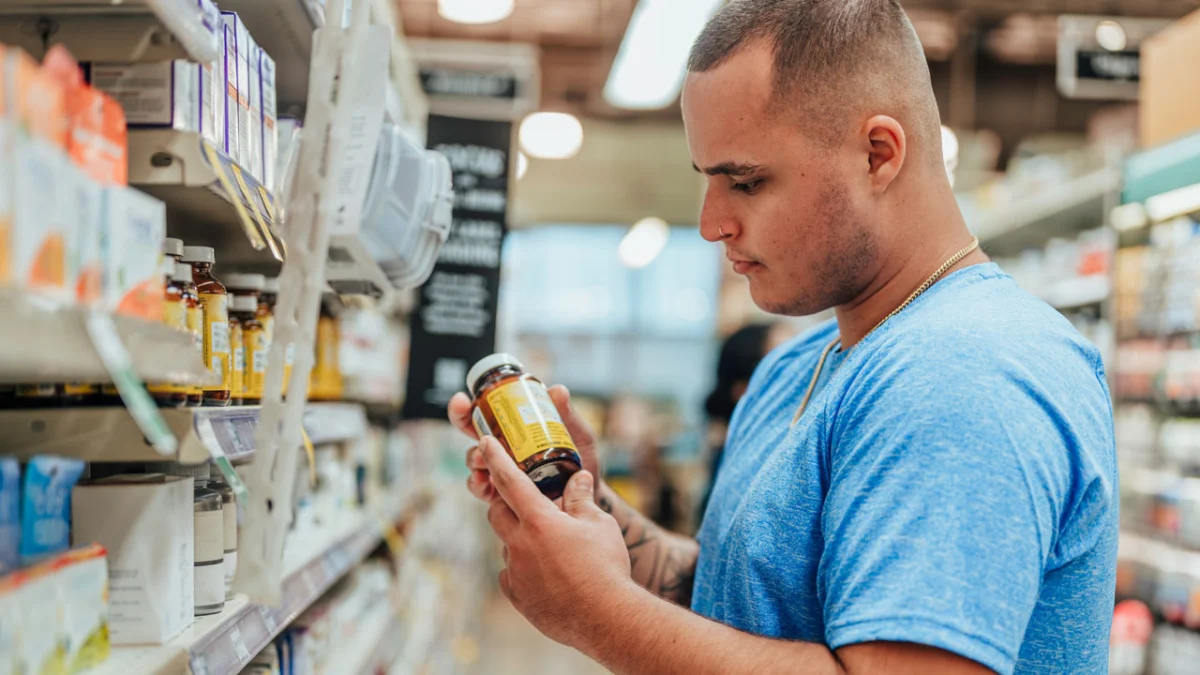
In the landscape of modern American health, the medicine cabinet has undergone a profound transformation. A new, comprehensive study from the Pew Research Center reveals that nearly 80% of U.S. adults are currently incorporating at least one form of health supplement into their daily regimen. From multivitamins and probiotics to specialized protein powders and herbal extracts, the reliance on these products has become a defining characteristic of contemporary American wellness culture.
As the global dietary supplement market continues to expand—reaching an estimated value of $209.5 billion in 2025—the debate surrounding the efficacy, regulation, and necessity of these products has intensified. For millions of Americans, however, the question is not one of scientific debate but of personal necessity; most users report that these supplements play a critical, or at least highly significant, role in maintaining their overall health.
The Prevalence of Supplementation: A Snapshot of Modern Habits
The Pew Research Center survey, conducted from July 6 to July 12, 2026, utilized a representative sample of 3,554 U.S. adults to gauge the habits and beliefs of the population. The data paints a clear picture: supplementation is a mainstream practice.

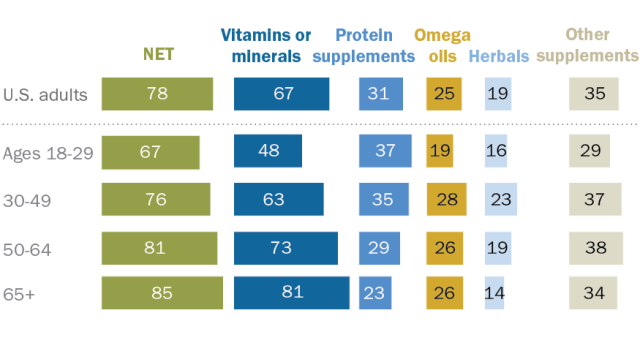
Vitamins and minerals, including staples such as iron, calcium, and comprehensive multivitamins, remain the primary choice for the vast majority of users, with 67% of all adults confirming they take them regularly. Other categories follow at lower but significant rates: 31% use protein supplements, 25% utilize omega oils, and 19% turn to various herbal remedies. Furthermore, 35% of respondents noted they are taking "other" supplements, a category that encompasses a wide range of popular health-conscious additions, including melatonin for sleep and probiotics for gut health.
Chronology of a Growing Trend
The rise of the supplement industry did not happen overnight. Over the past two decades, several factors have converged to propel these products into the mainstream:
- The Early 2000s: Increased public interest in "preventative medicine" began to shift the focus from reactive treatment (seeing a doctor when sick) to proactive wellness (trying to prevent illness through nutrition).
- The Digital Acceleration (2015–2020): The proliferation of health-focused blogs and early social media wellness communities brought supplements out of the niche health-food store aisles and into the common household.
- The Post-Pandemic Shift (2021–2024): The COVID-19 pandemic acted as a massive catalyst for immune-boosting supplement sales. Consumer interest in vitamin D, zinc, and vitamin C skyrocketed, permanently normalizing daily consumption for many who previously had no interest in supplementation.
- The "Influencer" Era (2025–2026): We are currently witnessing the dominance of health and wellness influencers. Whether on TikTok, Instagram, or specialized wellness platforms, these creators have turned "stacking" supplements into a lifestyle trend, often blending scientific research with anecdotal health advice.
Data-Driven Demographics: Who Is Taking What?
The survey data highlights clear demographic divides, providing insight into which groups are most likely to prioritize supplementation.
The Age Divide
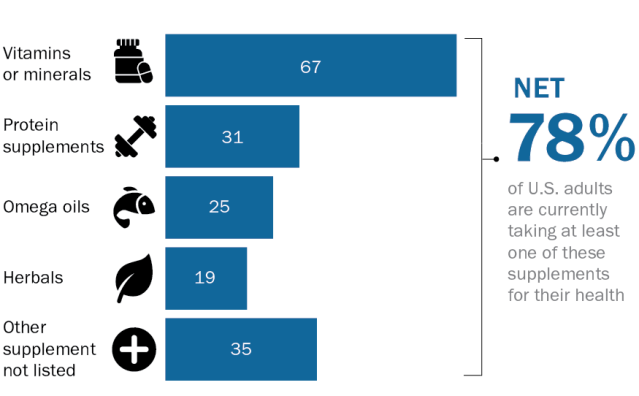
Perhaps the most notable finding is the correlation between age and supplement usage. While 85% of adults aged 65 and older report taking at least one supplement, the number drops to 67% among those under 30.
This is largely driven by the high prevalence of vitamin and mineral use among older populations, who often require specific nutritional support, such as calcium and vitamin D, as recommended by organizations like the National Institute on Aging. Conversely, the youth demographic exhibits a different priority: protein supplementation. Roughly 37% of adults aged 18 to 29 and 35% of those aged 30 to 49 use protein supplements—a trend closely aligned with the "protein maxxing" phenomenon currently trending across social media.
Gender and Socioeconomic Factors
Women are more likely than men to report taking supplements (82% vs. 74%). This disparity is consistent across almost all categories, including vitamins, minerals, and herbals. Socioeconomic factors also play a role; individuals with higher levels of education and higher family incomes are more likely to integrate supplements into their daily routine. For example, 85% of upper-income earners report supplement use, compared to 74% of those in lower-income brackets.
Cultural Nuances
The survey also noted that Asian adults are significantly more likely to use omega oils (40%) compared to their White, Black, and Hispanic counterparts, who hover around the 23–27% range. These variations underscore that supplement use is not just a health choice, but one often influenced by cultural dietary habits and specific wellness priorities.
Official Perspectives and Medical Caution
Despite the widespread popularity of these products, the medical community remains cautious. The U.S. Food and Drug Administration (FDA) regulates supplements differently than prescription drugs, often leading to a "buyer beware" environment where the efficacy of a product is not always guaranteed by rigorous clinical trials before it hits the shelf.
Many medical professionals, including those at the American Medical Association (AMA), frequently advise that the most effective way to obtain nutrients is through a balanced, whole-food diet rather than through concentrated capsules or powders. Doctors express concern about potential interactions between supplements and prescription medications, as well as the risk of "over-supplementation," which can lead to toxicity in certain fat-soluble vitamins.
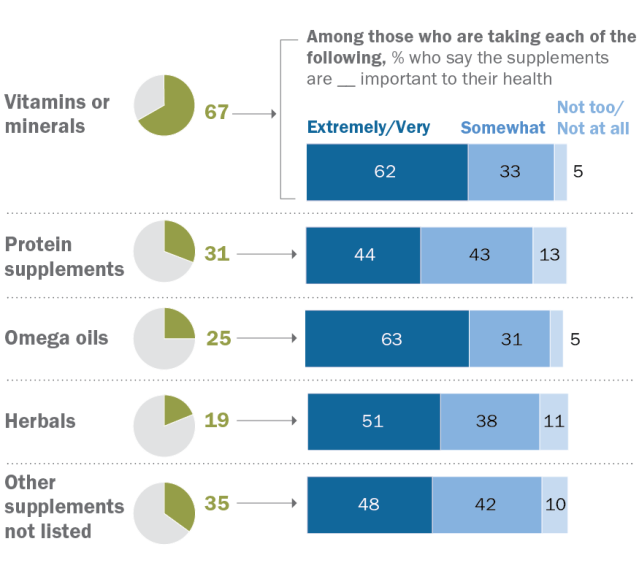
When asked about the importance of these products, consumers remain steadfast. A majority of those who take vitamins or minerals (62%) classify them as "extremely" or "very" important to their health. This conviction is slightly lower for protein supplements (44%), suggesting that users view vitamins as foundational health tools, while viewing protein as more of a lifestyle or fitness-focused enhancement.
The Implications of a Supplement-First Society
The widespread adoption of supplements has broad implications for both public health and the economy.
- Economic Impact: As a $200+ billion industry, the supplement sector is a major economic engine. Its growth shows no signs of slowing as companies innovate with personalized nutrition—using DNA testing or blood panels to suggest "bespoke" supplement stacks.
- Public Health Literacy: The heavy reliance on influencers for health information, as noted by the Pew Research Center, presents a double-edged sword. While it encourages individuals to take charge of their own health, it also risks the spread of misinformation, where profit-driven marketing is mistaken for clinical advice.
- The Shift in Medical Consultations: As more patients enter doctor’s offices with complex regimens of self-prescribed supplements, the role of the primary care physician is evolving. Doctors must now spend more time reviewing, vetting, and managing these non-prescription additions to ensure patient safety.
Conclusion: The Path Forward
The data from 2026 is definitive: the American approach to health is increasingly supplemented. While the trend offers potential benefits for those with genuine nutritional deficiencies, it also highlights a growing reliance on external products to bridge the gap in a modern diet that many feel is lacking.

As society moves forward, the challenge for public health officials will be to provide clear, accessible, and scientifically grounded information to help consumers navigate a marketplace that is increasingly crowded with claims, marketing, and varying levels of product quality. For the individual, the path to true health likely involves a delicate balance: leveraging the convenience of modern supplementation while never losing sight of the foundational necessity of nutrition, exercise, and qualified medical guidance.
About the Research
This analysis was conducted by the Pew Research Center to help the public, media, and policymakers better understand the evolving landscape of American health. The survey of 3,554 U.S. adults was carried out from July 6 to July 12, 2026, using the American Trends Panel. Respondents were provided with a clear definition of supplements—excluding prescription and over-the-counter drugs like Tylenol—to ensure consistency in the data. For full methodology, topline results, and the specific questionnaire used, please visit the Pew Research Center’s official repository.
About the Author