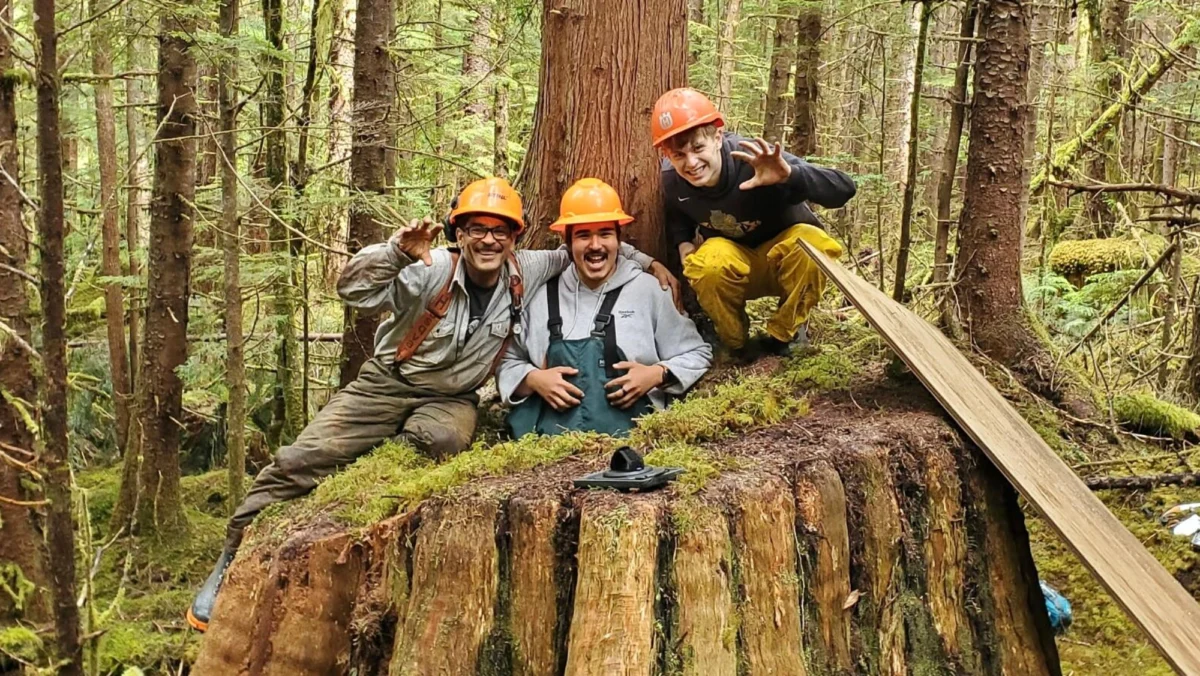
In the dense, mist-shrouded forests of Haida Gwaii, off the north coast of British Columbia, the Council of the Haida Nation is engaged in an unprecedented conservation experiment. Stewardship technicians, led by Haida member Elijah Washington, are trekking through the remnants of industrial logging sites to perform a unique form of surgery on the landscape. They are retrofitting massive, decaying western red cedar stumps with plywood, roofing material, and moss, transforming them into artificial winter dens for the taan—the coastal black bear.
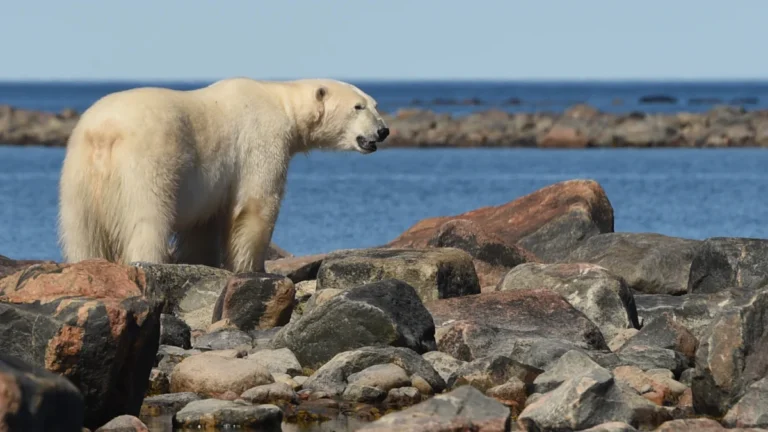
This subspecies, found nowhere else on Earth, represents some of the largest black bears in North America. As the island’s old-growth forests continue to shrink under the persistent pressure of the timber industry, these bears have found themselves homeless, forced to navigate a fragmented landscape where the natural hollows they rely on for winter survival are increasingly scarce.
The Crisis of Habitat Loss
The fundamental biology of the coastal black bear is tied to the architecture of the old-growth forest. For centuries, these bears have relied on the massive trunks of ancient cedars, which, as they age and decay, develop natural hollows perfect for hibernation and denning. Within these insulated chambers, female bears give birth to cubs—often weighing no more than a pound—and nurse them through the long, harsh winters.
However, decades of aggressive industrial logging have fundamentally altered the archipelago’s geography. The vast swathes of clear-cut forest have been replaced by second-growth stands, which, despite their green appearance, lack the complex structure—the rot, the hollows, and the sheer scale—required to house a hibernating bear.
“The only place where bears can have babies is in a den,” explains wildlife biologist Helen Davis, who has been collaborating with the Haida Nation to mitigate this crisis. “These dens are critical to population sustainability.”

A Chronology of Conservation
The path to building artificial dens began not with a grand environmental policy, but with the stark realities of the logging industry.
- The 1990s: Helen Davis began her research into denning habits, radio-collaring bears to track their movements. Her data confirmed a grim reality: bears were almost entirely dependent on large, hollow old-growth trees.
- The Early 2000s: Stories from loggers became increasingly common: they would fell a tree, only to have a startled bear scramble out—or worse, inadvertently kill a bear hibernating within. These incidents underscored the total destruction of the bears’ life-support systems.
- 2019: The Haida-owned forestry company, Taan Forest, began an initiative to train staff in identifying potential den sites. This marked a shift in corporate responsibility, moving from extraction to active restoration.
- 2023: Initial success was recorded. Bears began using the modified dens in the Mamin River and Survey Creek areas. The return of these bears annually served as a proof-of-concept.
- Summer 2026: The Council of the Haida Nation ramped up the effort, commissioning a dedicated crew to identify and retrofit seven new sites, with plans to reach a total of 10 by the end of October.
Supporting Data and Methodology
The methodology behind these "Goldilocks" dens is precise. Washington and his crew do not simply build boxes; they curate existing natural decay. They select stumps that possess a hollow core and manually manipulate the entrance to be just large enough for a mother bear to enter, yet small enough to retain heat and exclude predators.
The project utilizes a multi-pronged scientific approach to monitor efficacy:
- DNA Analysis: The crew collects hair samples from den entrances to track whether the same individuals return or if new bears are colonizing the sites.
- Remote Monitoring: Motion-activated cameras are installed to observe activity throughout the year. The team avoids the sites from October to April to ensure the bears remain undisturbed.
- Sensory Familiarization: To increase the likelihood of occupancy, the team places samples of hair from deceased bears within the new dens, a technique proven to provide a scent-based "welcome" to wandering bears.
Official Responses and Ethical Friction
The program has elicited a complex reaction from the Haida community and government officials. While the ingenuity of the program is praised, it has also become a lightning rod for the debate over the preservation of old-growth timber.
BC Forests Minister Ravi Parmar has maintained that a total cessation of old-growth logging would cause a collapse of the province’s forestry sector. This economic imperative has left conservationists in a bind: by providing "artificial" solutions for wildlife, does the government gain an excuse to continue clear-cutting the primary habitat?

Lisa White, a councillor with the Old Massett Village Council, articulated the emotional toll of this reality: “I actually cried,” she said upon seeing the plywood-covered stumps. For White, the necessity of these dens is a stinging indictment of how far the land has been degraded. She notes that the Haida people once used the forests for centuries—taking wood for homes and canoes—without ever requiring such drastic interventions to keep the local fauna alive. The forest was once self-sustaining; now, it requires human maintenance.
Implications for Global Conservation
The Haida Nation’s initiative is being watched by biologists worldwide as a potential model for "assisted conservation." However, experts caution that a den is only as valuable as the ecosystem surrounding it.
Noel Bellis, an Old Massett member and experienced carver, points out that shelter is only half the battle. "It’s also the forest around them that needs to be strong," he explains. If the surrounding second-growth forest is depleted of the food sources—such as salmonberry shoots, fireweed, and horsetail—that bears require upon emerging in the spring, the dens will essentially become traps.
The current strategy of Taan Forest is to open gaps in the canopy near these den sites to encourage the growth of browse-able vegetation. Yet, the deer population in these second-growth stands often overgrazes the understory, leaving the bears with little to forage. The implication is clear: the success of this program depends on a holistic approach that includes protecting food sources and limiting human-bear conflict.
The Cultural Connection: A Spirit-Led Stewardship
For the Haida, the bear is more than a biological entity; it is a relative. Barney Edgars, a Haida Elder, recalls a time when bears were respected neighbors rather than animals to be managed. The historical lack of bear attacks on the islands, he suggests, was a byproduct of this mutual respect—a cultural contract that has been frayed by the encroachment of industrial activity.

As the Haida move forward with this project, their primary goal is not to "manufacture" a bear population, but to restore a semblance of safety. Washington is adamant that they are not looking to build a "bear neighborhood." The goal is to provide enough scattered, safe sanctuaries to ensure the taan can continue to survive in their ancestral home.
The future of this project rests on the data collected this winter. If the cameras reveal that the bears are successfully utilizing these man-made chambers, the Haida Nation will have proven that humanity can act as an effective steward of the wild—even when it is repairing the damage caused by its own industry. However, the underlying message remains: the best den is not one built of plywood and nails, but one forged by the slow, quiet growth of an ancient cedar tree, left standing in the forest where it belongs.
About the Author