The intersection of human recreation and environmental preservation has reached a critical juncture. For decades, a quiet but intense conflict has simmered over the use of permanent, man-made anchors—metal bolts, pitons, and fixed slings—within the hallowed grounds of America’s federally designated wilderness areas. As land-management agencies move to finalize new draft guidance, the debate has evolved from a niche disagreement among enthusiasts into a significant test of the 1964 Wilderness Act’s foundational principles.
Following the passage of the 2025 Protecting America’s Rock Climbing (PARC) Act, the U.S. Forest Service (USFS), the National Park Service (NPS), and the Bureau of Land Management (BLM) released a sweeping set of proposed regulations in mid-June. These rules aim to reconcile the long-standing climbing tradition with the strict mandates of wilderness preservation. However, as the comment periods for these regulations draw to a close, the rift between those who view climbing as an integral, low-impact connection to nature and those who see permanent hardware as a violation of "untrammeled" wilderness remains as wide as ever.
A Chronology of Conflict and Legislative Shifts
To understand the current tension, one must look back at the legislative history of American public lands. The Wilderness Act of 1964 was designed to keep designated areas "untrammeled by man," where the earth and its community of life are essentially left to their own devices. For decades, the presence of fixed climbing anchors existed in a legal gray area, tolerated as a long-standing recreational practice but often at odds with the spirit of the law.
The situation came to a head in 2023, when the Biden administration proposed a national directive that would have essentially prohibited the installation of new fixed anchors in all wilderness areas, while mandating a rigorous, and some argued impossible, review process for existing routes. This move sent shockwaves through the climbing community, leading to a massive mobilization of advocates.
The political pendulum swung back sharply in 2025 with the passage of the Protecting America’s Rock Climbing (PARC) Act. This bipartisan legislation effectively overruled the administration’s restrictive approach, explicitly codifying recreational climbing—including the installation, maintenance, and use of fixed anchors—as an appropriate use of wilderness areas. The agencies’ current draft guidance, released this June, represents the executive branch’s attempt to interpret the PARC Act’s mandate into operational policy.
The Technical Reality: Why Anchors Matter
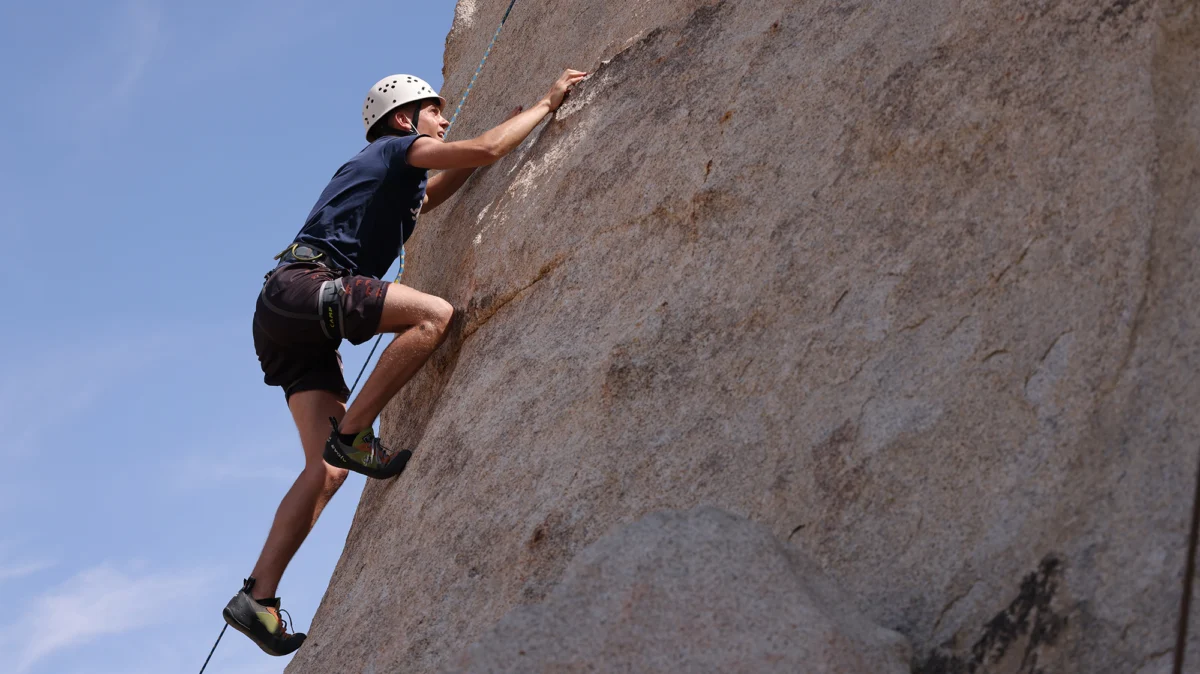
At the heart of the technical debate is the nature of the "anchor." In the climbing world, protection is paramount. When a climber ascends a steep rock face, they rely on safety systems to catch them in the event of a fall. While "traditional" climbing relies on removable devices like spring-loaded cams that fit into natural rock cracks, such gear is not always feasible.
In many instances, particularly on blank, sheer rock faces, no natural protection exists. Here, climbers drill small holes and insert steel bolts, adding a "hanger" to which a rope can be attached. Other methods include pitons—metal spikes hammered into thin fissures—and fixed slings around boulders or trees. For the climbing community, these are not acts of vandalism but essential safety infrastructure that allows for safe descent and risk mitigation.
Erik Murdock, deputy director of programs, policy, and government affairs at the Access Fund, emphasizes that climbers are a legitimate stakeholder in the "real estate" of public lands. "A lot of people and user types are vying for the same piece of protected space," Murdock notes. "The new guidance helps secure the place of climbers in that mix, ensuring that our access is protected while acknowledging the environmental sensitivities of the areas we love."
Agency Approaches: A Patchwork of Regulations
The current draft guidance reveals a notable lack of uniformity across federal agencies, reflecting the differing missions of each body:
- National Park Service: The NPS is taking a more stringent approach, requiring climbers to secure special-use permits or receive broad authorization from park superintendents before drilling new bolts. This reflects the agency’s primary mandate of preservation and its history of tight control over backcountry use.
- Bureau of Land Management: The BLM, which manages vast, often rugged swaths of Western landscape, has proposed a more lenient framework. Under the draft, climbers would be permitted to place a limited number of bolts in certain areas without prior individual authorization, acknowledging the logistical burden of oversight on such expansive tracts.
- U.S. Forest Service: As the steward of roughly half of the country’s public-land climbing, the Forest Service has opted for a decentralized model. It directs local forest offices to engage in collaborative planning with climbing groups and stakeholders to establish site-specific management plans.
While the Access Fund has labeled these policies "overall workable," the lack of a unified national standard has left some regional managers and environmental advocates concerned about the consistency of enforcement.
The Opposition: Wilderness Integrity vs. Recreation
The opposition to these measures, led by organizations such as Wilderness Watch, argues that the introduction of permanent hardware is fundamentally incompatible with the wilderness ethic. Dana Johnson, policy director at Wilderness Watch, points to the broader ecological crisis facing public lands.
"We’re squeezing wildlife into smaller and smaller pockets of protected space, and we have a lot of people waiting in line for more access," Johnson says. She argues that the infrastructure of climbing—bolts, trails, and high-traffic base camps—contributes to the degradation of these "last wild places."
A significant concern for critics is the capacity of land management agencies to actually enforce these rules. Over the past 18 months, several Forest Service regional offices have been hollowed out, losing substantial portions of their wilderness staff due to budget cuts and the influence of the now-defunct Department of Government Efficiency (DOGE). Without adequate personnel to monitor existing routes or audit the placement of new ones, critics fear that the PARC Act will lead to a "climbing free-for-all."
Implications: Moving Beyond the Anchor Debate
As the public comment period for these agencies concludes, many experts suggest that the focus on fixed anchors may be distracting from larger, systemic problems in wilderness management. Zach Lentsch, a veteran guide and owner of Wyoming Mountain Guides, argues that the "anchor debate" is a narrow framing of a much larger issue: the sheer volume of human traffic in protected areas.
Lentsch points out that hikers and backpackers cause significant ecological damage, often with less regulation than the climbing community. He cites the degradation of Lonesome Lake in the Wind River Range, where high concentrations of E. coli have been linked to human waste left by visitors.
"If you’re not a climber, it might seem like climbers are going out there willy-nilly and putting ugly hardware into the walls," Lentsch observes. "But the reality is more nuanced. There are plenty of places in the wilderness where you don’t need a fixed anchor, and typically the ethic has been if you don’t need a fixed anchor, you don’t bring one. We need to be talking about permit systems, human waste management, and limiting total usage across all user groups, not just policing metal bolts."
Looking Ahead
The implications of these new guidelines will ripple across the American West for years to come. If the agencies successfully implement collaborative, site-specific management, it could provide a blueprint for how to balance the competing demands of modern recreation and strict environmental conservation.
However, if the process is marred by inadequate oversight and a failure to address the broader impacts of human encroachment, the nation’s wilderness areas may continue to suffer the slow erosion of the very qualities that made them worth protecting in the first place.
For now, the fate of the cliffs remains in the hands of the agencies. With the Forest Service comment period having closed on July 20, and the remaining agencies set to conclude their review periods on August 14, the final versions of these policies will define the next chapter of American conservation—a chapter that will determine whether our wilderness remains a sanctuary for nature, or becomes merely another playground for an increasingly crowded world.
About the Author